news
stories from the front lines of discovery
From scientific breakthroughs to new open‑source tools, the Allen Institute’s work is reshaping how science is done—and who it’s for. Explore the latest news, stories, and highlights from across our research, partnerships, and open science efforts.


AI BioDesign accelerator combines experimental biology and artificial intelligence to learn nature’s design rules
Researchers from the Allen Institute, University of Washington, and Fred Hutch Cancer Center, supported by Fund for Science and Technology, will build open AI models, datasets, and tools to accelerate biological design for health, sustainability, and other global challenges
Thank you! Your submission has been received!
Oops! Something went wrong while submitting the form.
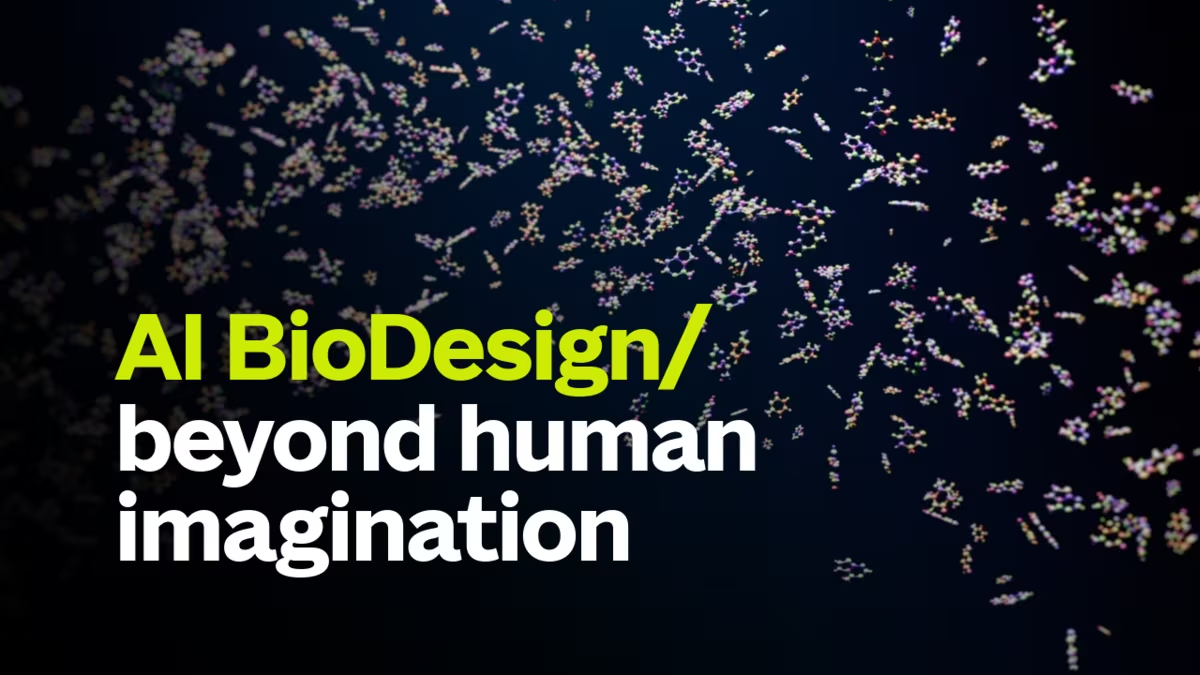

AI BioDesign: advancing biology and accelerating evolution
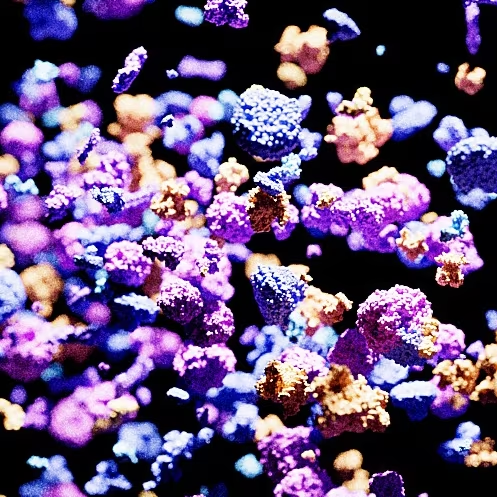
A bold and innovative collaboration between the Allen Institute, Fred Hutch Cancer Center, and the University of Washington, AI BioDesign will engineer and build new biomolecules that don’t exist in nature to help find new treatments for disease.
ai biodesign
video

AI BioDesign accelerator combines experimental biology and artificial intelligence to learn nature’s design rules
Researchers from the Allen Institute, University of Washington, and Fred Hutch Cancer Center, supported by Fund for Science and Technology, will build open AI models, datasets, and tools to accelerate biological design for health, sustainability, and other global challenges
No items found.
news
.avif)
genetics and wiring play a role in Alzheimer’s disease
UC San Francisco study that used Allen Institute’s Human Brain Atlas could lead to better treatments and therapies
No items found.
news
.avif)

the battle within
A scientist’s mission to conquer the disease that may one day conquer him
No items found.
multimedia
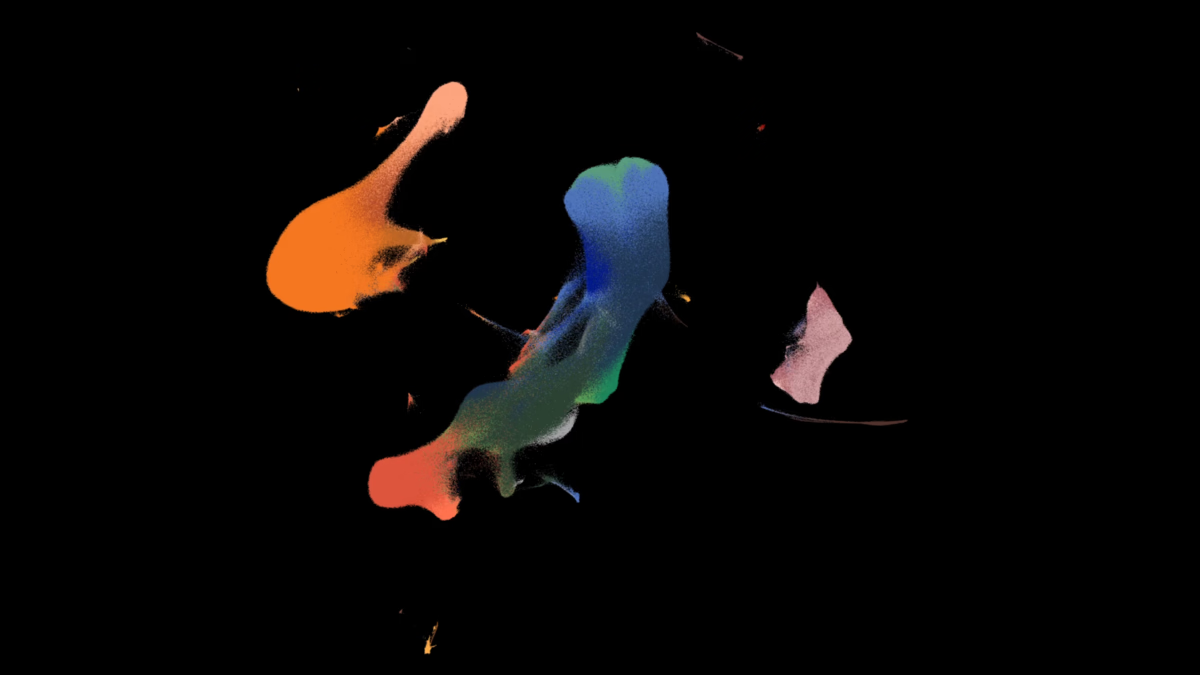
cancer research opens new window into battle against viruses
Scientists discover why multiple myeloma patients remain vulnerable to infection even after beating the cancer, and the findings could help develop better vaccines
immunology
news
finding Alzheimer's targets, one cell type at a time
How Shanahan Fellow Iris Stone used her Alzheimer's research and business savvy to chart a path into biotech
No items found.
news
ketamine increases neuroplasticity in female mice but not in males
The surprising finding could help scientists develop better treatments for depression
brain science
news
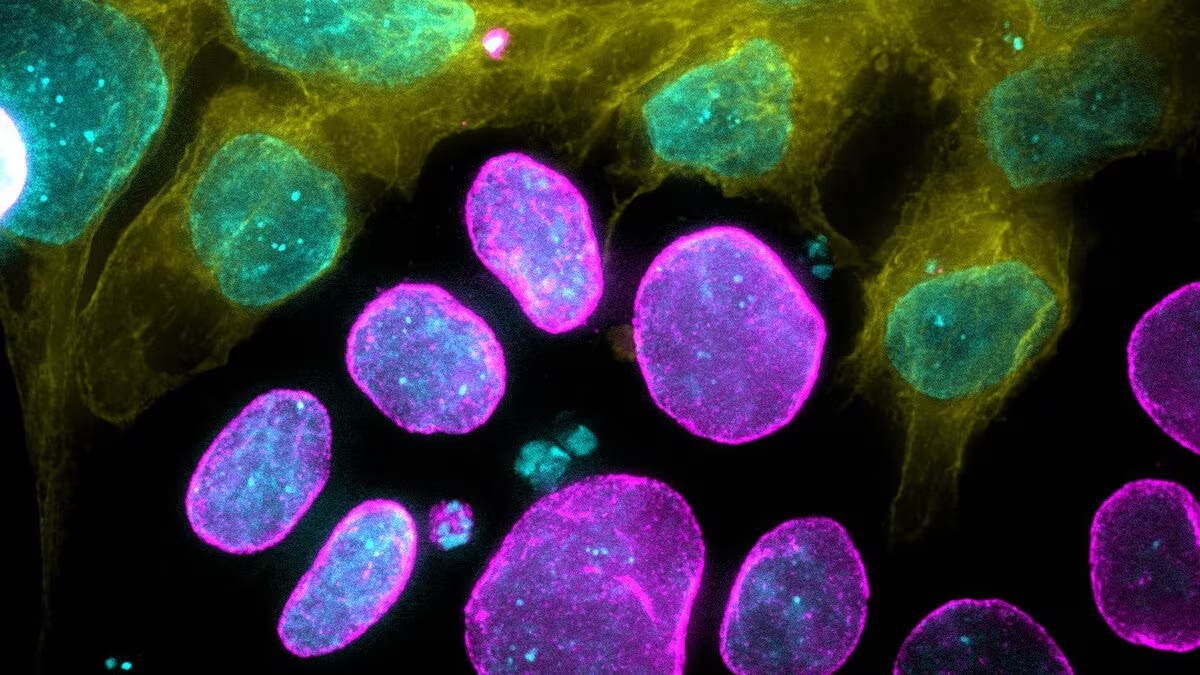
rogue DNA can move from cell to cell and change how they function
Scientists used Allen Institute cell lines to discover an important new way that cells trade genetic material
cell science
news
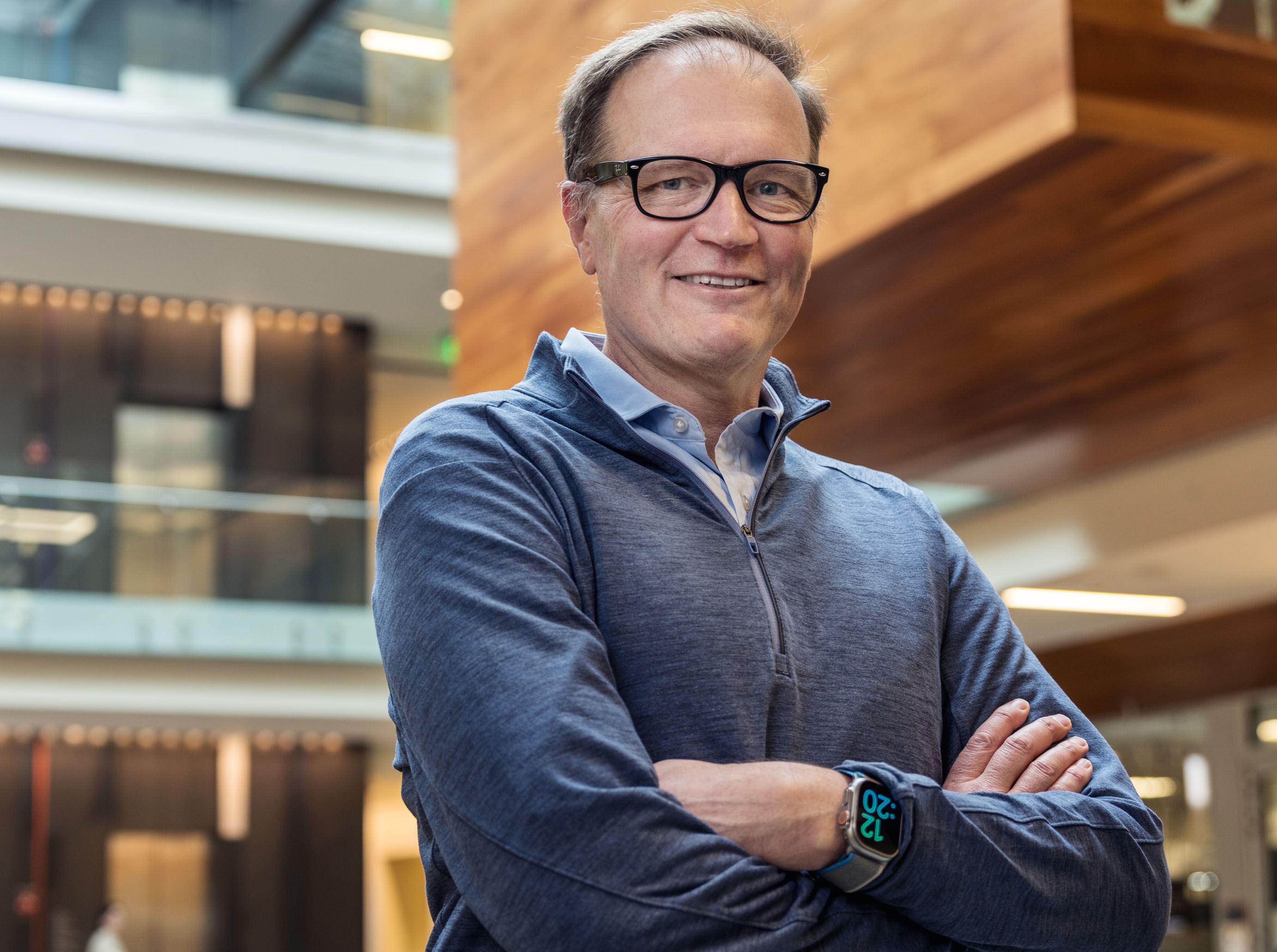
Karel Svoboda elected to the Washington State Academy of Sciences
Svoboda’s work has advanced our understanding of the neural mechanisms of learning, movement, and complex brain behavior
neural dynamics
news


SciShots: amber waves of brain

New video illustrates how neural activity in a mouse brain travels in aesthetically pleasing waves and spirals
brain science
science images

load more stories
1 / 37
No results found, try reducing your search parameters.
press & media contact
Get in touch for media inquiries and resources for covering science at the scale of greatest impact.
Thank you! Your submission has been received!
Oops! Something went wrong while submitting the form.


KIRO Radio: Breakthroughs in Synthetic Biology
(Interview starts 11:35 in) Troy McDiarmid from the Seattle Center for Synthetic Biology describes the innovative research underway to create cellular recorders that will track the full life histories of human cells to better understand disease.

Puget Sound Business Journal: Seattle biotech research hub launches with big goals for growth, scientific advances
The Seattle Hub for Synthetic Biology is developing technology to monitor genomic changes in cells in real time, in turn showing cells' whole histories and the genetic causes of disease.
Inside Precision Medicine: How Single-Cell Omics is Revolutionizing Our View Of Neurobiology
(Photo credit: miakievy / Getty Images) The adult human brain is made up of billions of neurons and glial cells. Understanding the diversity of these cells and their distinctive gene-regulatory mechanisms is crucial for determining how the brain works and, in turn, for developing treatments for neurologic disorders

GeekWire: Inside the new Seattle Hub for Synthetic Biology, which uses DNA to ‘record biology over time’
(Photo credit: Charlotte Schubert) Researchers opened the doors Monday to the new Seattle Hub for Synthetic Biology, a collaboration between the Allen Institute, the Chan Zuckerberg Initiative and the University of Washington.


Science Friday: 3,000 Types Of Brain Cells Categorized In Massive Brain Cell Atlas
In October 2023, an international group of scientists released an impressively detailed cell atlas of the human brain, published in 21 papers in the journals Science, Science Advances and Science Translational Medicine.

STAT: Allen Institute CEO Rui Costa on mapping the brain and paying early-career scientists decent salaries
Mapping the billions of cells that make up the brain is a task mammoth enough to keep hundreds of researchers across continents busy for years. But it’s just one of several ambitious projects the Allen Institute is helping tackle.
No results found, try reducing your search parameters.