
Growing up in a small town in Nigeria, Alex Gideon developed an early interest in science while in secondary school. As a first-generation university student, he went on to study anatomy at the University of Port Harcourt, where he fell in love with the brain. That love fueled his determination to become a neuroscientist.
“The brain is fascinating; there is so much about it that is inspiring,” Gideon said. “That interest led me to seek out opportunities for further training, and on my third application, I got in.”
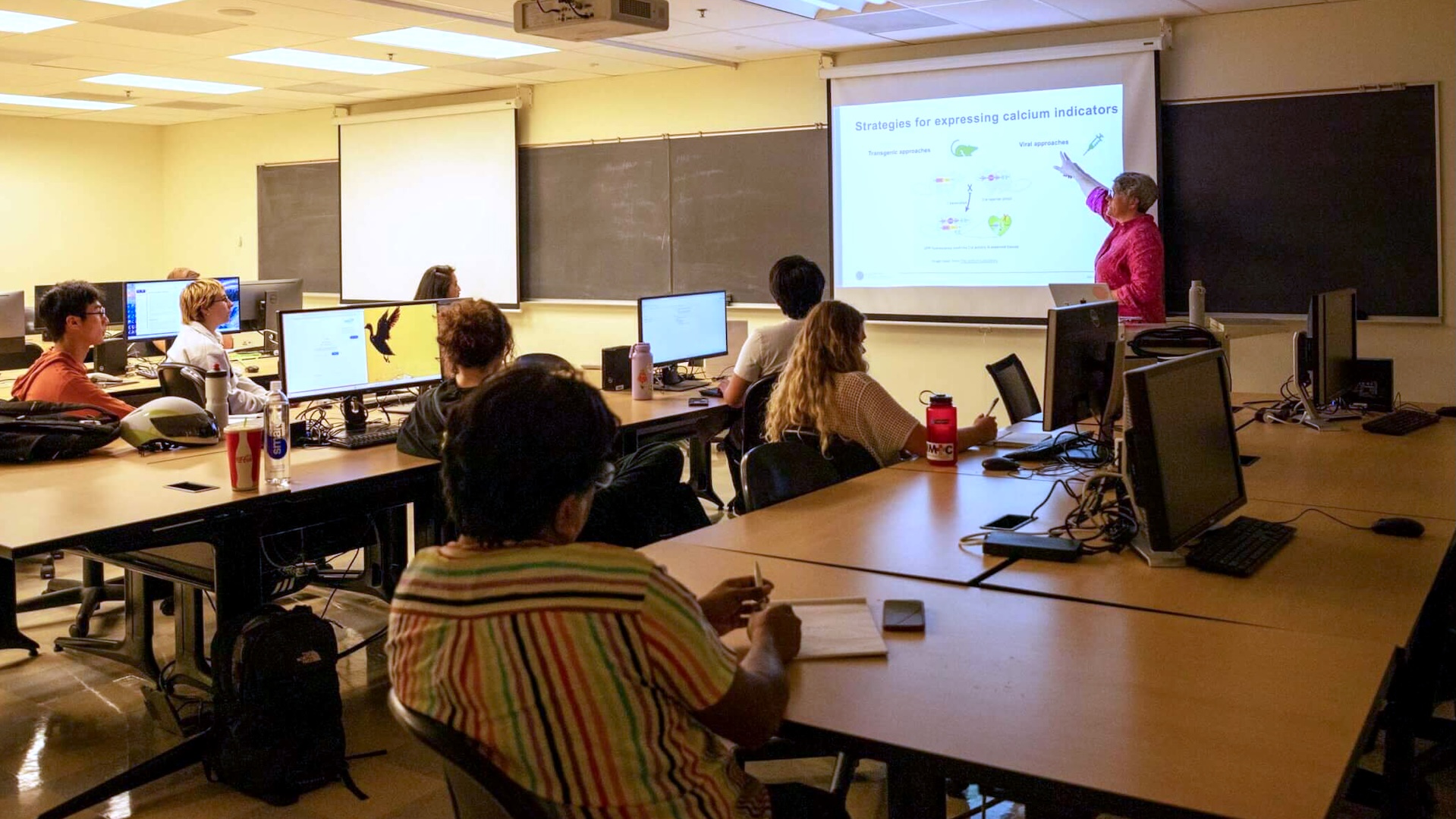
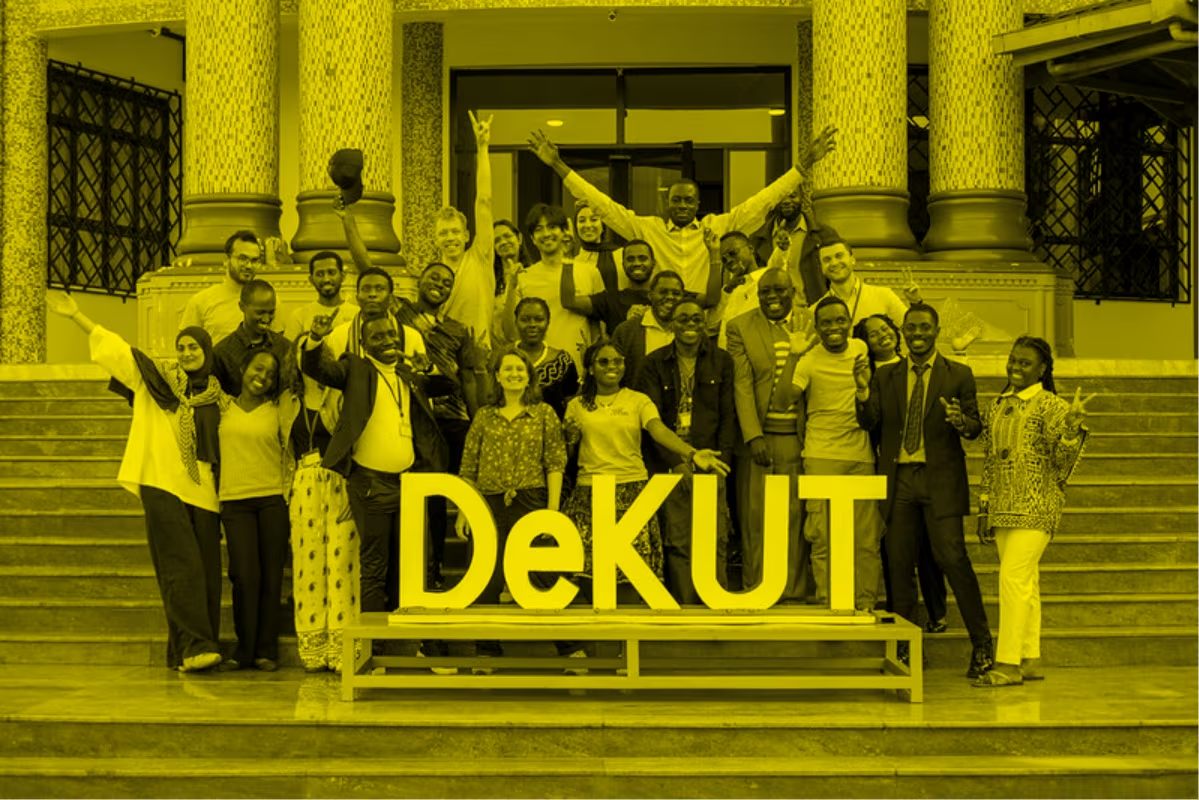
The training was from TReND CaMinA, an annual two-and-a-half-week computational neuroscience and machine learning workshop held throughout Africa. It’s run by TReND in Africa, a volunteer-run charity promoting science across the continent, supported by the Allen Institute.
“The course was exceptional and it changed everything for me,” said Gideon. “But beyond the training, the network I built with students, faculty, and organizers was very strong.”
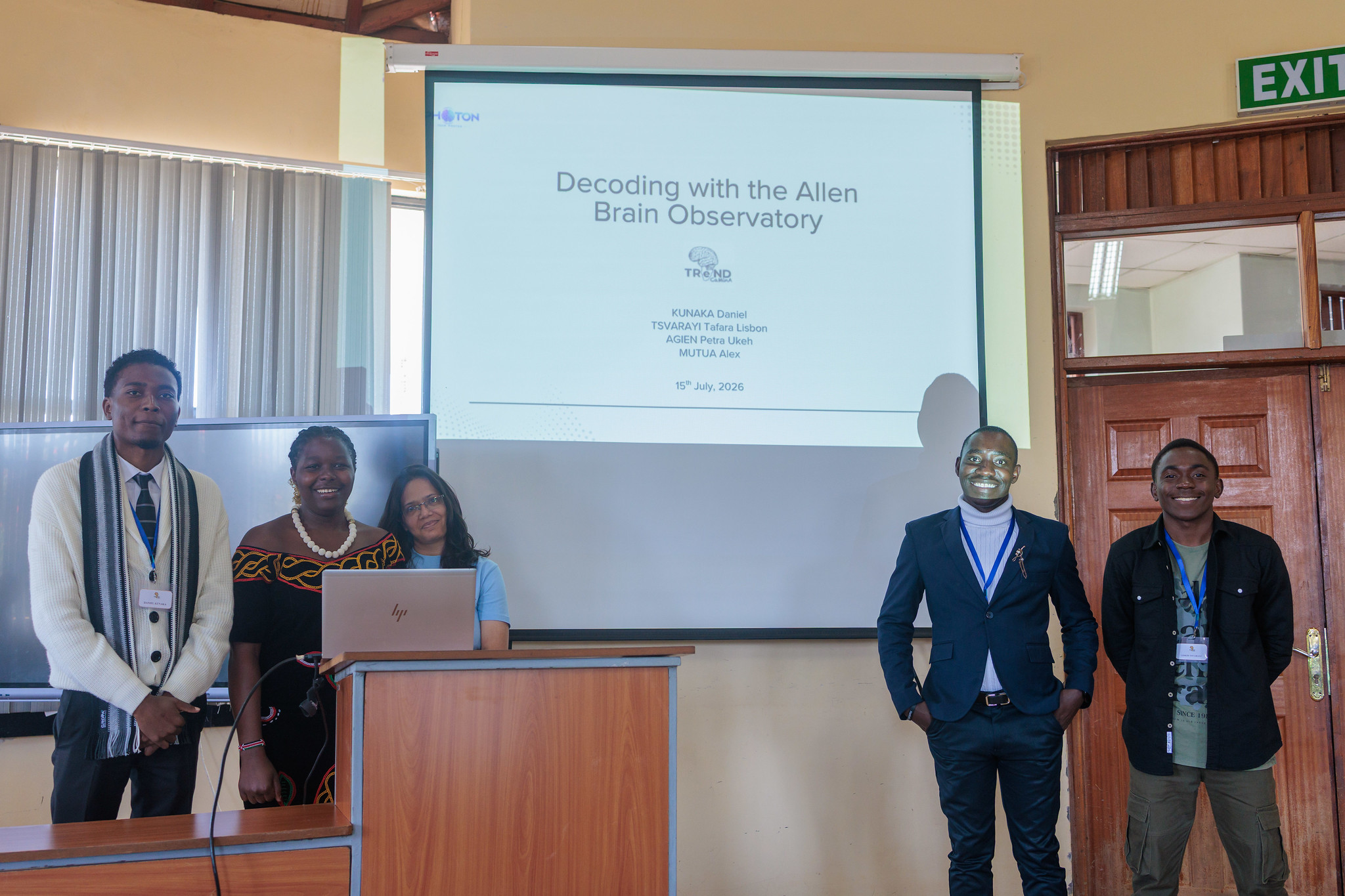
Inspired by that experience and the need for broader access to computational neuroscience training, Gideon and some colleagues went on to establish the African Computational Neuroscience Educational Initiative (ACNEI). This independent, African-led initiative collaborates with various institutions to hold virtual and in-person computational neuroscience workshops across Africa, targeting students ranging from high school to master’s level.
“We had more than 800 applications and accepted 250 students who enrolled virtually for a two-week program, so there’s a large demand for this experience,” Gideon said.
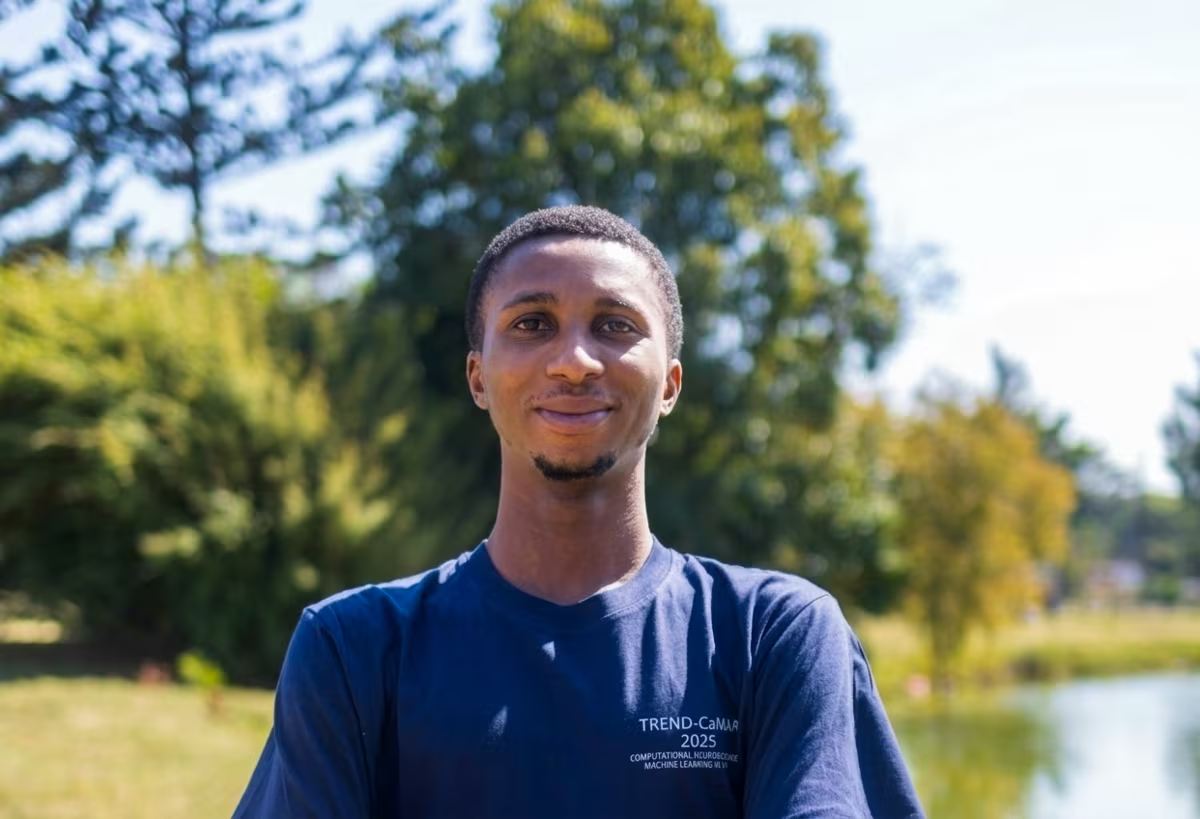
ACNEI also hosted 50 students this summer for in-person training in five different countries: Zambia, Nigeria, Ghana, Uganda, and Cameroon. Its programs are free for participants and have benefited from support and collaboration from TReND in Africa. For TReND organizers, ACNEI proves that their efforts to increase scientific capacity are paying off, catalyzing new learning opportunities and spreading science throughout the continent.
“This is our long-term goal,” said Artemis Koumoundourou, TReND in Africa executive director. “We want to help provide tools to researchers in Africa and then have them create a stable computational neuroscience research network through the continent. And ideally, alumni would eventually run TReND CaMinA with funding support from TReND.”
Many of ACNEI's founders are alumni of TReND CaMiNA, reflecting the growing contribution of African scientists trained through the program. ACNEI has expanded to establish hubs in multiple African countries, helping educate more students while reducing the need for long-distance travel for in-person workshops.
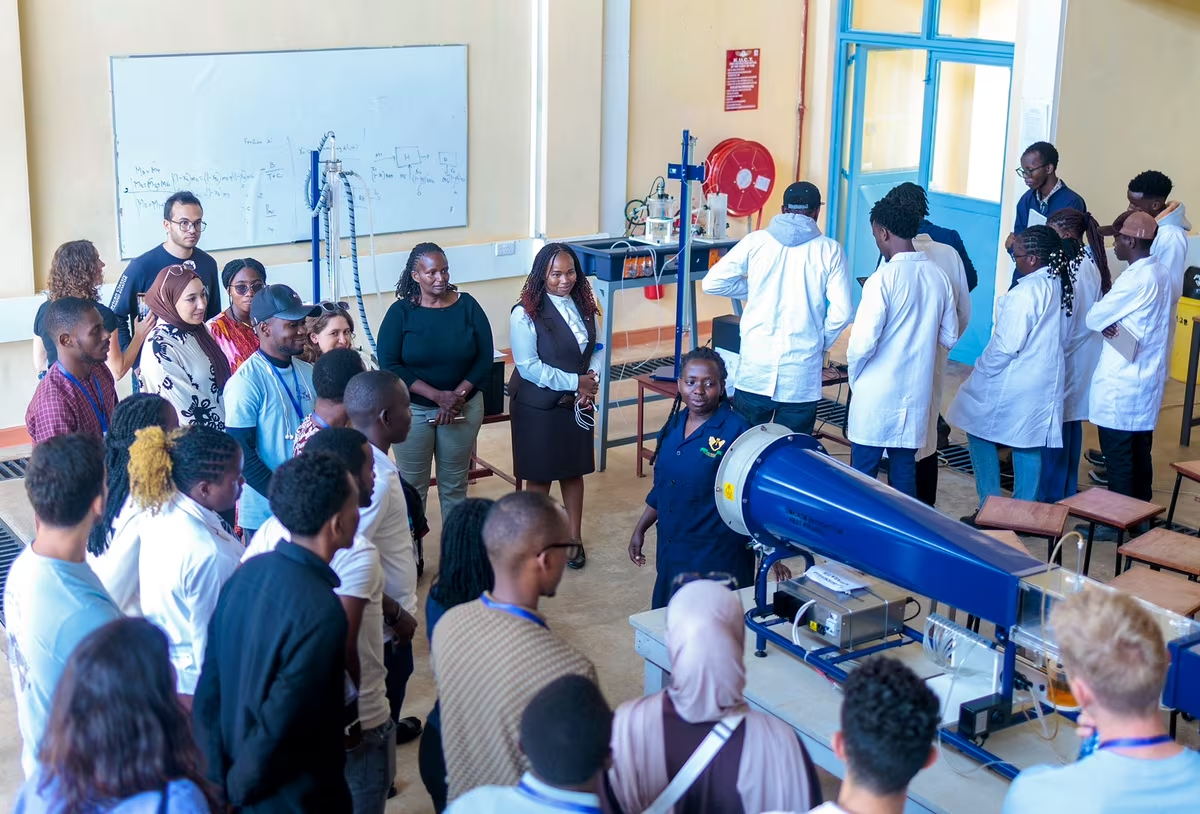
Meanwhile, Gideon is preparing to pursue his postgraduate training, while remaining involved in the organization and its long-term development. “We are building a future where world-class computational neuroscience education is accessible across Africa, and where emerging African scientists are empowered to lead scientific discovery, drive innovation, and solve problems that impact the continent and the world,” said Gideon.
Citations
about the allen institute
Allen Institute is a 501(c)(3) tax exempt organization dedicated to accelerating science for a healthier world. Through large-scale, multidisciplinary research initiatives, the Institute generates foundational knowledge, data, tools, and models that are shared openly with the world to advance our understanding of life and health. Founded by Jody Allen and the late Paul G. Allen, Allen Institute is supported primarily by Fund for Science and Technology.
.avif)