impact
about
our story
explore our impact
careers and opportunities
join us
open science
sharing science to speed discovery
open science week
celebrating open science
team science
people & teams
discovery is a team effort
advisors
their input shapes our science
board of directors
they help us fulfill our mission
shanahan foundation fellowship
at the interface of data and neuroscience
studio d3 fellowship
contribute bold ideas to redefine discovery
next generation leaders
fostering emerging leaders in bioscience
research
overview
our approach
science at the scale of greatest impact
additional programs
studio d3
data driven discovery
neurobiology of action
revealing the mechanisms behind movement and learning
science accelerators
brain science
building a blueprint of the brain
cell science
understanding how cells become organs
neural dynamics
revealing the brain’s hidden algorithms
immunology
mapping the immune system
synthetic biology
designing biology to advance health
brain health
accelerating human brain research
ai biodesign
unlocking new frontiers of bioscience
education
overview
science education
science is for everyone
open science
sharing science speeds discovery
engagement
education resources
real science. real skills.
field trips
experience science where it happens
educator development
empowering educators
news
overview
all news
explore the latest news
podcast
the human stories behind discovery
sign up for our newsletter
stay connected to our science
events
overview
all events
public engagement, workshops, seminars and more
conferences
connect with us
science resources
explore
publications
explore our publications
open science
sharing science to speed discovery
science resources
allencell.org
allenimmunology.org
allenneuraldynamics.org
brain-bican.org
brain-map.org
microns-explorer.org
impact
back to menu
overview
our story
explore our impact
careers and opportunities
join us
open science
sharing science to speed discovery
open science week
celebrating open science
team science
people & teams
discovery is a team effort
advisors
their input shapes our science
board of directors
they help us fulfill our mission
shanahan foundation fellowship
at the interface of data and neuroscience
studio d3 fellowship
contributing bold ideas to redefine discovery
next generation leaders
fostering emerging leaders in bioscience
research
back to menu
overview
our approach
science at the scale of greatest impact
publications
explore our publications
open science
sharing science to speed discovery
science accelerators
brain science
building a blueprint of the brain
cell science
understanding how cells become organs
neural dynamics
revealing the brain’s hidden algorithms
immunology
creating the ultimate immune system reference
synthetic biology
seattle hub for synthetic biology
brain health
accelerating human brain research and disease therapeutics
ai biodesign
unlocking new frontiers of bioscience
additional programs
studio d3
data driven discovery
neurobiology of action
revealing the mechanisms behind movement and learning
education
back to menu
overview
science education
science is for everyone
open science
sharing science speeds discovery
engagement
education resources
real science. real skills.
field trips
experience science where it happens
educator development
empowering educators
news
back to menu
overview
all news
explore the latest news
podcast
the human stories behind discovery
newsletter
stay connected to our science
events
back to menu
overview
all events
public engagement, workshops, seminars and more
conferences
connect with us
science resources
back to menu
science resources
allencell.org
allenimmunology.org
allenneuraldynamics.org
brain-bican.org
brain-map.org
microns-explorer.org
explore
publications
explore our publications
open science
sharing science to speed discovery
search
news

out of the blue – and into the rest of the brain

While probing the mysterious “blue place,” scientists discover the longest neuron ever measured in a mouse and new insights into how the brain learns

September 16, 2026
0 min read
visualization of mice brain neurons
share/
Topography of locus coeruleus norepinephrine neurons in the mouse brain. Approximately 100 fully reconstructed neurons are superimposed. Neurons are colored by their locations. Dorsal neurons (purple) project to the front of the brain, ventral (yellow) neurons project to the back.
While probing the mysterious “blue place,” scientists discover the longest brain cell ever measured in a mouse and new insight into how the brain learns

in this article

table of contents will display on published page only
set h2 to populate the table of contents here

authors

Ed Muir
Sr. Communications Specialist

Deep in the brainstem sits a small but important cluster of neurons known as the locus coeruleus (LC), Latin for “blue place.” It makes up a tiny fraction of the brain’s cells but plays an important role by releasing a crucial chemical messenger known as norepinephrine (NE). NE activates the body’s response to stress or excitement, impacts attention and learning, and affects heart rate.
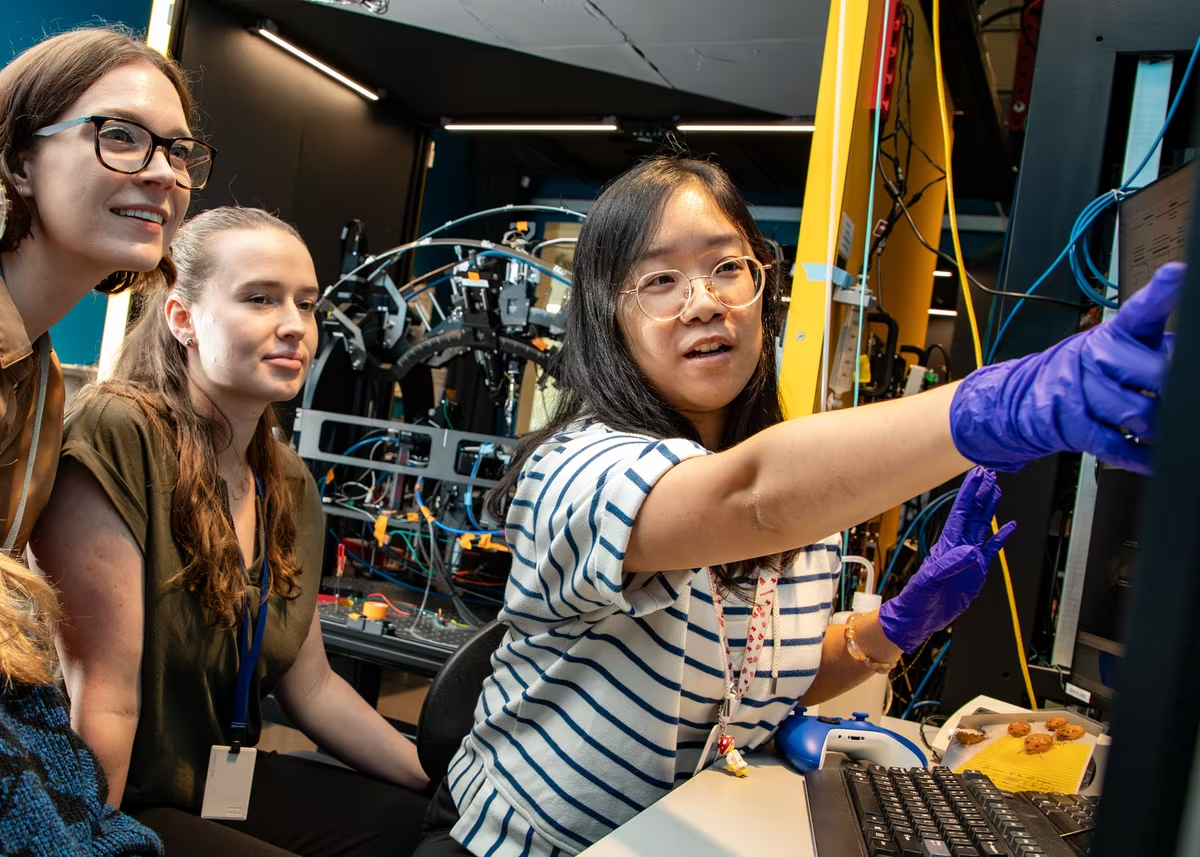
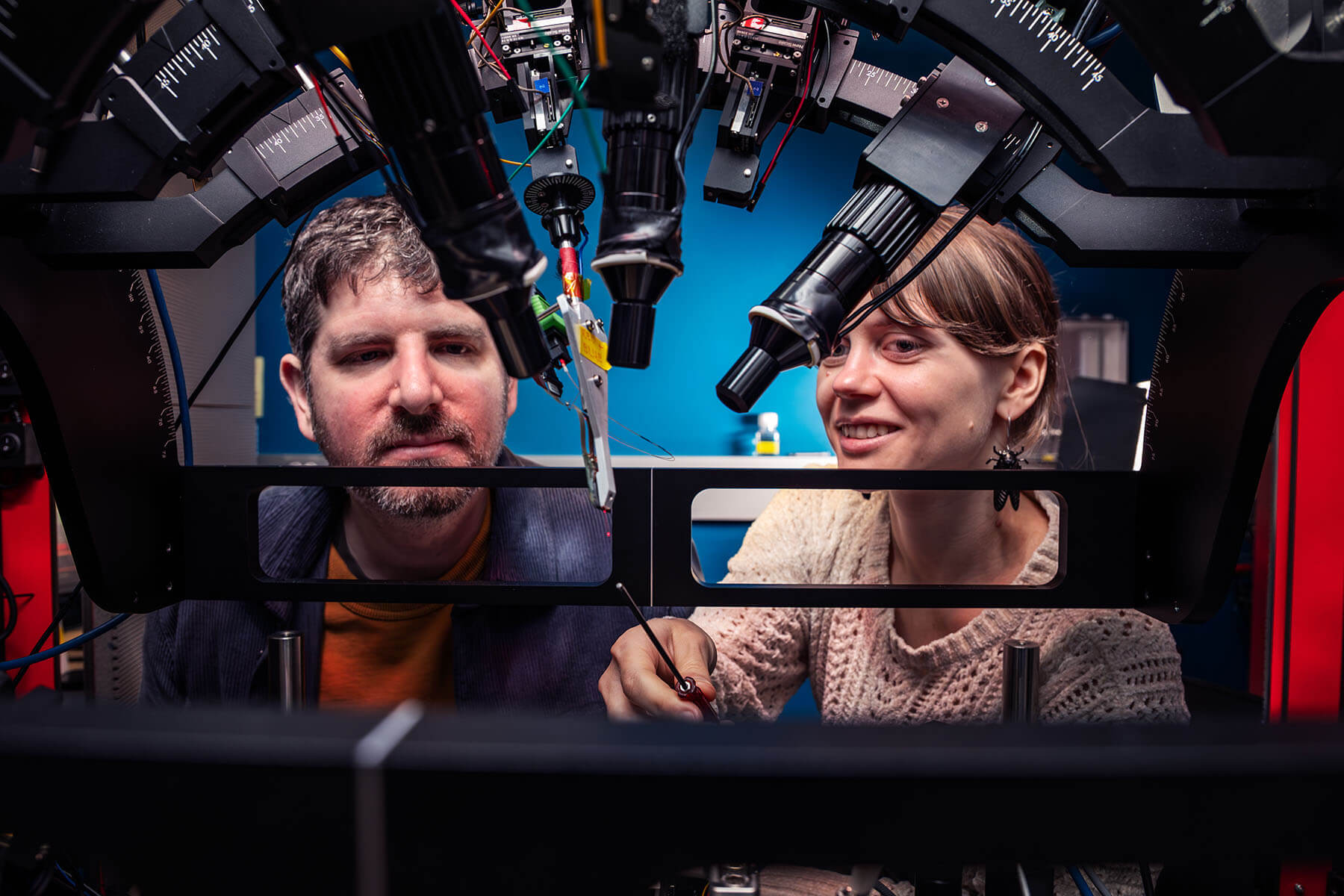
Sue Su (right), Allen Institute neural dynamics scientist,working with researchers Sam Tuggle (left) and Ella Hilton-VanOsdall(center) at the Allen Institute. (Credit: Erik Dinnel)

For a long time, scientists believed the LC (called the blue place because it contains neuromelanin, a dark bluish pigment formed by dopamine and NE) worked like a single loudspeaker, indiscriminately broadcasting a uniform NE signal throughout the brain, triggering it to release this important neurotransmitter. But in a new study published in Nature, Allen Institute scientists used a combination of brain imaging, neural recordings, genetic tools, and behavioral experiments in mice to illustrate that it actually transmits multiple signals through distinct routes with great precision depending on what the mouse experiences.

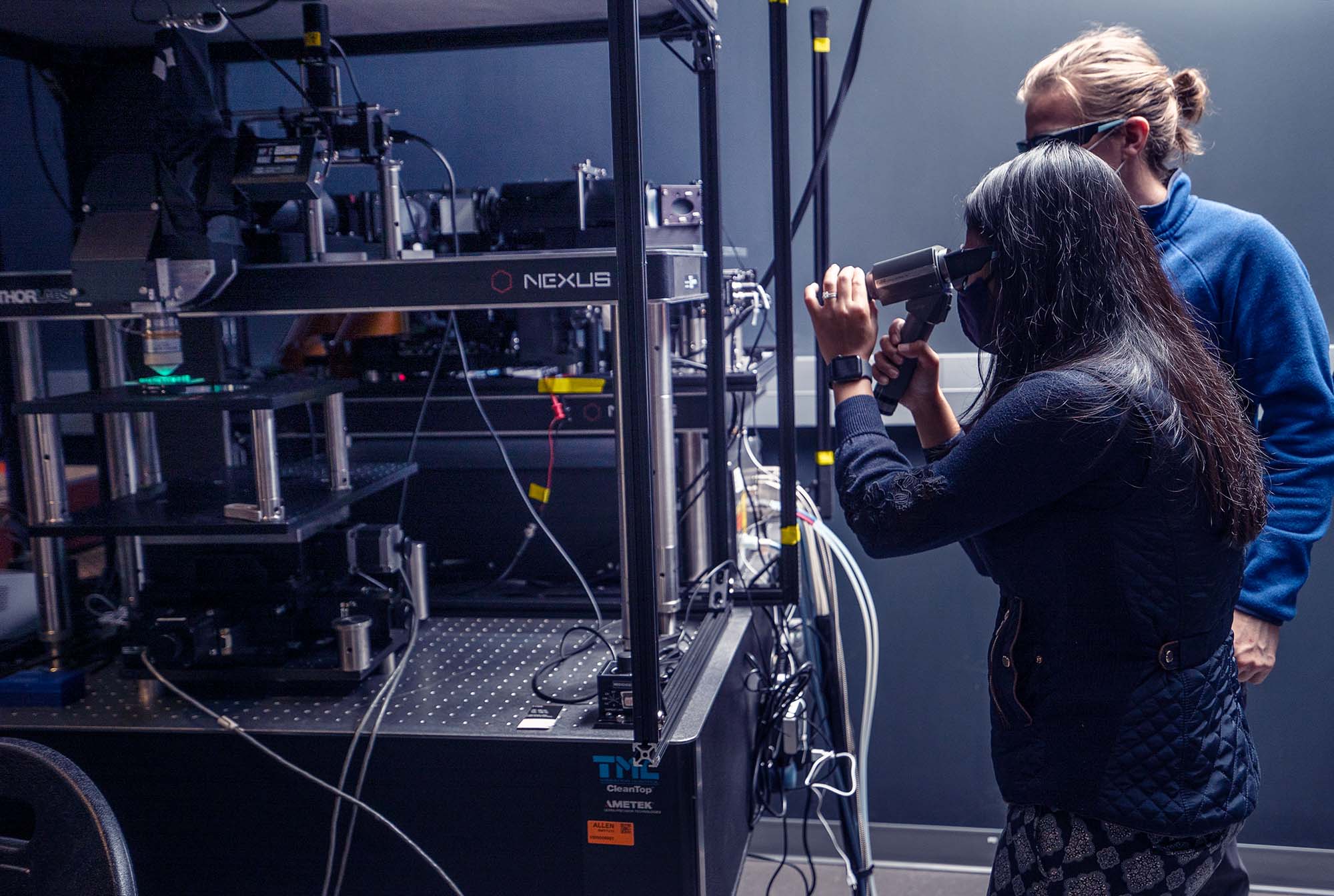
The ExA-SPIM microscope was used in this study to image brain regions with extreme precision.

‍

tailored messages instead of one loudspeaker/

In their mapping of LC neurons, researchers discovered that they sent their connections—and therefore also the signals that activate the release of norepinephrine—to specific “addresses” elsewhere in the brain. Neurons in the upper (dorsal) part of the LC sent their connections mainly to the cerebral cortex and forebrain, while neurons in the lower (ventral) area communicated with the brainstem and spinal cord.

“The findings suggest the brain's norepinephrine system is far more like a targeted postal network than a foghorn,” said Karel Svoboda, director of Neural Dynamics at the Allen Institute and study co-author.

why this matters/

NE is crucial for regulating mood and attention; therefore, it is the target of common medications for treating depression, anxiety, and ADHD. LC neurons are also among the first to degenerate in Alzheimer’s disease, so the research could have important implications for treating these disorders.

With new information about the precise organization of LC neurons, future therapies could also target specific regions, rather than flood the entire system and affect some circuits positively and others negatively.

The research was supported by the National Institutes of Health’s Brain Research Through Advancing Innovative Neurotechnologies® Initiative, or The BRAIN Initiative®.
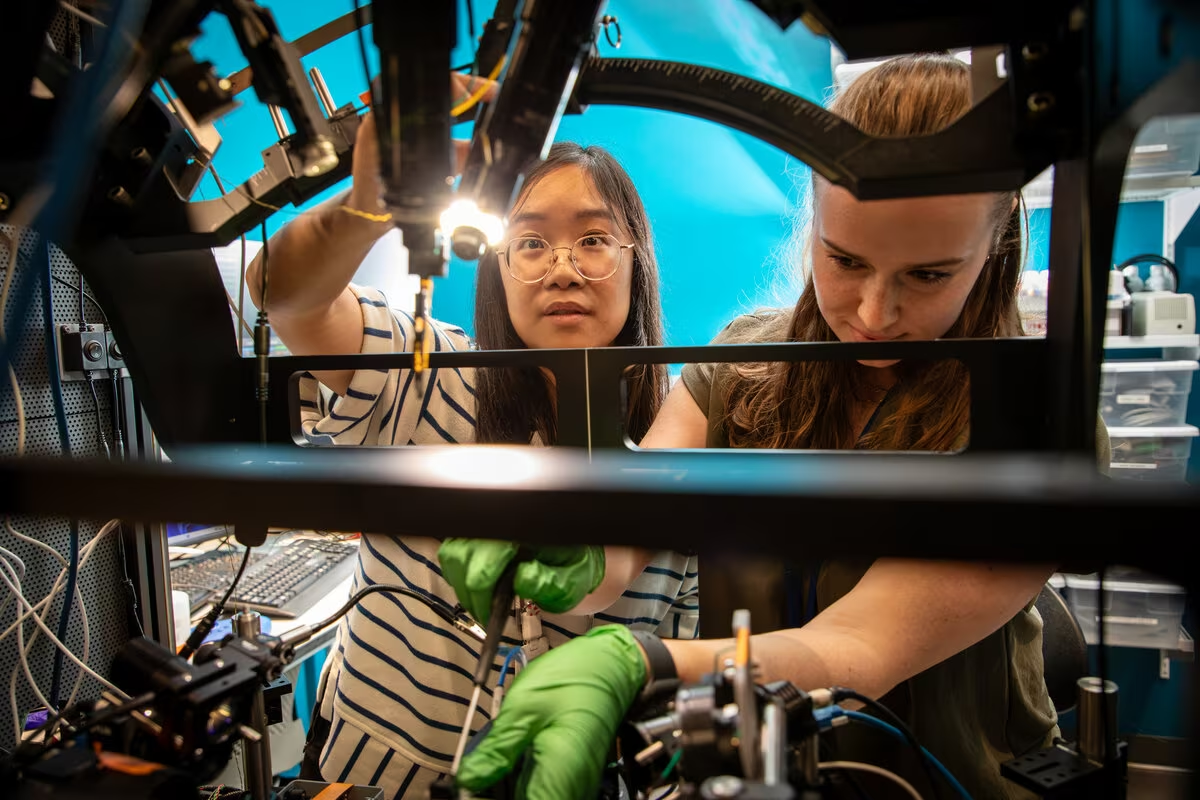
Sue Su (left) works with Ella Hilton-VanOsdall at the Allen Institute. (Credit: Erik Dinnel)

the learning cells/

Researchers also found the LC neurons leading to the cortex carried learning signals. When the mice performed a decision-making task, such as switching choices after a negative outcome, dorsal LC neurons became active. In contrast, ventral LC neurons showed elevated firing just before mice would ignore cues that might offer potential rewards.

“What emerged was a clear map: neurons in the dorsal LC that send signals upward to the cortex are involved in learning, whereas neurons in the ventral region projecting downward to the brainstem and spinal cord govern whether animals engage with their environment at all,” said Svoboda. “We also showed that these anatomical differences are mirrored by distinct gene expression patterns.”

longest axon ever discovered/

In the study, researchers precisely mapped the mouse brain, including whole-brain imaging of almost 35,000 neurons and genetic profiling of nearly 400,000 cells, plus complete reconstruction of some of the brain’s most complex cells. Scientists also discovered incredible physical characteristics of LC neurons. They found that the neurons have axons—the long projections of a nerve cell that carry signals to other cells—averaging about 35 centimeters in length. One axon measured 70.32 centimeters, leading to the longest single neuron ever measured in a mouse.  
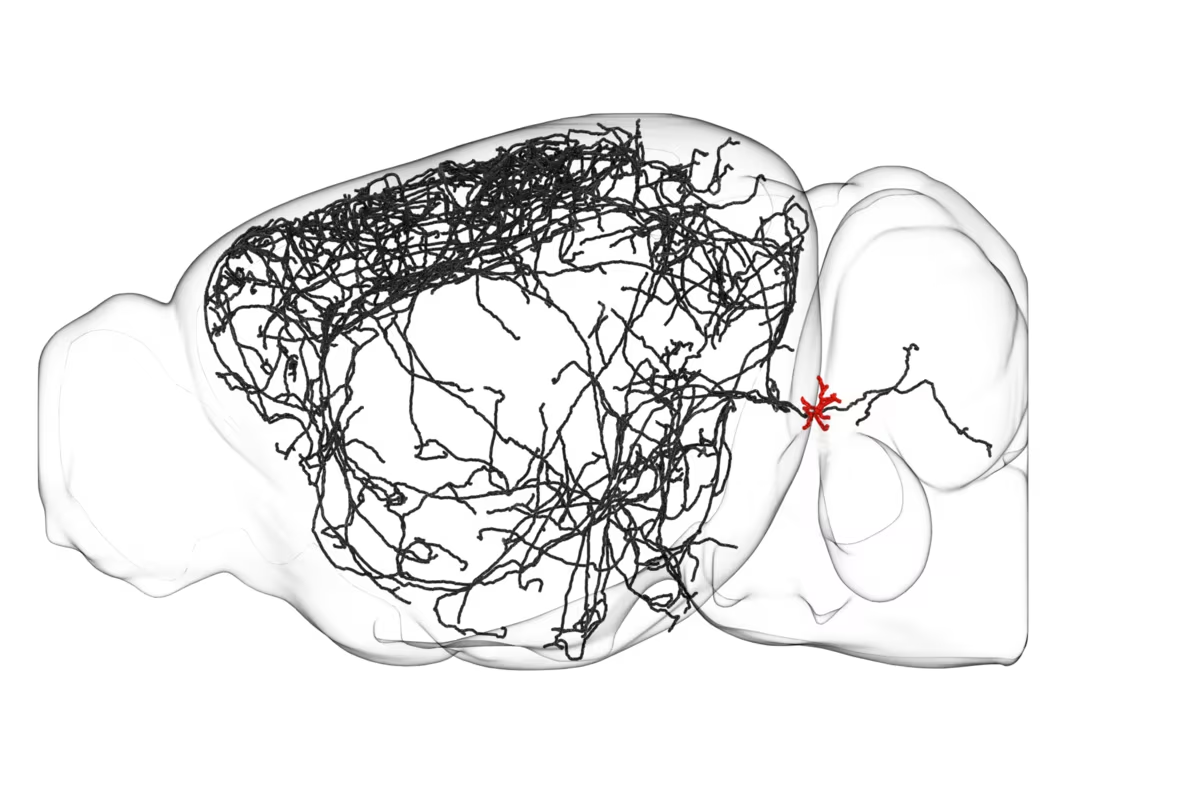
Reconstruction of 70 cm LC neuron in mouse, the longest ever measured.

“This neuron, like many others that we studied, supplies NE to a very large volume ofthe cerebral cortex. For the brain, this is highly unusual. Most neurons aremore specific in their targets,” said Jeremiah Cohen, scientist at the Allen Institute and study co-author. “But this neuron doesn't release NE everywhere. It ignores the cerebellum, brainstem, and spinal cord.”

Additionally, researchers drew parallels between NE and dopamine, the brain’s other major chemical messenger, which carries signals to the basal ganglia, a region involved in habit formation. They believe that these two systems work together as a learning platform, allowing the brain to learn multiple complex and abstract concepts simultaneously.

By mapping the contours and architecture of the brain’s mysterious “blue place,” this new research deepens our understanding of neuronal communications and learning in the animal brain and may one day help scientists develop more targeted and precise treatments for neurological conditions in humans.

Citations
Zhixiao Su, Polina Kosillo, Kanghoon Jung, Shuonan Chen, Mathew T. Summers, Alex Piet, et al.. "Topographic structure and function of locus coeruleus noradrenaline neuronsTopographic structure and function of locus coeruleus noradrenaline neurons". nature, September 16, 2026. Accessed: September 16, 2026.

about the allen institute

Allen Institute is a 501(c)(3) tax exempt organization dedicated to accelerating science for a healthier world. Through large-scale, multidisciplinary research initiatives, the Institute generates foundational knowledge, data, tools, and models that are shared openly with the world to advance our understanding of life and health. Founded by Jody Allen and the late Paul G. Allen, Allen Institute is supported primarily by Fund for Science and Technology.
related news

all news
news
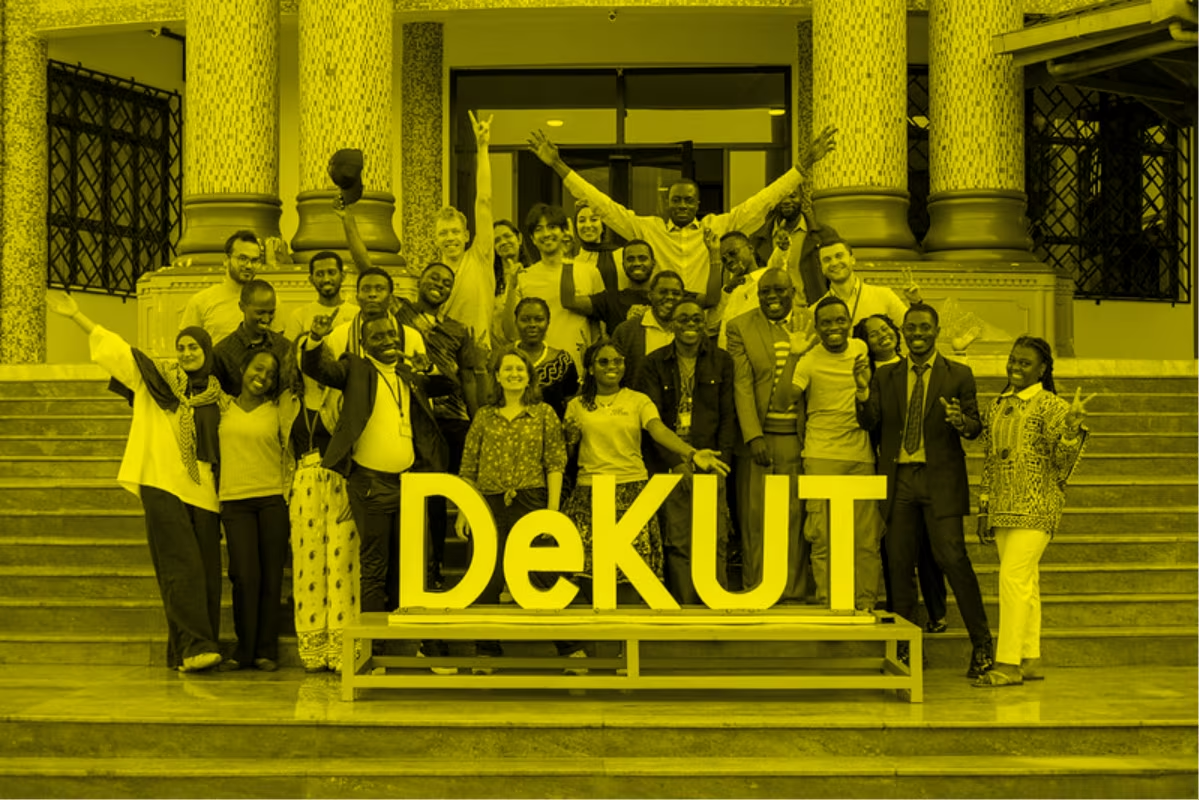
paying it forward: spreading science throughout Africa
A program supported by the Allen Institute is catalyzing learning, community, and helping to nurture the next generation of scientists
news
finding Alzheimer's targets, one cell type at a time
How Shanahan Fellow Iris Stone used her Alzheimer's research and business savvy to chart a path into biotech
news
Karel Svoboda elected to the Washington State Academy of Sciences
Svoboda’s work has advanced our understanding of the neural mechanisms of learning, movement, and complex brain behavior
news
Neuropixels Opto sheds new light into deepest regions of the brain
A single tool measures and manipulates brain cell communication and democratizes advanced neuroscience
news
scientists develop new way to “listen in” on the brain’s hidden language
Paradigm-shifting technology is changing how researchers do neuroscience
news
Allen Institute scientists igniting curiosity of young minds
Students at the University of Puget sound are gaining valuable real-world insight and training using the Allen Institute's cutting edge resources and...
we acceleratedevelopcatalyzeimpact

science done differently. shared openly.

explore our accelerators

brain science

Mapping every cell, connection, and circuit in the brain—openly shared with the world.

cell science

Decoding how cells become tissues, then programming that knowledge into powerful new research tools.

neural dynamics

Revealing the brain's hidden algorithms that transform neural activity into real-world behavior.

immunology

Creating the deepest open reference for the healthy human immune system ever built.

synthetic biology

Engineering cells to record their own histories, transforming how we understand disease over time.

ai biodesign

Advancing evolution to explore biology’s full design space and advance human health

Brain Health

Accelerating human brain research and new therapeutic strategies for neurological conditions

research

Big questions, open answers, and science built to be shared.

education

Inspiring the next generation of scientists through open science resources.

impact

Our science is empowering researchers and advancing health worldwide.
advancing science through open, collaborative research
Get the allen institute newsletter
Stay informed on the latest breakthroughs in neuroscience, bioscience, and AI-driven research.
allen institute
impactpeople & teamscareers & opportunitiesalumnihistory & founder
science resources
allencell.orgallenimmunology.orgallenneuraldynamics.orgbrain-bican.orgbrain-map.orgmicrons-explorer.org
research
brain sciencecell scienceneural dynamicsimmunologysynthetic biologyai biodesignbrain healthpublicationsscience resources
quick links
newseventsopen sciencepodcasthuman brain donationvisit uscontact
education
science educationfield tripsprofessional developmenteducation resources
follow us/

allen institute, 615 Westlake Ave North, Seattle, WA 98109 +12065487055

© 0000 allen institute. all rights reserved.
privacy policyterms of usecitation policyemployee portalpolicy & compliancecookie settings