impact
about
our story
explore our impact
careers and opportunities
join us
open science
sharing science to speed discovery
open science week
celebrating open science
team science
people & teams
discovery is a team effort
advisors
their input shapes our science
board of directors
they help us fulfill our mission
shanahan foundation fellowship
at the interface of data and neuroscience
studio d3 fellowship
contribute bold ideas to redefine discovery
next generation leaders
fostering emerging leaders in bioscience
research
overview
our approach
science at the scale of greatest impact
additional programs
studio d3
data driven discovery
neurobiology of action
revealing the mechanisms behind movement and learning
science accelerators
brain science
building a blueprint of the brain
cell science
understanding how cells become organs
neural dynamics
revealing the brain’s hidden algorithms
immunology
mapping the immune system
synthetic biology
designing biology to advance health
brain health
accelerating human brain research
ai biodesign
unlocking new frontiers of bioscience
education
overview
science education
science is for everyone
open science
sharing science speeds discovery
engagement
education resources
real science. real skills.
field trips
experience science where it happens
educator development
empowering educators
news
overview
all news
explore the latest news
podcast
the human stories behind discovery
sign up for our newsletter
stay connected to our science
events
overview
all events
public engagement, workshops, seminars and more
conferences
connect with us
science resources
explore
publications
explore our publications
open science
sharing science to speed discovery
science resources
allencell.org
allenimmunology.org
allenneuraldynamics.org
brain-bican.org
brain-map.org
microns-explorer.org
impact
back to menu
overview
our story
explore our impact
careers and opportunities
join us
open science
sharing science to speed discovery
open science week
celebrating open science
team science
people & teams
discovery is a team effort
advisors
their input shapes our science
board of directors
they help us fulfill our mission
shanahan foundation fellowship
at the interface of data and neuroscience
studio d3 fellowship
contributing bold ideas to redefine discovery
next generation leaders
fostering emerging leaders in bioscience
research
back to menu
overview
our approach
science at the scale of greatest impact
publications
explore our publications
open science
sharing science to speed discovery
science accelerators
brain science
building a blueprint of the brain
cell science
understanding how cells become organs
neural dynamics
revealing the brain’s hidden algorithms
immunology
creating the ultimate immune system reference
synthetic biology
seattle hub for synthetic biology
brain health
accelerating human brain research and disease therapeutics
ai biodesign
unlocking new frontiers of bioscience
additional programs
studio d3
data driven discovery
neurobiology of action
revealing the mechanisms behind movement and learning
education
back to menu
overview
science education
science is for everyone
open science
sharing science speeds discovery
engagement
education resources
real science. real skills.
field trips
experience science where it happens
educator development
empowering educators
news
back to menu
overview
all news
explore the latest news
podcast
the human stories behind discovery
newsletter
stay connected to our science
events
back to menu
overview
all events
public engagement, workshops, seminars and more
conferences
connect with us
science resources
back to menu
science resources
allencell.org
allenimmunology.org
allenneuraldynamics.org
brain-bican.org
brain-map.org
microns-explorer.org
explore
publications
explore our publications
open science
sharing science to speed discovery
search
news

mapping the motor cortex – where movement begins

New study provides the most detailed look at the brain region that controls movement and could help fight diseases like ALS and dementia

September 23, 2026
0 min read
Diagram of a mouse brain composed of branching fibers
share/
Diagram shows subcortical and intracortical connectivity in the mouse brain (credit: Friedrich Miescher Institute for Biomedical Research, University of Basel)
A new study provides the most detailed look at the brain region that controls movement and could help fight diseases like ALS and dementia

in this article

table of contents will display on published page only
set h2 to populate the table of contents here

authors

Ed Muir
Sr. Communications Specialist

The brain’s motor cortex is as important as it sounds: it plans, controls, and executes voluntary muscle movements. Whether you’re playing catch, writing your name, or chewing food, it all points back to this region and its connections to other parts of the brain.  

Yet despite extensive study, scientists still haven’t created a detailed map of how the mouse motor cortex is internally organized. Most brain atlases have divided it into two general regions—primary and secondary—based on differences in connectivity, but this doesn’t provide a detailed or consistent picture.  

A new study by researchers at the University of Basel, Friedrich Miescher Institute for Biomedical Research, and the Allen Institute paints a more precise portrait of the mouse motor cortex. Scientists mapped this critical area into 16 distinct subregions, each with its own pattern of connections. Their results could have important implications for understanding diseases that affect the motor cortex, such as amyotrophic lateral sclerosis (ALS) and frontotemporal dementia (FTD).
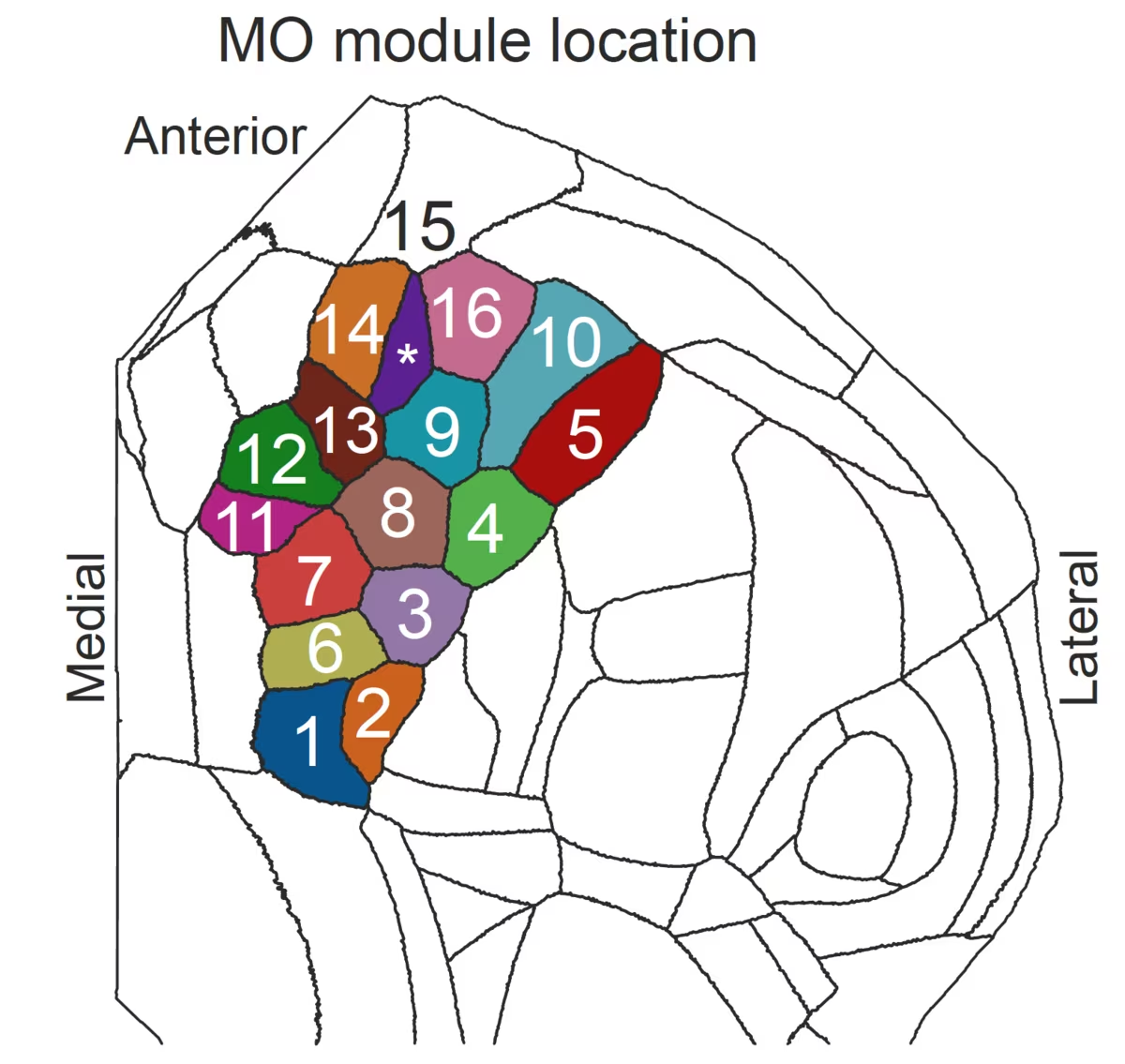
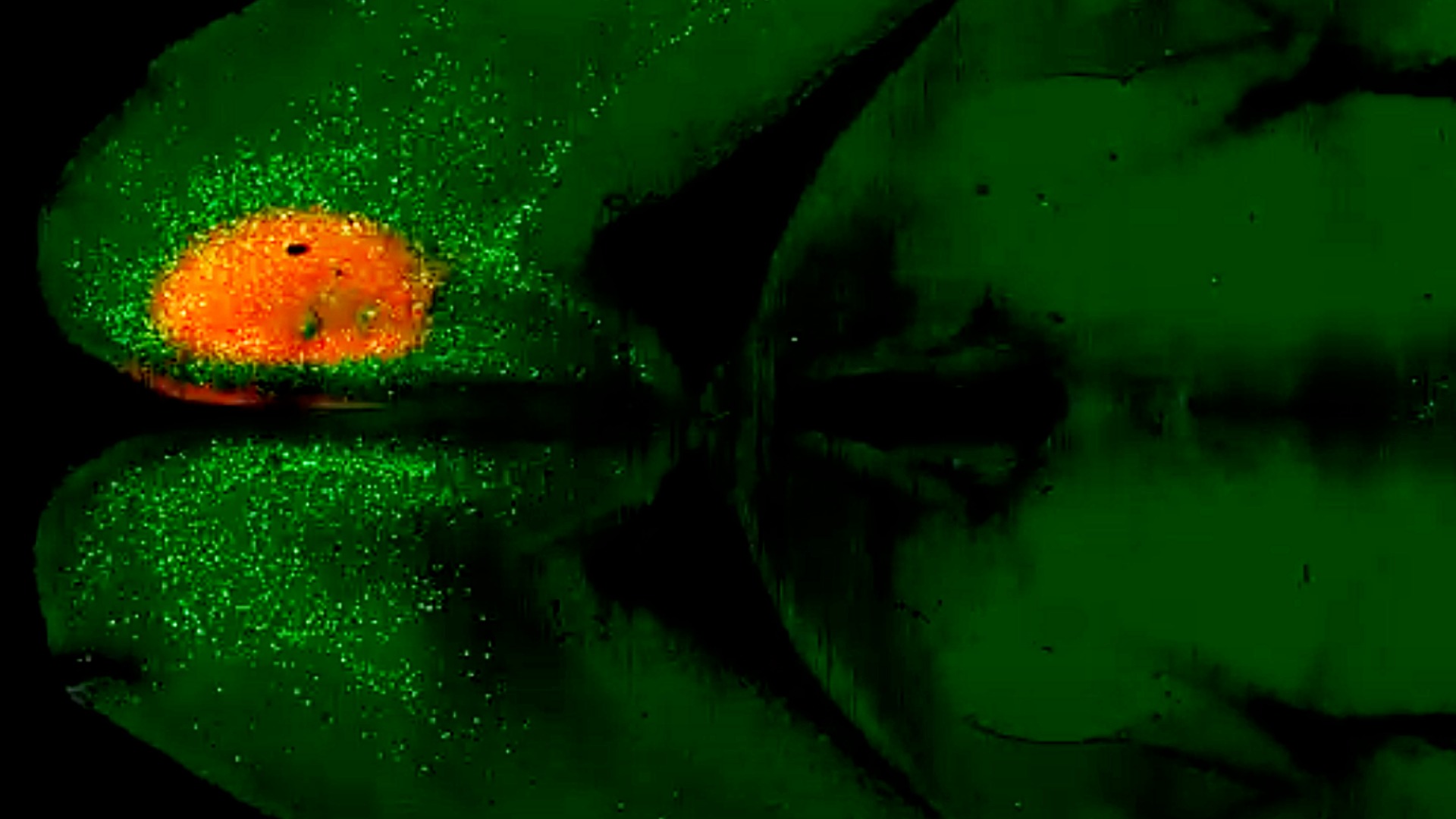
Location of the identified motor cortex subregions displayed on the flattened isocortex view (credit: Friedrich Miescher Institute for Biomedical Research, University of Basel)  

“Understanding the precise wiring of the brain is essential for developing effective treatments for brain diseases. Here, our Swiss collaborators’ expert charting of the functionally specific motor cortex circuit, combined with the Allen Institute’s foundational connectivity atlas, resulted in such a precision map that drives movement control,” says Hongkui Zeng, executive vice president and director of Brain Science at the Allen Institute and a senior author on the study.  

motor cortex’s geography in unprecedented detail

Researchers studied 547 experiments that tracked how nerve signals travel out of the motor cortex and into other parts of the brain. They looked at where each tiny section of the motor cortex sends its "messages"—to regions involved in movement, sensory information, and decision-making. By grouping areas that send similar signals, they found 16 distinct subregions, each responsible for something slightly different. These areas are arranged in three rows, organized in two main ways:

  1. Moving from back to front separates areas connected to sensory information (like touch and body position) from areas connected to planning and decision-making.
  1. Moving sideways reveals areas linked to different body parts—from the trunk and limbs on one side, to the face and mouth on the other.

Researchers also confirmed their map using two other methods: tracing individual neurons and looking at what types of brain cells were present. All three methods pointed to the same 16-subregion structure.
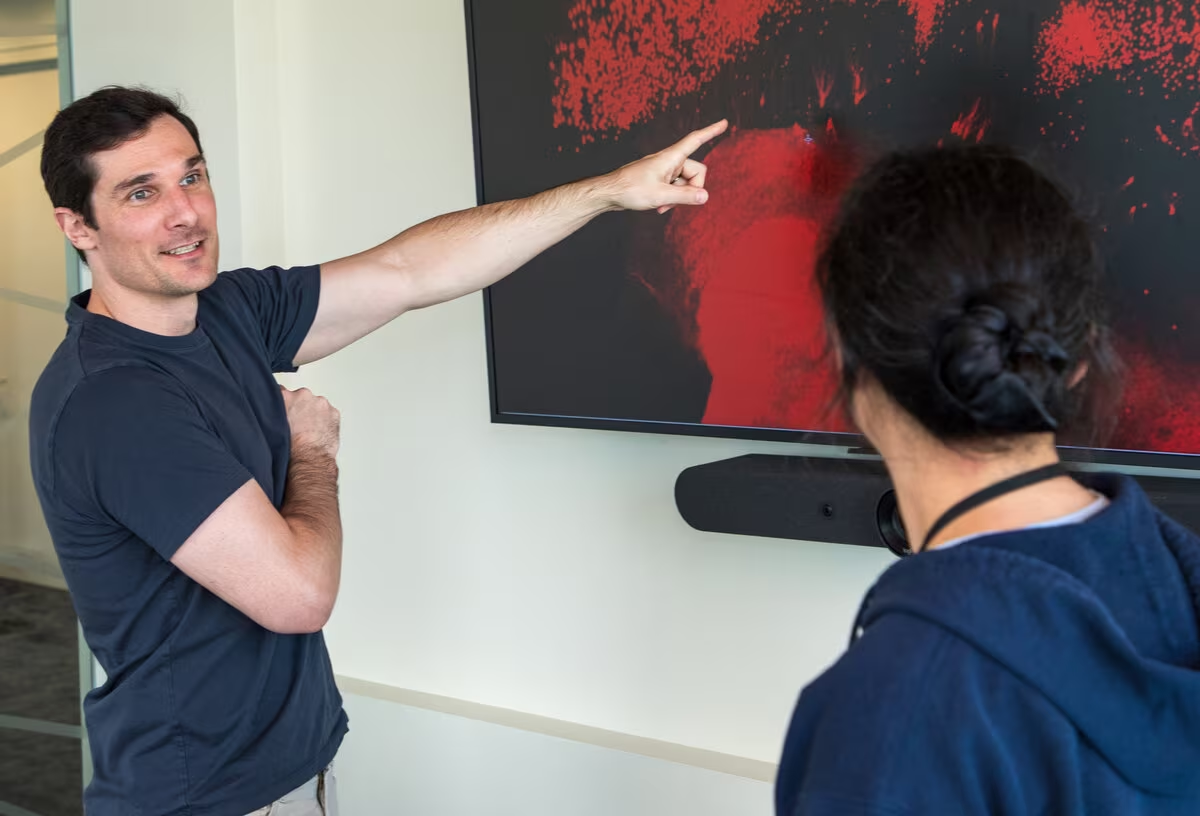
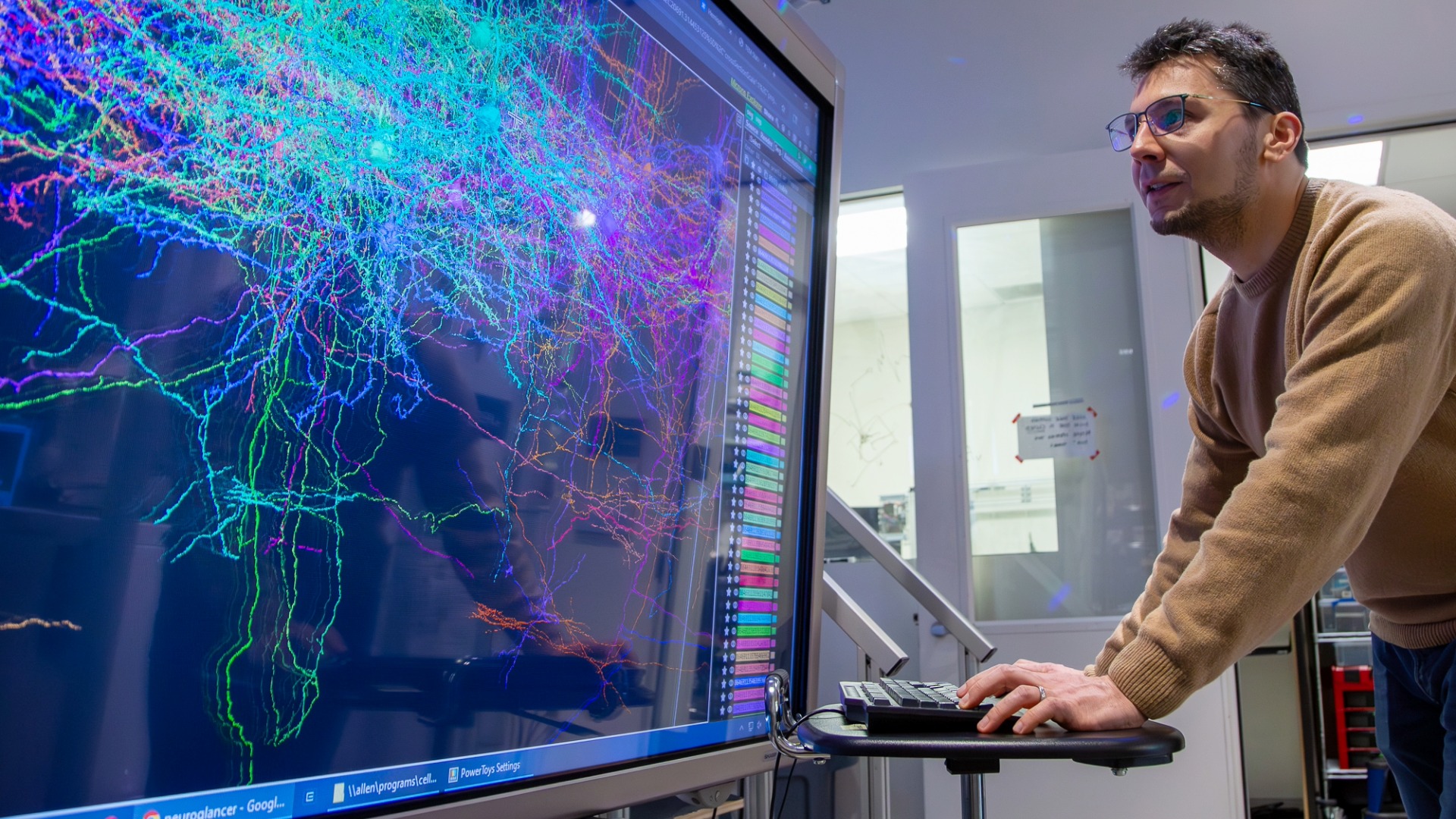
Scientist Nicholas Lusk and assistant investigator Shenqin Yao examine a 3D rendering of a transgenic mouse line showing thalamus-projecting cortical neurons (credit: Allen Institute/Jerry Petersen)

Additionally, scientists discovered that the primary motor cortex and secondary motor cortex work in tandem as they send signals to the brainstem and spinal cord, which challenges previous assumptions that they were arranged in more of a hierarchy.

“The most fascinating finding is the extremely high precision with which the motor cortical modules interact with the output regions and that the modules communicate to the rest of the cortex using the same wiring logic,” says Silvia Arber, professor of neurobiology at the University of Basel and the Friedrich Miescher Institute for Biomedical Research, and lead author of the study.

Scientists used the Allen Institute’s Mouse Brain Atlas for their research to leverage the anatomical databases and workflows needed for this high-precision work. The map is also available for researchers around the world through an online tool called BrainGlobe, which allows scientists to work from the same reference point.  

“Researchers interested in the cortex now have an accessible unified map to align their data to, and this will accelerate progress in the field,” says Antonio Falasconi, one of the study’s first authors. “Bringing together vast datasets describing the brain's wiring and its cellular makeup, we discovered a valuable and much more precise underlying blueprint of motor cortex organization,” says Harsh Kanodia, another first author of this study.

practical implications

Amyotrophic lateral sclerosis (ALS) and frontotemporal dementia (FTD) both affect the motor cortex—ALS by destroying cells that send signals to the muscles, FTD by damaging the frontal part of the brain that dictates personality, behavior, and language. However, scientists don’t fully understand why some cells are targeted and others are not. This new detailed map could change that. Researchers can now look at which of the 16 subregions has vulnerable cells, while also tracking how disease spreads through connected regions. Future research could also look into how the 16-subregion system relates to the cortical organization in other species, including humans.

Citations
No items found.

about the allen institute

Allen Institute is a 501(c)(3) tax exempt organization dedicated to accelerating science for a healthier world. Through large-scale, multidisciplinary research initiatives, the Institute generates foundational knowledge, data, tools, and models that are shared openly with the world to advance our understanding of life and health. Founded by Jody Allen and the late Paul G. Allen, Allen Institute is supported primarily by Fund for Science and Technology.

related news

all news
news
genetics and wiring play a role in Alzheimer’s disease
UC San Francisco study that used Allen Institute’s Human Brain Atlas could lead to better treatments and therapies
news
ketamine increases neuroplasticity in female mice but not in males
The surprising finding could help scientists develop better treatments for depression
science images
SciShots: amber waves of brain
New video illustrates how neural activity in a mouse brain travels in aesthetically pleasing waves and spirals
news
developing AI models that learn like a real brain
Shanahan Fellow Denis Turcu is using the world's most detailed brain map to rewrite how machines learn
news
“computational crystal ball” helps predict cell behavior
New technology could lead to better treatments for cancer by allowing scientists to perform virtual experiments
news
mind trip: how psilocybin changes the brain
New research may help improve psychedelic therapy for neuropsychiatric disorders
we acceleratedevelopcatalyzeimpact

science done differently. shared openly.

explore our accelerators

brain science

Mapping every cell, connection, and circuit in the brain—openly shared with the world.

cell science

Decoding how cells become tissues, then programming that knowledge into powerful new research tools.

neural dynamics

Revealing the brain's hidden algorithms that transform neural activity into real-world behavior.

immunology

Creating the deepest open reference for the healthy human immune system ever built.

synthetic biology

Engineering cells to record their own histories, transforming how we understand disease over time.

ai biodesign

Advancing evolution to explore biology’s full design space and advance human health

Brain Health

Accelerating human brain research and new therapeutic strategies for neurological conditions

research

Big questions, open answers, and science built to be shared.

education

Inspiring the next generation of scientists through open science resources.

impact

Our science is empowering researchers and advancing health worldwide.
advancing science through open, collaborative research
Get the allen institute newsletter
Stay informed on the latest breakthroughs in neuroscience, bioscience, and AI-driven research.
allen institute
impactpeople & teamscareers & opportunitiesalumnihistory & founder
science resources
allencell.orgallenimmunology.orgallenneuraldynamics.orgbrain-bican.orgbrain-map.orgmicrons-explorer.org
research
brain sciencecell scienceneural dynamicsimmunologysynthetic biologyai biodesignbrain healthpublicationsscience resources
quick links
newseventsopen sciencepodcasthuman brain donationvisit uscontact
education
science educationfield tripsprofessional developmenteducation resources
follow us/

allen institute, 615 Westlake Ave North, Seattle, WA 98109 +12065487055

© 0000 allen institute. all rights reserved.
privacy policyterms of usecitation policyemployee portalpolicy & compliancecookie settings