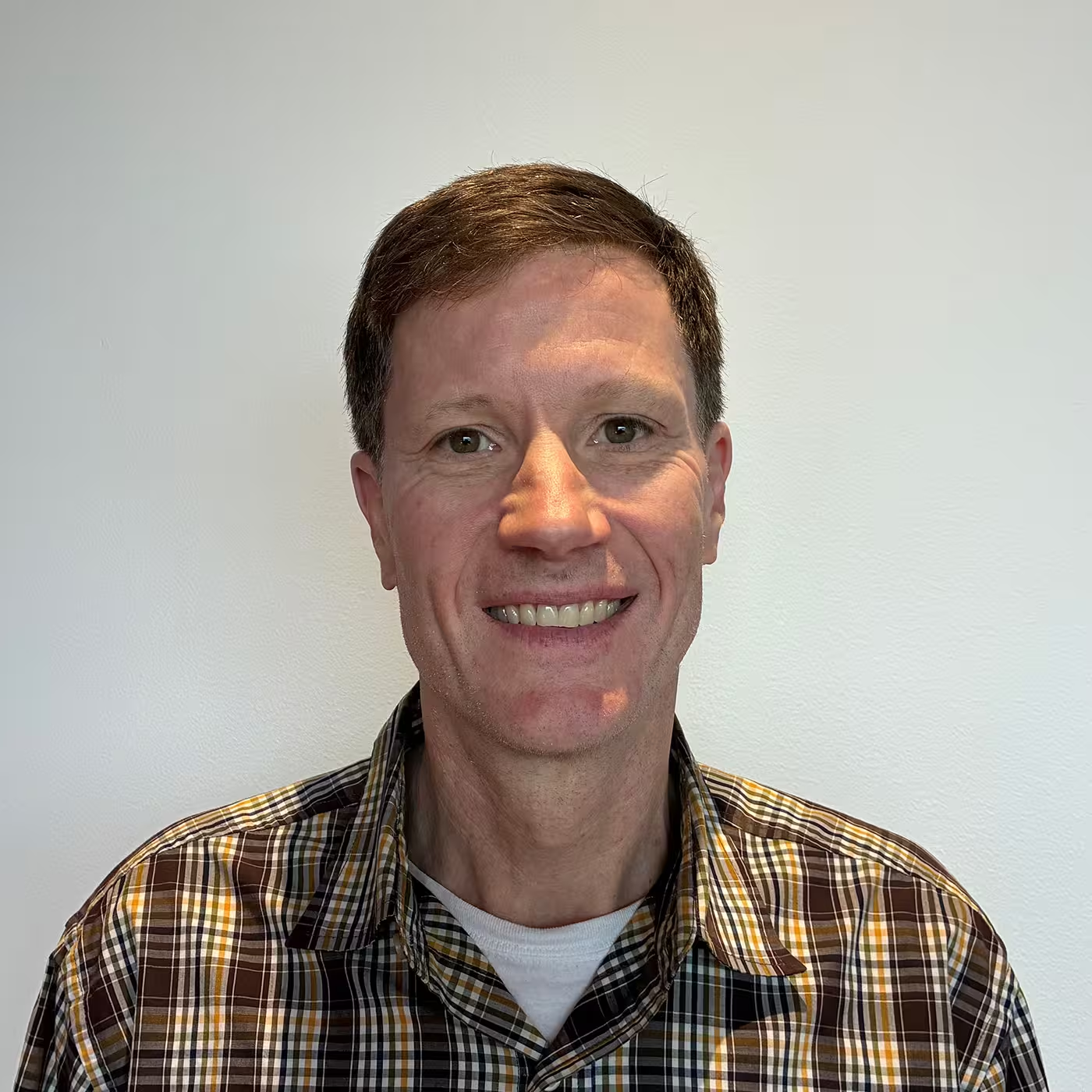
Growing up in the Eastern European country of Romania, Denis Turcu knew early on what he wanted to be. Or so, he thought.
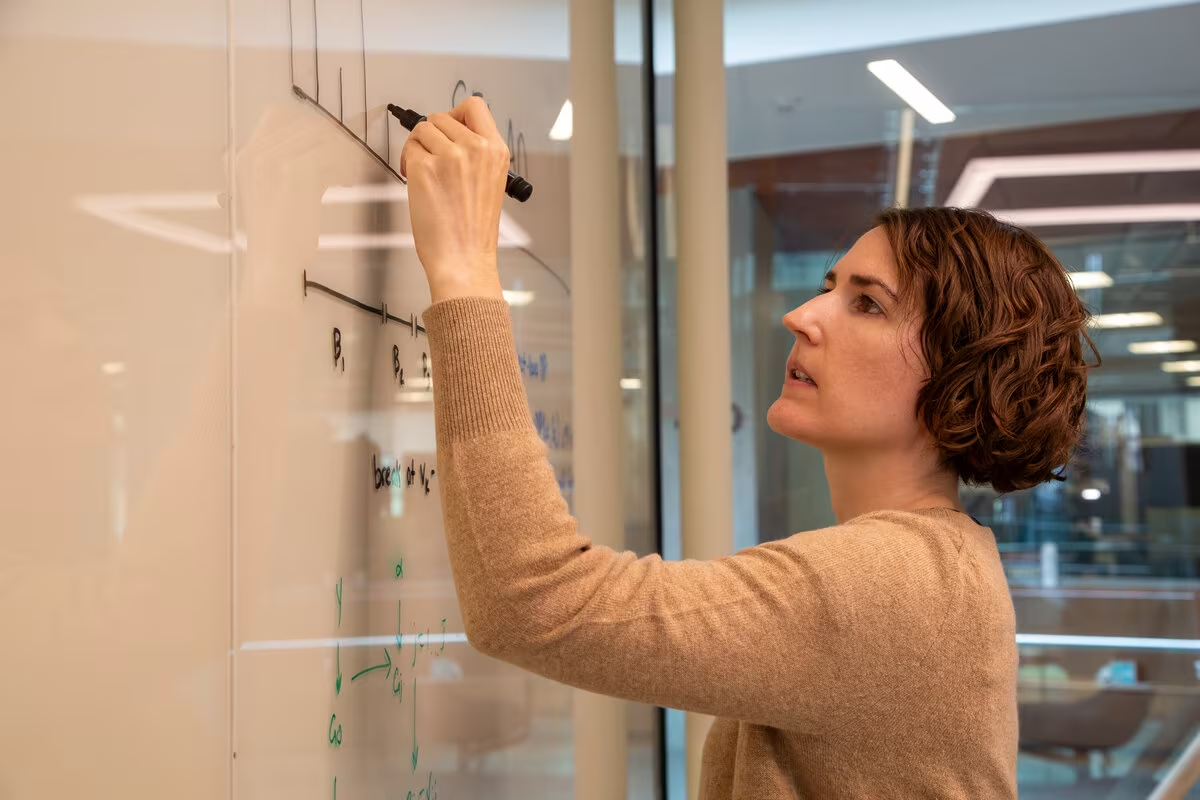
He entered middle school math and science competitions, spurred by his father, a math teacher. Later as a student at Harvard, where he double majored in physics and math with a computer science minor - the idea was that Turcu would pursue a Ph.D. in theoretical physics and continue in academia. But in the spring of his junior year, a computational neuroscience class by Prof. Haim Sompolinsky that he took to fulfill a life sciences requirement showed him something he hadn't expected: the same mathematical tools he had built up in physics could be used on the brain itself.
understanding the brain through math and data science
“I was lucky because this class was only offered every other year,” explains Turcu, Ph.D., a Shanahan Fellow focusing on computational neuroscience at the Allen Institute. “I found the applicability of neuroscience very appealing. All of a sudden, I could see how to apply my skills that I developed through physics, math, and computer science to study the brain.”
Changing direction late in college, Turcu accepted and then turned down a job offer in data science to pursue a Ph.D. in theoretical neuroscience at Columbia University, a path that ultimately led him to the Allen Institute as a Shanahan Fellow.
“The fellowship offered an incredible opportunity to work with investigators whose research I was already following, so I was eager to work with these leaders in the field of neuroscience,” said Turcu. “Given my aspiration to lead my own lab in academia, this fellowship was the right next step after my Ph.D.”
The mentorship, resources, and exposure to a diverse research community provided by the Shanahan Fellowship have enriched Turcu’s experience and exceeded his expectations. He’s taking full advantage of connections imbedded in the program to boost his work both at the Allen Institute and projects outside the institute.
building AI systems that learn like the brain

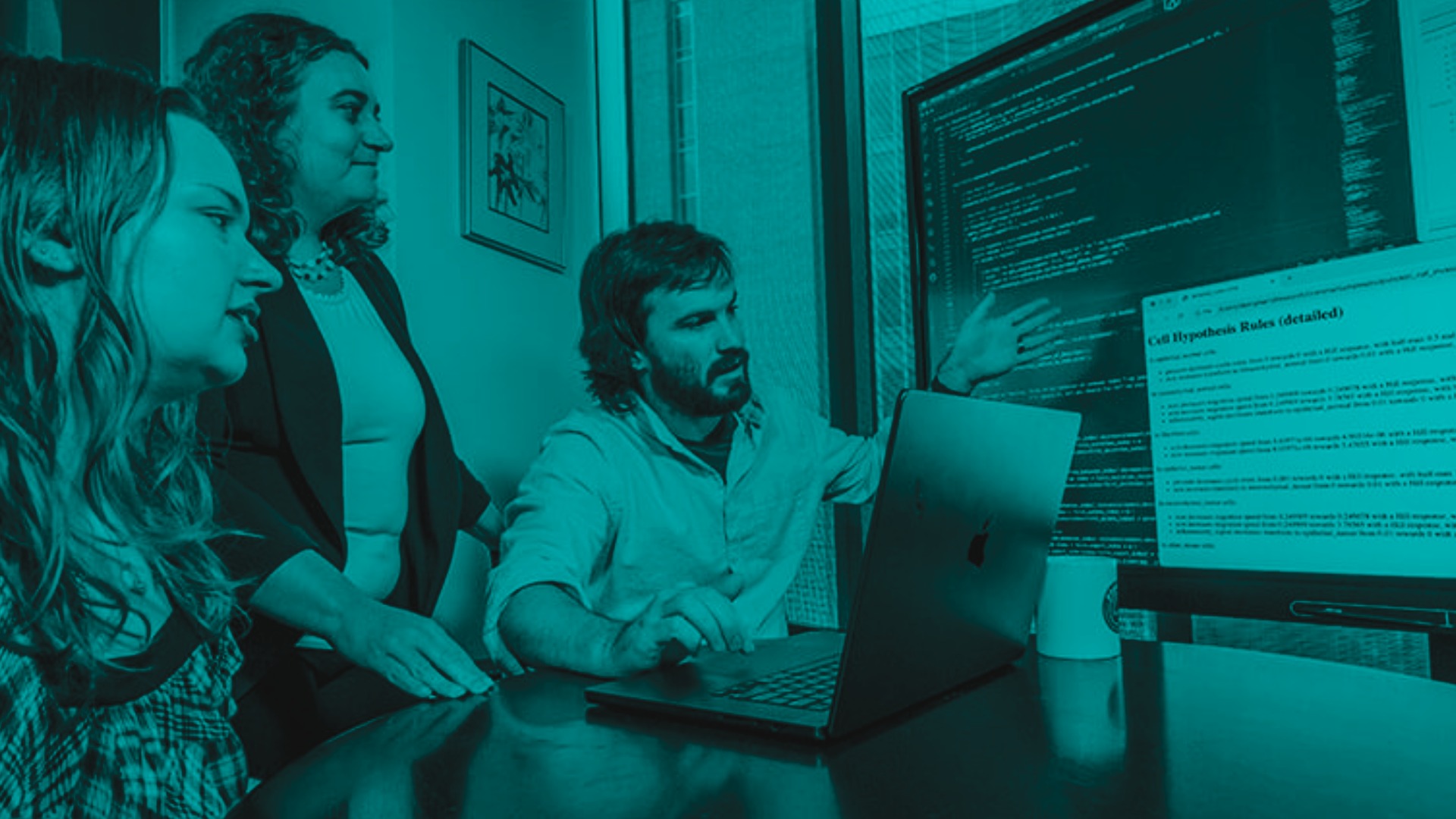
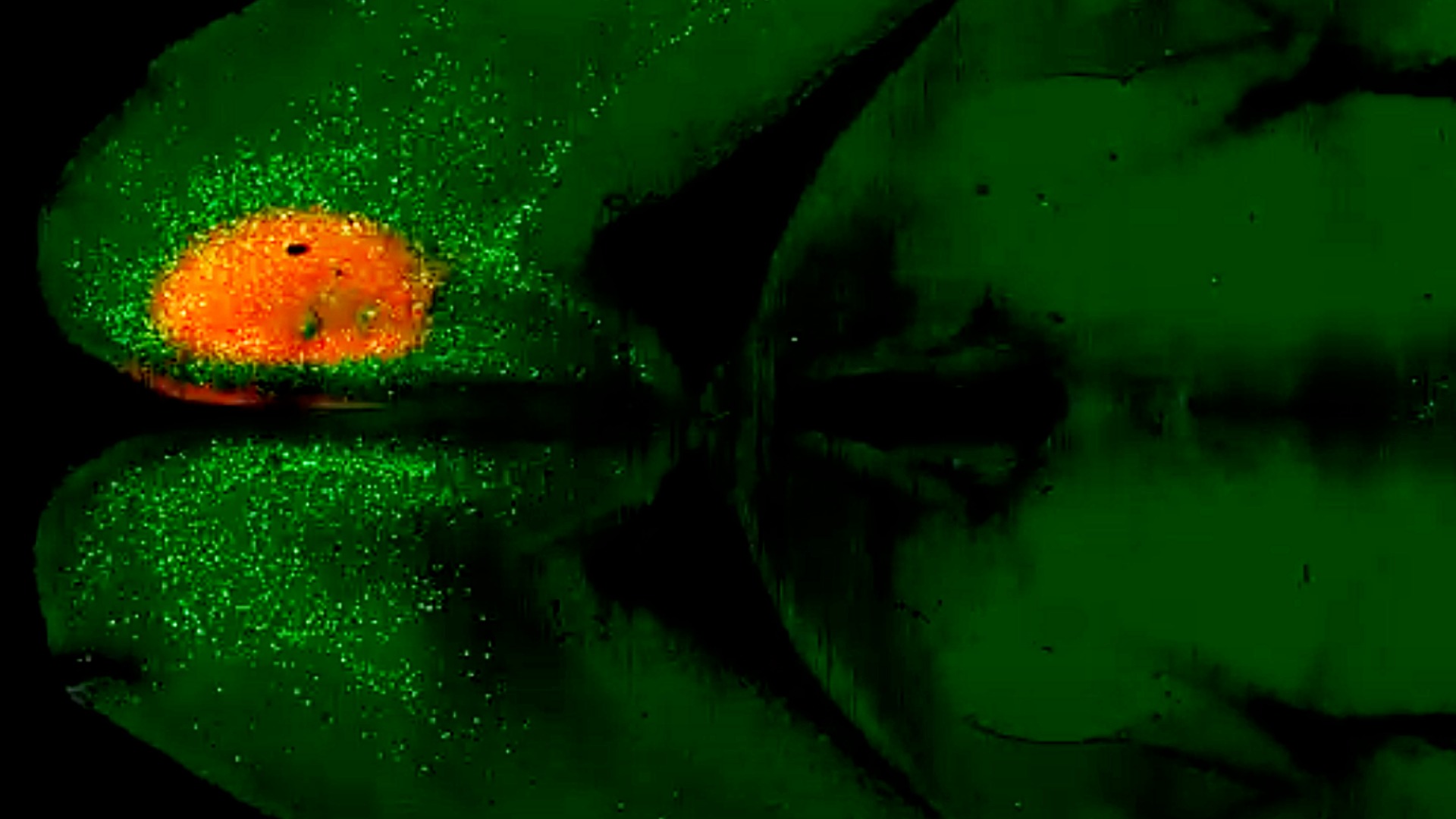

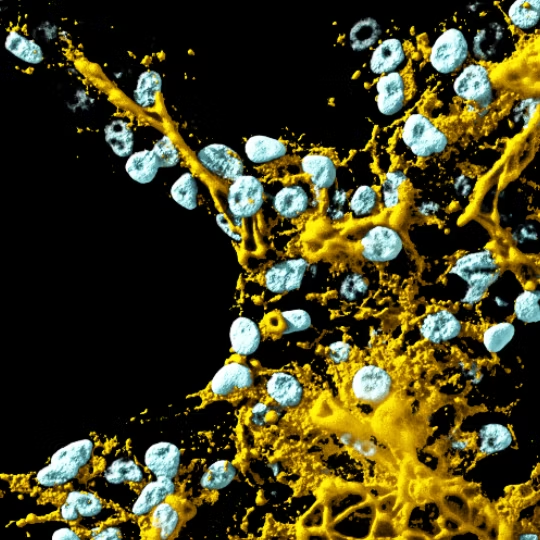
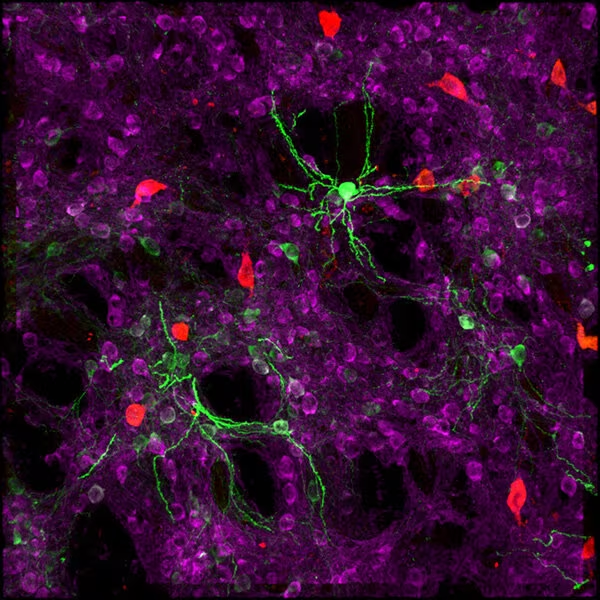
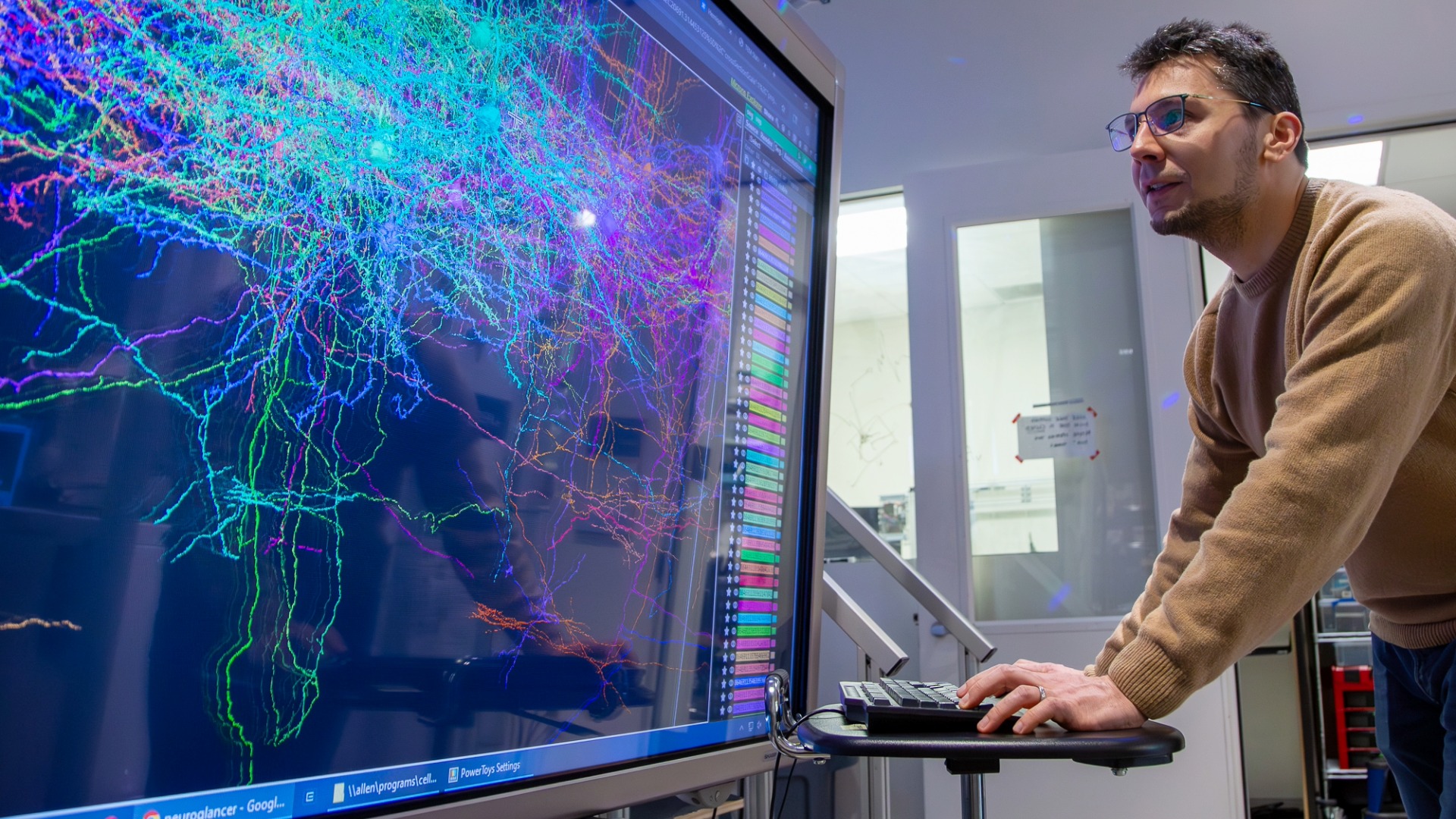
Right now, Turcu is helping develop a new way for computational models to learn, working alongside Allen Institute investigator Stefan Mihalas, Ph.D., who studies how networks of neurons compute. Their inspiration comes from MICrONS, the largest map ever made of the synaptic connections between neurons in a piece of mammalian brain tissue. Until recently, scientists assumed that all synapses (the junctions where one neuron passes a signal to another) followed the same rule of learning. Turcu’s team noticed that the two distinct types of excitatory synapses, found and described in MICrONS, may correspond to different modes of learning, such as learning based on either local or global information, with individual synapses able to switch from one state to another. To explore what these learning states might do, they built a model that can swap between two ways of learning during training. The first, called backpropagation, is the standard method behind most of today's AI: when the model gets something wrong, the error is traced backwards through the network, and every connection is adjusted to do better next time. It works well, but real brains certainly don't learn this way. The second, called Hebbian learning, is often summed up as "neurons that fire together, wire together," meaning two neurons strengthen their connection whenever they are active at the same moment. It's a much closer match to what biological brains do. By letting their model use both, Turcu's team is inspired by MICrONS data to build artificial systems that learn more like the brain itself. “We’re close to releasing our findings in preprint and then publication,” adds Turcu.
a holistic approach to understanding how the brain controls movement and behavior
At the University of Washington, Turcu is collaborating with a team on a project that combines connectomic data with biomechanical modeling to explore how the brain controls the body to interact with the environment. Specifically, Turcu is exploring how a handful of signals from the fruit fly's central brain travel down its ventral nerve cord, the insect equivalent of a spinal cord, and somehow produce the full repertoire of walking, turning, and grooming behaviors.
“This research combines behavioral data, biomechanical and connectome models and artificial neural network models into a single project. We’re looking at how we can use the connectome to study small neural circuits that are responsible for coordinating muscle activity, something that all organisms do, but is something we don’t fully understand yet,” Turcu said.
A parallel collaboration takes him from flies to fish. Working with his former Columbia Ph.D. advisor and researchers at Harvard's Kempner Institute, Turcu is studying how weakly electric fish, which communicate by sending faint electrical pulses to one another, coordinate their social behavior at the level of neural circuits.
Though Turcu has already packed in a lot of research, he is only about halfway through his three-year fellowship and already thinking about what's next. He believes the Shanahan Fellowship will be a springboard toward his long-term goal: leading his own lab.
"I want to understand how the brain combines sensory feedback with internal models of the body and the world to interact with uncertain, imperfect environments. Physics shapes the sensory signals available; biomechanics limits how the body can move, and circuit architecture determines how information is processed and stored. Bringing these threads together is where I want to start."
Citations
about the allen institute
Allen Institute is a 501(c)(3) tax exempt organization dedicated to accelerating science for a healthier world. Through large-scale, multidisciplinary research initiatives, the Institute generates foundational knowledge, data, tools, and models that are shared openly with the world to advance our understanding of life and health. Founded by Jody Allen and the late Paul G. Allen, Allen Institute is supported primarily by Fund for Science and Technology.
.gif)

.avif)