
When people hear “psilocybin,” they often think of psychedelic drugs—images of the unbridled 60s, after-hours parties, and the Grateful Dead—since this compound is the common ingredient in “magic mushrooms.” For decades, advocates for psychedelics have promoted the therapeutic benefits of psilocybin, and in recent years mainstream medical research has taken a closer look.
We knew its effects on the brain were long-lasting and wide-ranging; for example, the drug has shown promise in treating depression and potentially substance use disorders, with benefits lasting weeks to months. But now, a new study shows that it also has a long-lasting effect on the physical structure of the brain’s connections.
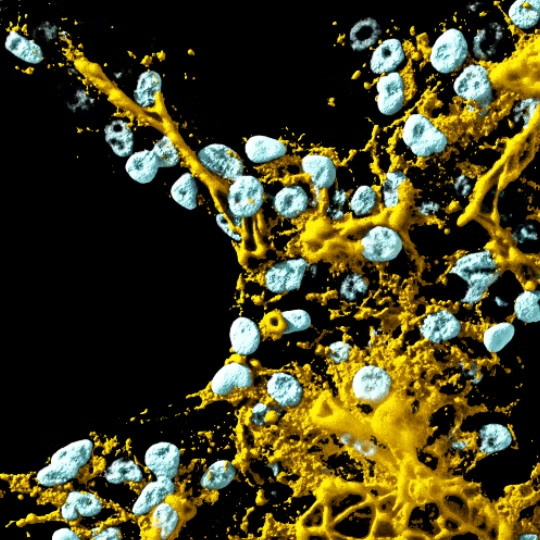
Just one dose of psilocybin changes the structure of dendritic spines – the tiny protrusions where neurons receive signals from other neurons – in an area of the brain known as the medial frontal cortex in mice, the location at the front of the brain which is crucial to decision-making and regulating social behavior in mice. What scientists didn’t know, though, was which regions of the brain were sending signals to these newly formed connections. Understanding that could lead researchers to understand how psilocybin creates lasting changes in the brain.

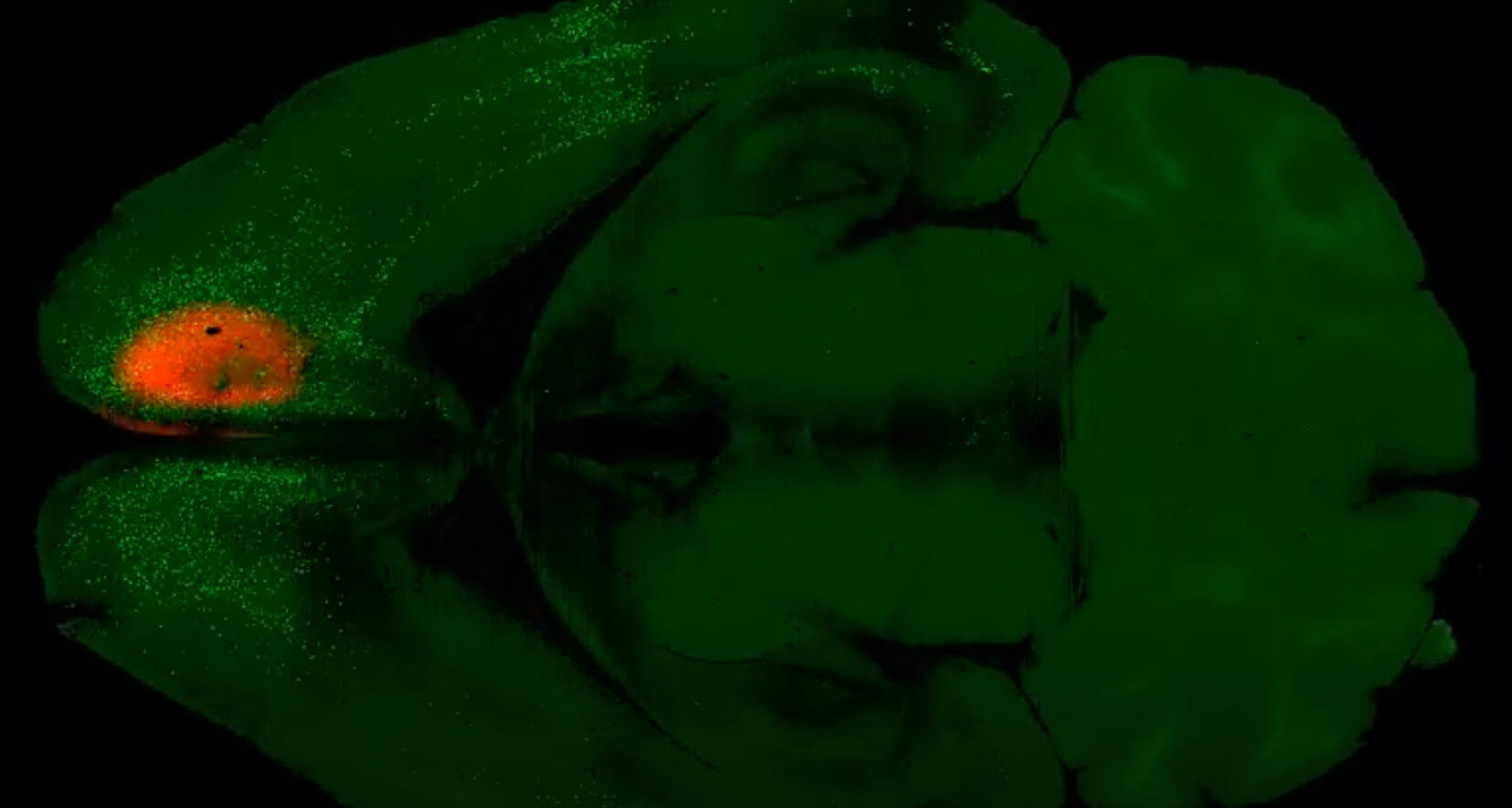
This video of a mouse brain shows where viral tracing starts. The red cells are the PT neurons in the frontal cortex, and the white shows all the neurons in the brain.
“The rewiring in the mouse brain from psilocybin is not haphazard; there’s a definite pattern to it,” said Alex Kwan, Ph.D., a professor of biomedical engineering at Cornell University and one of the senior authors of the study.
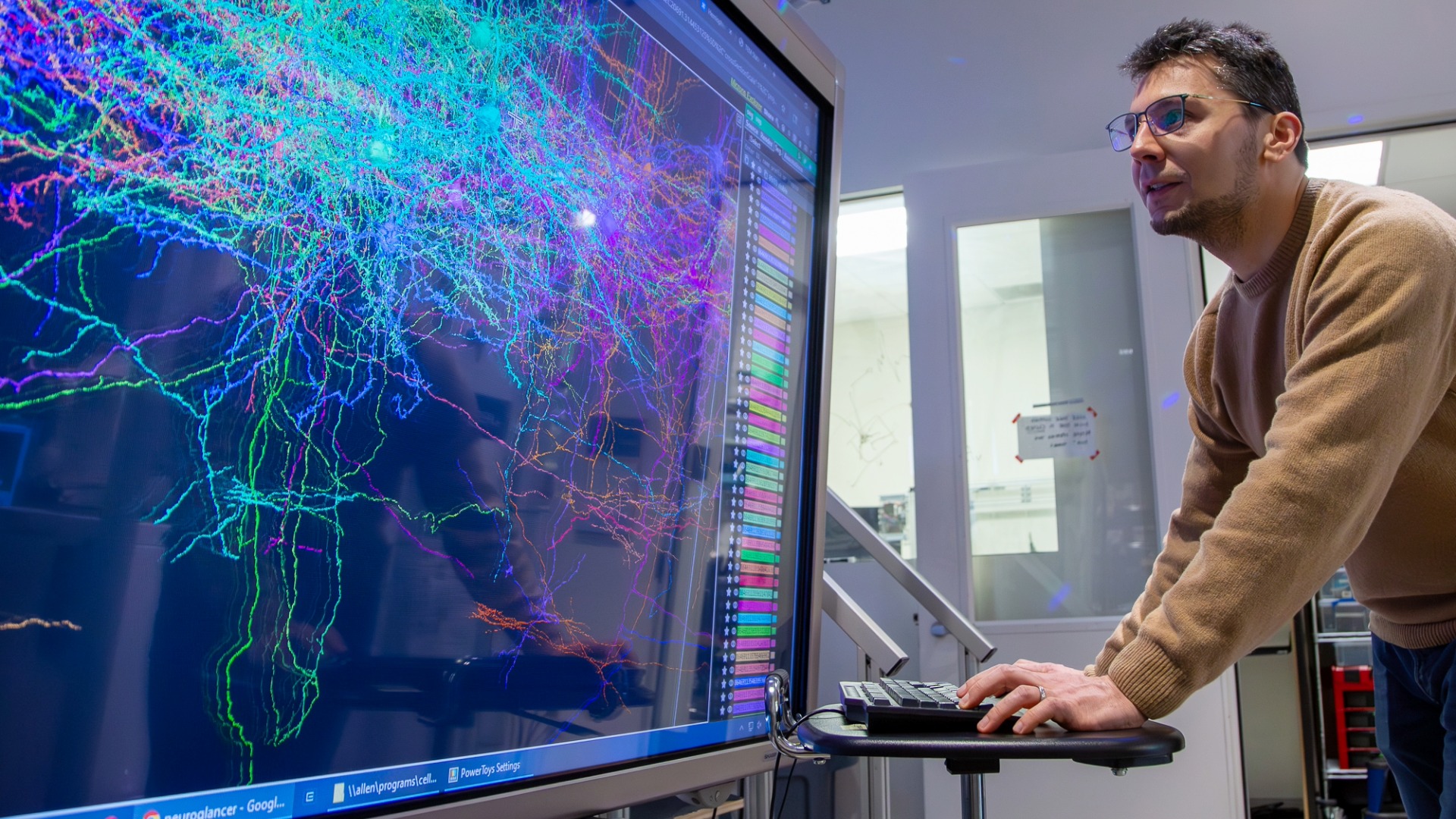
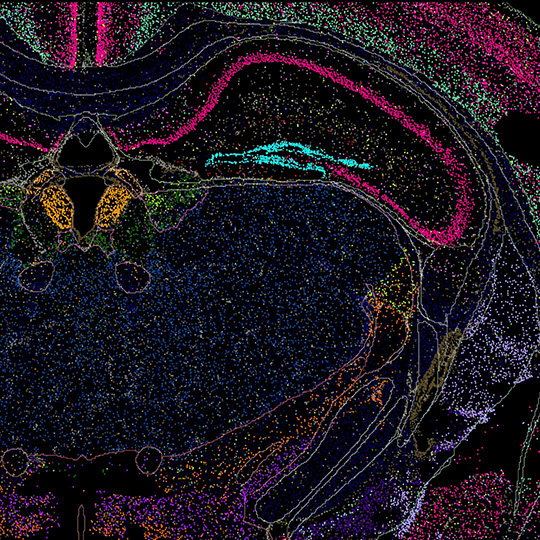
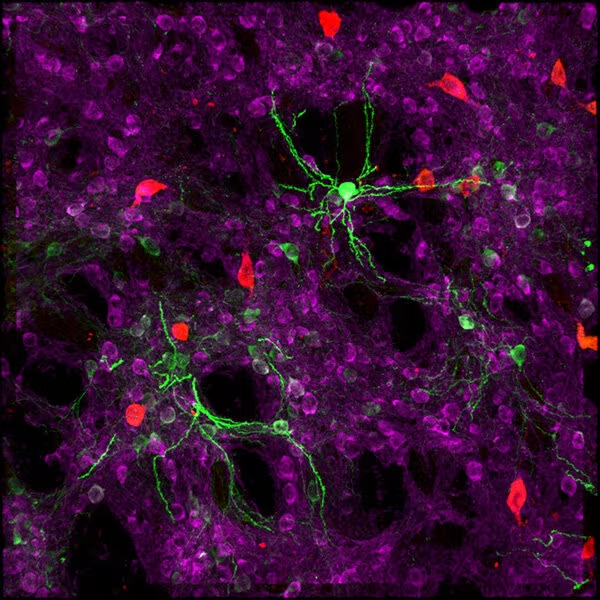
Researchers used several Allen Institute tools, including the Allen Mouse Connectivity Database, specially engineered harmless viruses that can’t replicate, and the OpenEphys GUI open-source tool. They used the engineered virus to map connections throughout the entire mouse brain, which Kwan said was extremely helpful. The virus inserted special DNA into brain cells that caused them to glow, so that connected cells could be traced and tracked.
“It was kind of like a self-driving car for the brain,” Kwan said. “The virus essentially maps all the brain’s connections for you.”

The engineered viral tracing tools and the comprehensive mouse brain atlases have been instrumental in dissecting the detailed actions of psilocybin in altering and fine-tuning specific neural pathways.
- Hongkui Zeng, Ph.D. executive vice president and director, Brain Science at the Allen Institute
Researchers focused on two major types of neurons in the front part of the brain: pyramidal tract (PT) neurons and intratelencephalic (IT) neurons. Both are excitatory neurons that send electrical signals out to different areas of the brain. Then some mice received psilocybin while others received saline, and the results showed very different drug-induced wiring changes between the PT and IT neurons.
how the brain rewires itself with psilocybin
Psilocybin strengthened the connections into PT neurons from regions of the brain that control senses; the visual cortex, the part of the brain that processes what the animal sees; and the retrosplenial cortex, which aids mice in navigation, memory, and spatial orientation. But it was somewhat of a zero-sum game: these strengthened connections weakened connections from other regions, particularly from the lateral network, on the sides and bottom of the brain; and ventromedial prefrontal cortex, located at the front and bottom middle of the mouse brain. These areas regulate the animal’s bodily and emotional responses.
IT neurons showed the exact opposite response. Psilocybin weakened the connections into these neurons that were strengthened in PT neurons. This suggests psilocybin isn’t simply amplifying or dampening brain activity broadly, it’s orchestrating a coordinated reorganization of information flow through the brain’s networks. The researchers think that the pattern of rewiring depends on the firing activity of neurons. For instance, psilocybin increased the firing rate of neurons in the retrosplenial cortex, which is in the upper-back-middle of the brain and responsible for spatial awareness, by 39%.
“Illuminating the specific pathways that psilocybin acts on was an important breakthrough in this study,” Kwan said. “We also used chemogenetics to determine the drug’s effect on the plasticity of the brain, and it appears the plasticity depended not only on the influence of psilocybin, but also the ongoing brain activity.”
Researchers hope the study’s findings can help improve psychedelic therapy. If neural activity during drug exposure determines which circuits get rewired, then combining psilocybin with targeted brain stimulation techniques could allow scientists to guide brain cell rewiring toward specific therapeutic circuits. Scientists realize that humans suffering from mental illness or depression are different than lab mice in a controlled environment, but that could inform the way they administer psilocybin to different patients by varying the dosage, controlling external stimuli, or adjusting other variables. Understanding which circuits are affected can help account for those differences in individual reactions to psilocybin, potentially allowing for more targeted therapeutics.
Citations
about the allen institute
Allen Institute is a 501(c)(3) tax exempt organization dedicated to accelerating science for a healthier world. Through large-scale, multidisciplinary research initiatives, the Institute generates foundational knowledge, data, tools, and models that are shared openly with the world to advance our understanding of life and health. Founded by Jody Allen and the late Paul G. Allen, Allen Institute is supported primarily by Fund for Science and Technology.
.gif)

.avif)