
impact
about
our story
explore our impact
careers and opportunities
join us
open science
sharing science to speed discovery
open science week
celebrating open science
team science
people & teams
discovery is a team effort
allenites
the people who make our work possible
advisors
their input shapes our science
board of directors
they help us fulfill our mission
shanahan foundation fellowship
at the interface of data and neuroscience
next generation leaders
fostering emerging leaders in bioscience
research
overview
our approach
science at the scale of greatest impact
publications
explore our publications
open science
sharing science to speed discovery
science accelerators
brain science
building a blueprint of the brain
cell science
understanding how cells become organs
neural dynamics
revealing the brain’s hidden algorithms
immunology
creating the ultimate immune system reference
synthetic biology
seattle hub for synthetic biology
brain health
accelerating human brain research and disease therapeutics
education
overview
science education
science is for everyone
open science
sharing science speeds discovery
engagement
education resources
real science. real skills.
field trips
experience science where it happens
educator development
empowering educators
news
overview
all news
explore the latest news
podcast
the human stories behind discovery
sign up for our newsletter
stay connected to our science
events
overview
all events
public engagement, workshops, seminars and more
conferences
connect with us
science resources
science resources
allencell.org
allenimmunology.org
allenneuraldynamics.org
brain-bican.org
brain-map.org
microns-explorer.org
impact
back to menu
team science
our story
explore our impact
careers and opportunities
join us
open science
sharing science to speed discovery
open science week
celebrating open science
team science
people & teams
discovery is a team effort
allenites
the people who make our work possible
advisors
their input shapes our science
board of directors
they help us fulfill our mission
shanahan foundation fellowship
at the interface of data and neuroscience
next generation leaders
fostering emerging leaders in bioscience
research
back to menu
overview
our approach
science at the scale of greatest impact
publications
explore our publications
open science
sharing science to speed discovery
science accelerators
brain science
building a blueprint of the brain
cell science
understanding how cells become organs
neural dynamics
revealing the brain’s hidden algorithms
immunology
creating the ultimate immune system reference
synthetic biology
seattle hub for synthetic biology
brain health
accelerating human brain research and disease therapeutics
education
back to menu
overview
science education
science is for everyone
open science
sharing science speeds discovery
engagement
education resources
real science. real skills.
field trips
experience science where it happens
educator development
empowering educators
news
back to menu
overview
all news
explore the latest news
podcast
the human stories behind discovery
newsletter
stay connected to our science
events
back to menu
overview
all events
public engagement, workshops, seminars and more
conferences
connect with us
science resources
back to menu
science resources
allencell.org
allenimmunology.org
allenneuraldynamics.org
brain-bican.org
brain-map.org
microns-explorer.org
Heading
search
news

ketamine increases neuroplasticity in female mice but not in males

The surprising finding could help scientists develop better treatments for depression

July 31, 2026
0 min read
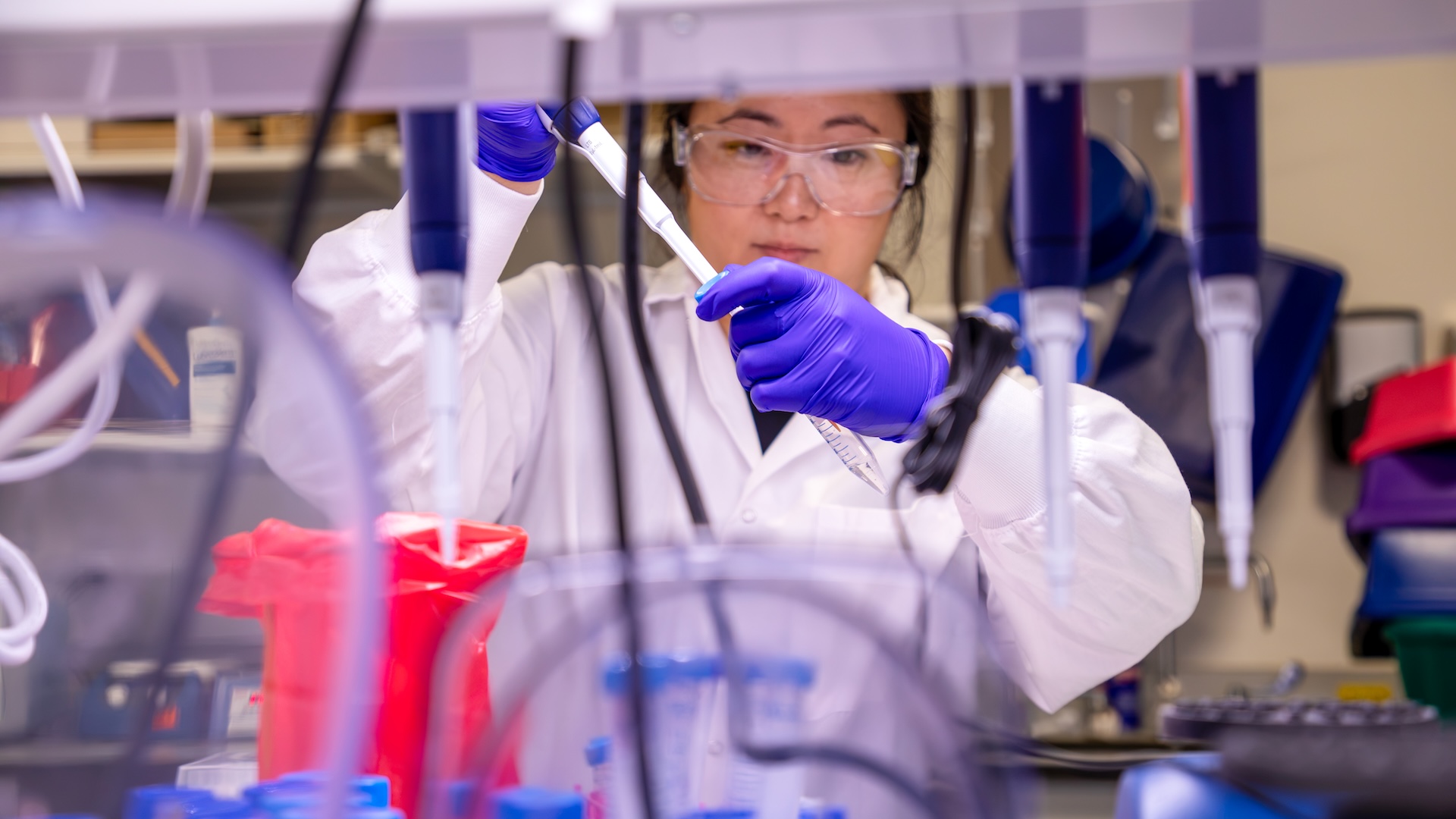
Female scientist in white lab coat working with a pipette in a laboratory
share/
Kelly Jin, scientist at the Allen Institute
The surprising finding could help scientists develop better treatments for depression

in this article

table of contents will display on published page only
set h2 to populate the table of contents here

authors

Peter Kim
Associate Director, Communications & Media Relations

Doctors use ketamine on patients as general anesthesia before surgery. They also prescribe it in low doses for pain management, and more recently, it’s been used for treatment-resistant depression where other drugs have failed. It works by dampening communication between brain cells. But a new study reveals that its effects on the brain are different in male and female mice. This insight—if reproduced in humans—could change the way we test the efficacy of drugs and unlock better treatments for depression.

Researchers at the Institute of Science and Technology Austria, in collaboration with scientists at the Allen Institute, discovered that when female mice are recovering from a single ketamine sedation, their brains become much more active than their male counterparts, specifically their microglia. These specialized brain cells began reaching out with their branch-like arms to intermingle with surrounding brain cells. This increased activity led to the removal of the extracellular matrix—the proteins and molecules surrounding, supporting, and giving structure to cells—and created space that allowed new synapses to form and remodel the neural network, thereby increasing neuroplasticity. Researchers didn’t observe this behavior in male mice.  

“We didn’t expect to see this; it was a surprising finding,” said Sandra Siegert, professor at the Institute of Science and Technology Austria and senior author of the study. Microglia are the brain’s defense system—immune cells that help clear debris, trigger inflammation to protect the brain, and maintain optimal brain function.

Alessandro Venturino and Sandra Siegert, scientists at the Institute of Science and Technology Austria (Photo credit: Siegert group ISTA)

A pathway to neuroplasticity

Importantly, scientists uncovered the precise pathway of this increased neuroplasticity: during recovery from ketamine anesthesia, corticosterone spiked in the blood. Corticosterone is an important hormone that helps animals respond to stress. This hormone triggered microglia to turn on the Fkbp5 gene, which then produces the FKBP51 protein. This protein in turn activated the microglia to start intermingling with surrounding neurons, which eventually led to an increase in neuroplasticity. Scientists at the Allen Institute performed single-nucleus RNA sequencing to help uncover this hidden pathway and reveal the specific gene that was turned on in female mice but not in males.

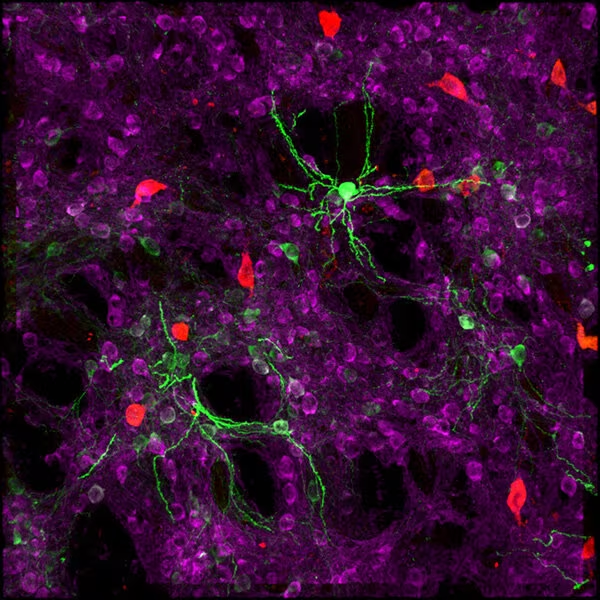
Distribution of microglia (green) across the different cortical layers (orange) in the mouse visual cortex (Photo credit: Siegert group ISTA)

Neuroplasticity is a delicate balance: too much or too little has both been linked to neuropsychiatric disorders. “Understanding how to balance good plasticity versus maladaptive plasticity is very important for healthy life, healthy aging, and neuropsychiatric diseases,” said Bosiljka Tasic, Director of Molecular Genetics at the Allen Institute and one of the study co-authors. “How can you modify and modulate this plasticity but in a positive way? Many of the major plasticity-inducing drugs have become quite interesting, especially as treatments for depression, but we still don’t know how they work.”

The new research reveals that at least in female mice, the FKBP51 protein can be a lever to pull in order to regulate neuroplasticity in the brain, and ketamine can be one way to pull this lever. The findings, if fully replicated in humans, point to the importance of sex differences when evaluating the effects of drugs and treatments. “How drug effects differ between males and females is important to know in order to offer the best treatment,” said Siegert.

In immunology, it is known that immune cells respond differently between males and females, which can lead to different outcomes in infectious diseases. “Microglia, which have capabilities similar to macrophages, are not necessarily excluded from this assumption,” said Siegert. “It is only now that scientists are exploring this topic.”

Citations
No items found.

about the allen institute

Allen Institute is a 501(c)(3) nonprofit medical research organization dedicated to accelerating science for a healthier world. Through large-scale, multidisciplinary research initiatives, the Institute generates foundational knowledge, data, tools, and models that are shared openly with the world to advance our understanding of life and health. Founded by Jody Allen and the late Paul G. Allen, Allen Institute is supported primarily by the Fund for Science and Technology.

related news

all news
No articles for the category
we acceleratedevelopcatalyzeimpact

science done differently. shared openly.

explore our accelerators

brain science

Mapping every cell, connection, and circuit in the brain—openly shared with the world.

cell science

Decoding how cells become tissues, then programming that knowledge into powerful new research tools.

neural dynamics

Revealing the brain's hidden algorithms that transform neural activity into real-world behavior.

immunology

Creating the deepest open reference for the healthy human immune system ever built.

synthetic biology

Engineering cells to record their own histories, transforming how we understand disease over time.

Brain Health

Accelerating human brain research and new therapeutic strategies for neurological conditions

research

Big questions, open answers, and science built to be shared.

education

Inspiring the next generation of scientists through open science resources.

impact

Our science is empowering researchers and advancing health worldwide.
advancing science through open, collaborative research
Get the allen institute newsletter
Stay informed on the latest breakthroughs in neuroscience, bioscience, and AI-driven research.
allen institute
impactpeople & teamscareers & opportunitiesalumnihistory & founder
science resources
allencell.orgallenimmunology.orgallenneuraldynamics.orgbrain-bican.orgbrain-map.orgmicrons-explorer.org
research
brain sciencecell scienceneural dynamicsimmunologysynthetic biologybrain healthpublications
education
science educationfield tripsprofessional developmenteducation resources
quick links
newseventsopen sciencepodcastscience resourceshuman brain donationvisit uscontact
follow us/

allen institute, 615 Westlake Ave North, Seattle, WA 98109 +12065487055

© 0000 allen institute. all rights reserved.
privacy policyterms of usecitation policyemployee portalpolicy & compliancecookie settings