.avif)

Scientists have known that Alzheimer's doesn't hit every part of the brain with equal force. The disease attacks some areas, like the hippocampus and entorhinal cortex, which are crucial for memory, more aggressively than other regions, like the ones that handle basic sensory processing.
Researchers believe that’s generally because of one of two things: genetics or wiring. With genetics, scientists believe that a person’s genetic predisposition makes certain brain regions inherently more fragile and therefore susceptible to damage. With wiring, researchers think the disease spreads like a cold through the brain’s neurons regardless of the patient’s genetics.
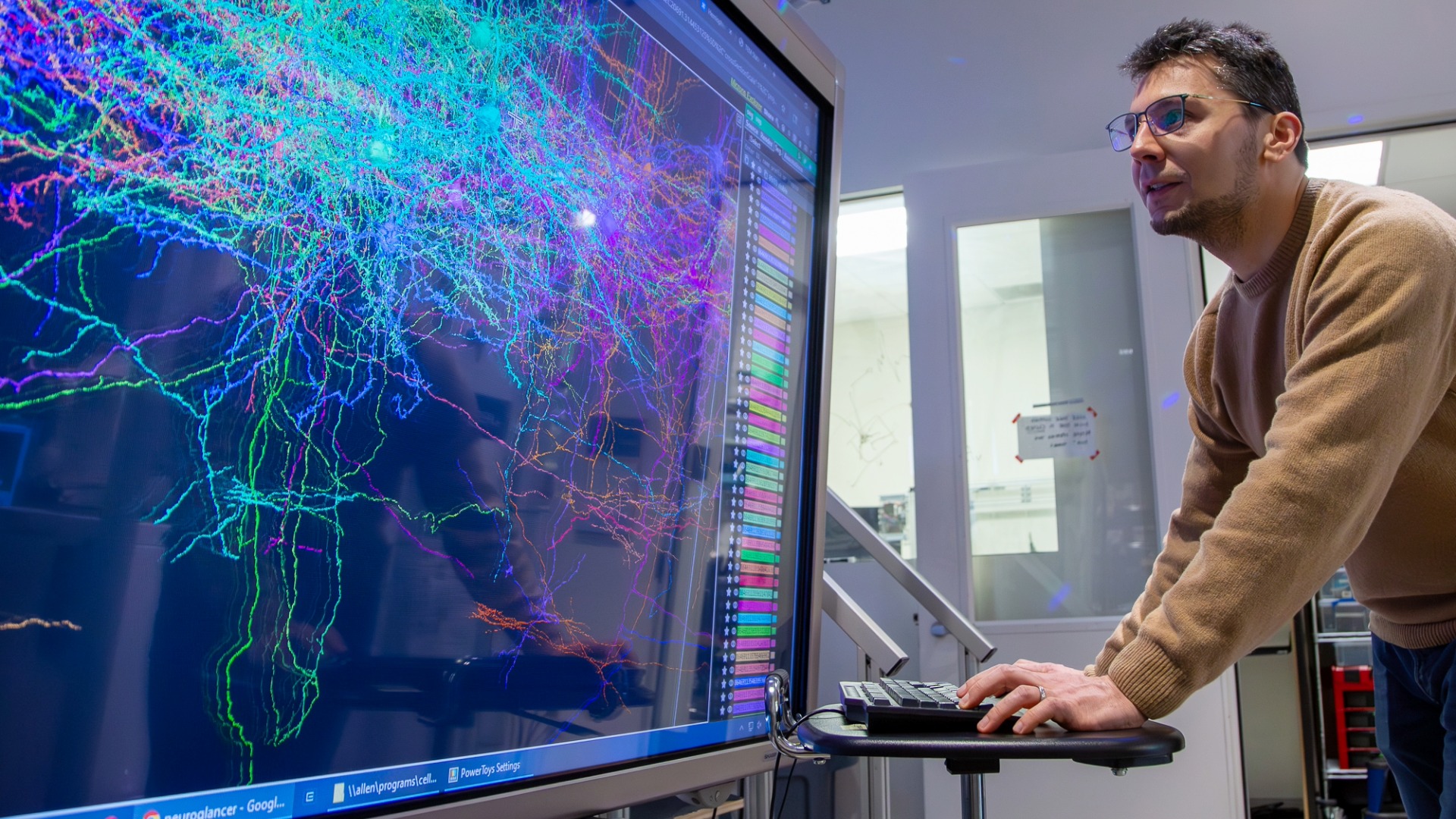
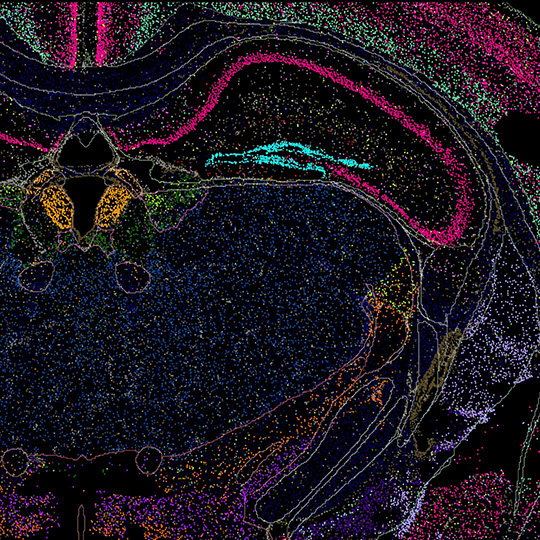
In a study published in Brain, a team at the University of California, San Francisco (UCSF) tested both ideas – genetics and wiring – at the same time. Using the Allen Institute’s Human Brain Atlas, they built a computer model that acts like a map of the brain's wiring. It predicts how so-called tau tangles, which are the hallmarks of Alzheimer’s, spread from cell to cell, like water flowing through pipes.
the trouble with tau/
Tau is a protein that in its healthy state stabilizes neurons and transports food and chemical signals throughout the brain. In Alzheimer’s, however, it changes form, detaching from neurons and clumping into sticky threads known as neurofibrillary tangles. These tangles choke and destroy cell communication and align with the progression of memory loss and cognitive decline in Alzheimer’s patients.
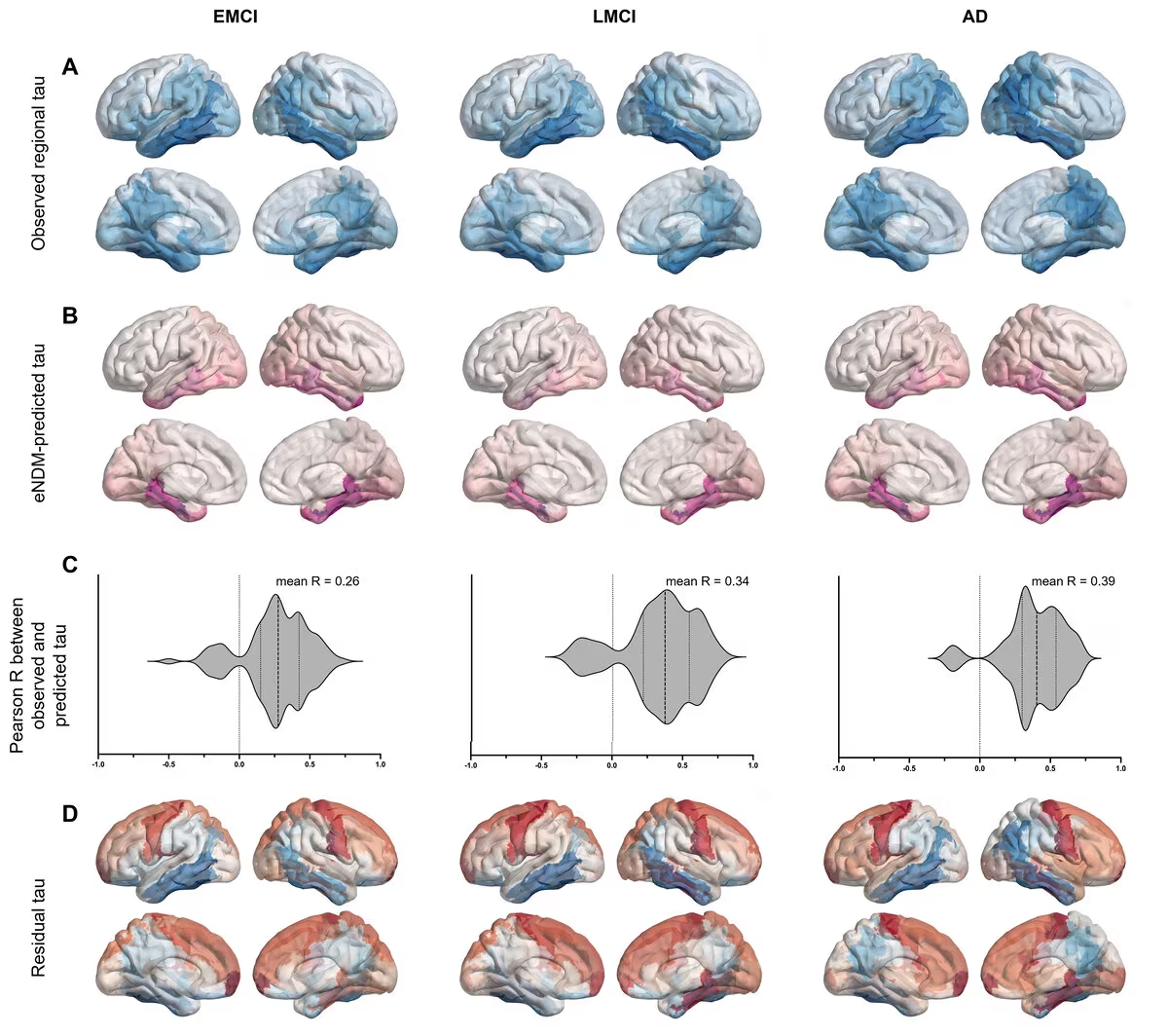
The researchers analyzed brain scans and gene expression data from 196 patients with mild cognitive impairment or Alzheimer's disease. They created a computer model called the "extended network diffusion model" (eNDM) that simulated how tau spreads from its origin point in the entorhinal cortex outward along neural connections. The model successfully predicted the real pattern of tau buildup seen in patient brain scans, confirming that network-based spread is in fact a major driver of disease progression.
“We think of this model as sort of a Google Maps for tau,” said Ashish Raj, senior study author and UCSF professor of radiology and biomedical imaging. “This model allows you to predict the process of tau spread and say what this person might experience in the future. So we can see whether they are going to see cognitive decline, executive dysfunction, which parts of the brain they're going to get tau in, and which areas are going to atrophy.”
.avif)
But the model wasn't perfect. In some brain areas, it guessed too little tau, while in others it guessed too much. That “leftover” mistake turned out to be an important part of the study.
Researchers looked at where 100 genes linked to Alzheimer's disease are active in the brain and checked if they matched this leftover pattern. At first, almost 40% of the genes linked with Alzheimer’s didn't seem related to the leftover tau damage. But when the model’s statistical analysis separated out the effects of brain wiring, they noticed that there was a high degree of similarity: the same genes associated with Alzheimer’s were also active in this leftover region of tau. This meant that both brain wiring and genetics played a role in the formation of tau tangles, which was a new discovery for scientists.
Researchers used brain gene expression maps from the Allen Institute’s Human Brain Atlas, which was invaluable to their research.
“This Allen Institute resource is a godsend for people like me. A lot of my team and groups around the world like mine have a computational background and do not generate their own data. And getting that kind of data is incredibly difficult in the first place,” said Raj. “So the role that the Allen Institute played in this research is instrumental, and I don't think there's any other similarly high-quality resource anywhere right now.”
why this matters/
This study demonstrates that both major theories of selective vulnerability were right all along, but they needed to be considered together rather than separately. The findings provide the first explanation of why genetic risk factors and disease location often appeared disconnected in prior research: it wasn't that genes didn't matter; it was that the analysis needed to remove network effects first to see their true signal.
This discovery could point to new drug targets, since each gene group seems to work through a different biological pathway. It also reveals that certain genes which were considered irrelevant have a real, if hidden, effect.
Scientists note this is early-stage work. But the findings offer a promising new way to study Alzheimer's and possibly other brain diseases like Parkinson's that spread in similar ways.
Citations
about the allen institute
Allen Institute is a 501(c)(3) tax exempt organization dedicated to accelerating science for a healthier world. Through large-scale, multidisciplinary research initiatives, the Institute generates foundational knowledge, data, tools, and models that are shared openly with the world to advance our understanding of life and health. Founded by Jody Allen and the late Paul G. Allen, Allen Institute is supported primarily by Fund for Science and Technology.
.gif)