

When we think of waves, our minds might travel to the tranquility of ocean beaches. But brains also pulse with wave cycles. These waves are in the shape of circles made up of electrical pulses jumping from one brain cell to the next as the brain communicates and performs tasks. Think of it as a track relay: one runner runs with the baton around a portion of a track and then hands it off to the next runner who then runs the next portion of the race. The shape of the route they run is determined by the shape of the track they are running on.
In the brain, think of the runner as the electrical pulse and the track is the wiring of the brain cells that connect to one another to form circuits. The electrical waves rotate around a specific region of the brain. New research from the University of Washington (UW), with contributions from the Allen Institute, reveals that this brain activity is shaped by the physical architecture of neural wiring (how brain cells connect to one another). The connection patterns determine the shape of the circular, electrical wave patterns that surge throughout the brain.
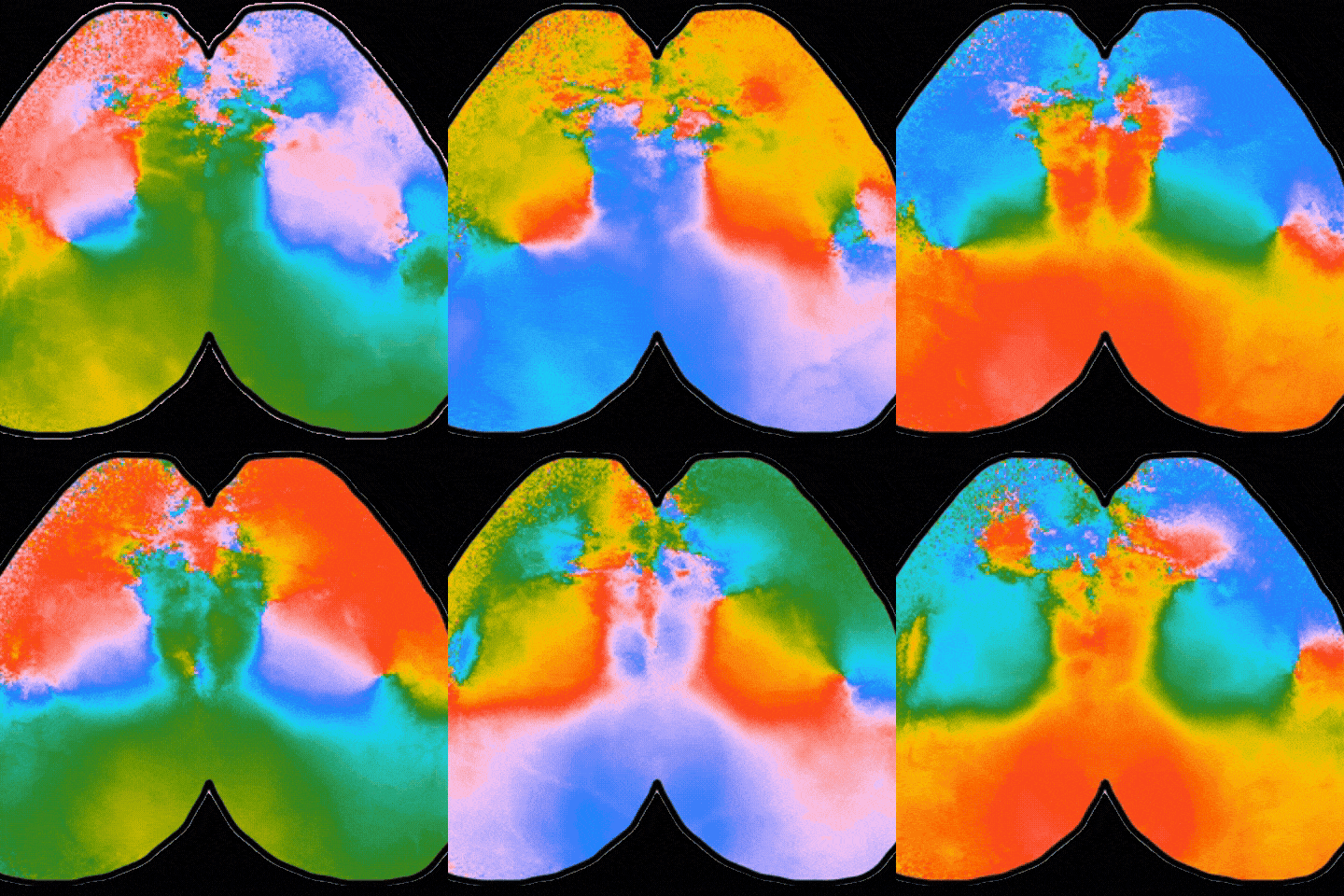
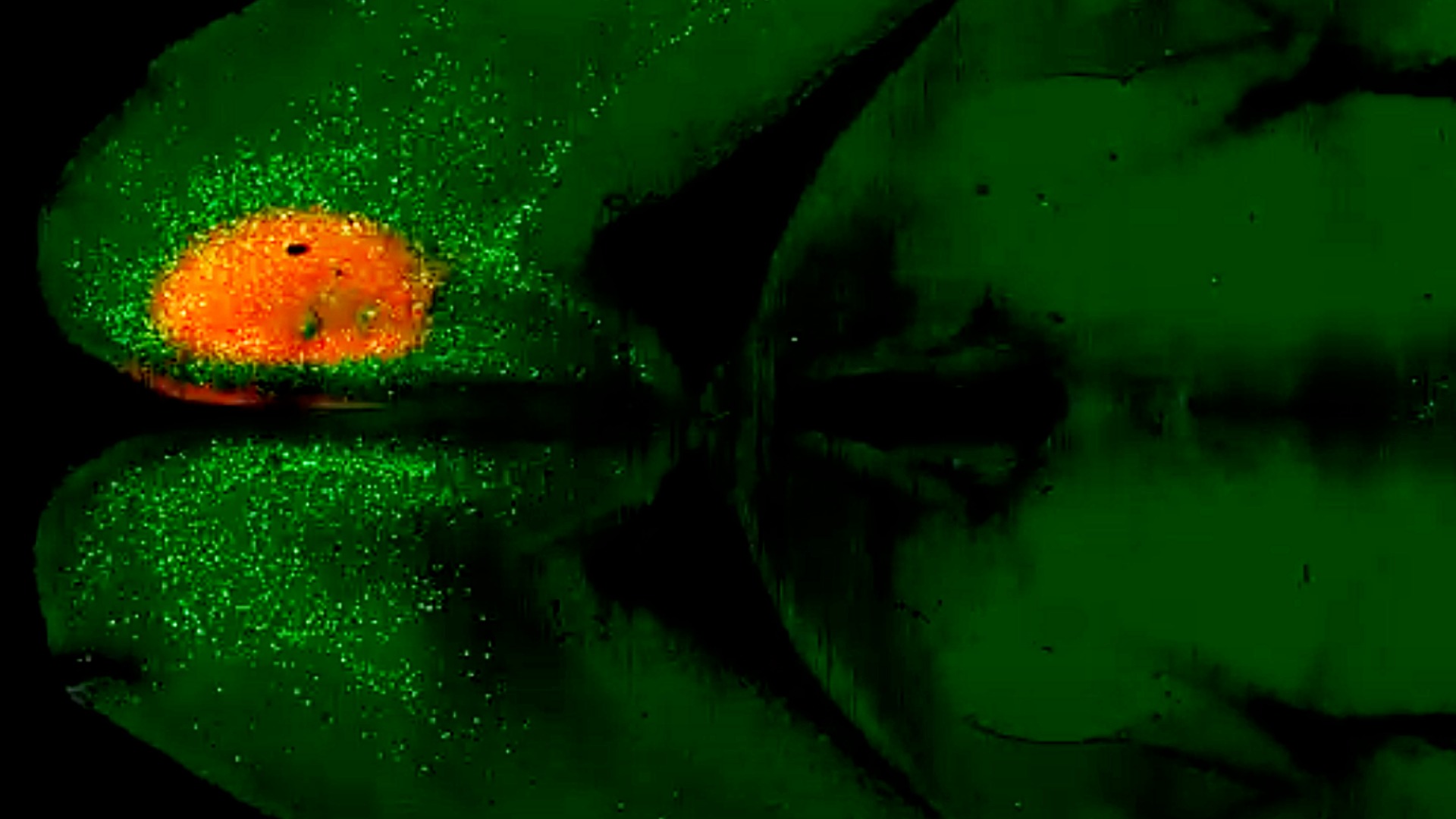
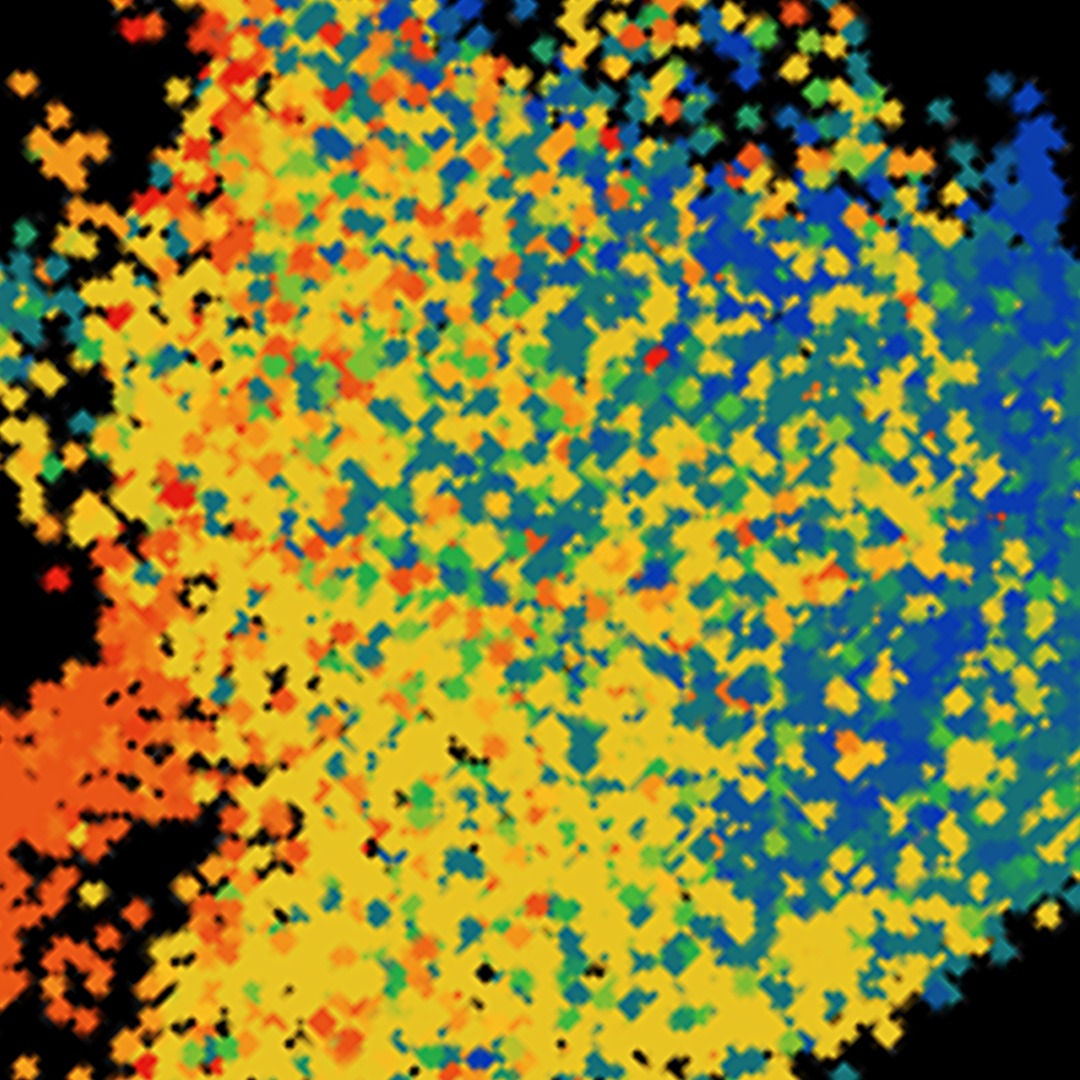
What you're looking at above is an overhead view of a mouse brain. The cyan (blueish) color represents the start of the wave where the first brain cells begin to fire and the first pulse of electricity is released. The red is where the the electricity stops and the circular wave ends. The colors swirl because of the underlying circular brain connectivity that researchers observed. When the colors change, the electrical pulse has entered another region of the brain.
As the video progresses, the waves rotate around fixed points in the somatosensory cortex, a region associated with the processing of sensory information from the body. These areas of the cortex are of special interest to neuroscientists because they represent all of the body’s parts: limbs, ears, mouth, whiskers. Even during restful states, waves of neural activity sweep across the brain’s map of the body.
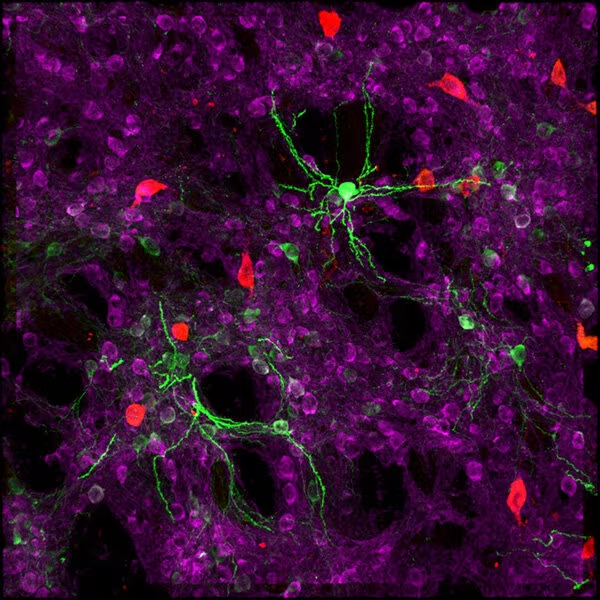
The study, used specially engineered mice neurons from the Allen Institute that glow when stimulated to fire an electrical pulse. This helped track the pulse of electricity activity as it travelled through the brain so that researches could see the shape of the wave.
Rotating waves occur spontaneously, but sensory stimulation can also trigger them, though the exact driving force during spontaneous states is still unclear.
Citations
about the allen institute
Allen Institute is a 501(c)(3) tax exempt organization dedicated to accelerating science for a healthier world. Through large-scale, multidisciplinary research initiatives, the Institute generates foundational knowledge, data, tools, and models that are shared openly with the world to advance our understanding of life and health. Founded by Jody Allen and the late Paul G. Allen, Allen Institute is supported primarily by Fund for Science and Technology.
.gif)

.avif)