synthetic biology

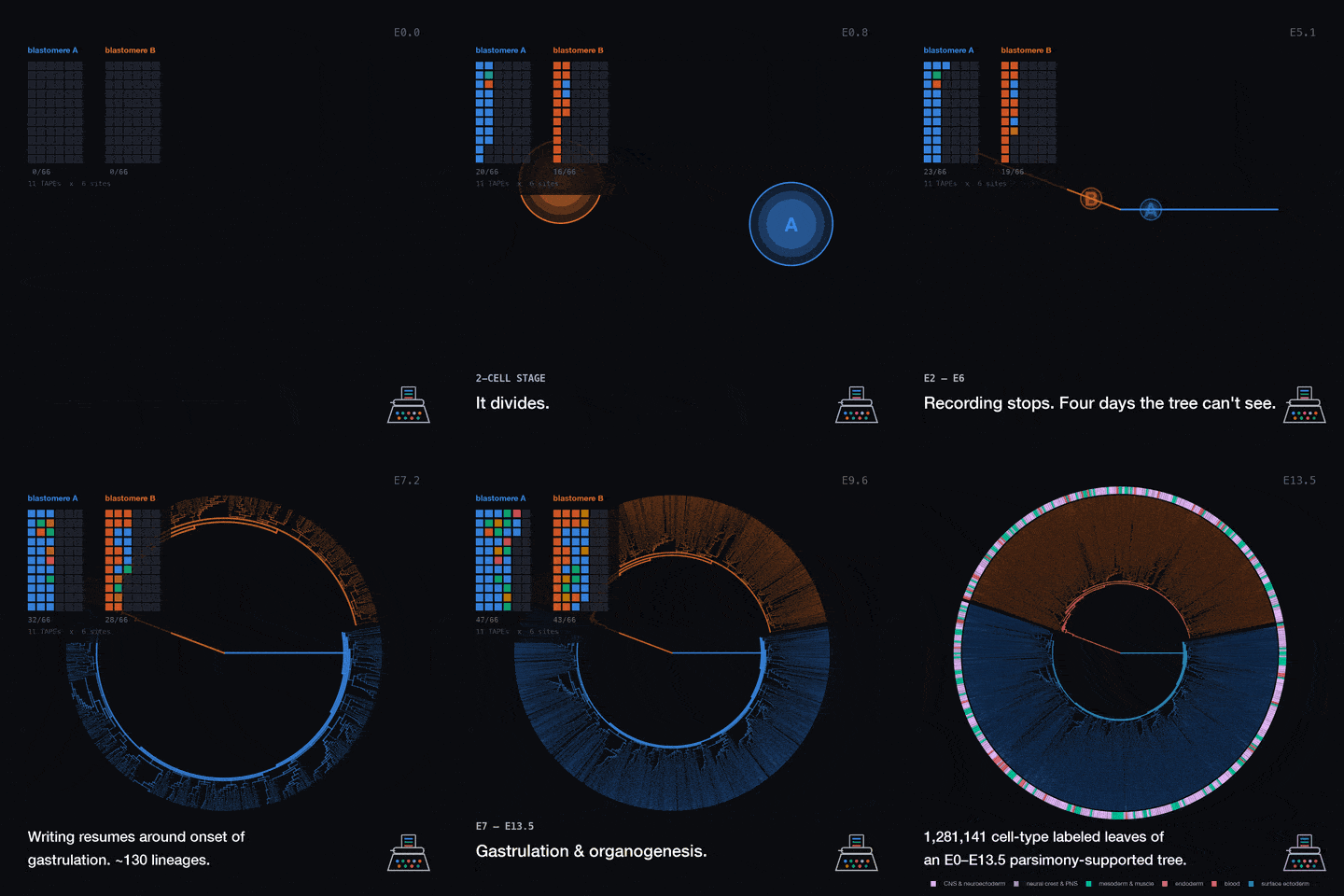
Cells don't just exist in the present. We’re learning how to record and reconstruct everything they experience as they develop into organisms.
Traditional biology works in snapshots, capturing a frozen moment in a cell or organism's life. But disease doesn't emerge in a single moment. It's a process, unfolding over time through countless molecular and cellular decisions. To truly understand disease, you need to understand that entire process.
The Seattle Hub for Synthetic Biology—a landmark collaboration between the Allen Institute, Biohub, and the University of Washington—is engineering cells to record their histories as they divide, differentiate, and mature. Scientists can capture a complete chronicle of millions of cells at once, in whole organisms, creating datasets that will power AI models and open entirely new doors in disease research.
teams at the University of Washington/
Shendure Lab
This team is working to develop and apply new technologies and methods for genetics, genomics and molecular biology. Research by the Shendure Lab focuses on next-generation DNA sequencing to measure biological phenomena.
Trapnell Lab
The Trapnell Lab at the University of Washington’s Department of Genome Sciences studies how genomes encode the program of vertebrate development and how that program goes awry in disease.
Pepper Lab
Investigating antigen specific adaptive immune cells to better design vaccines and therapeutics.
Pinglay Lab
We are a laboratory of biological tinkerers at the intersection of DNA synthesis, protein design and single-cell sequencing.
Hamazaki Lab
We use and develop a stem-cell based embryo model that allow us to test out the synthesized DNA circuit in physiologically relevant context and to understand human developmental diseases.
Brotman Baty Institute
The Brotman Baty Institute operationalizes and administers the University of Washington (UW) portion of the SeaHub project, and provides single-cell sequencing support to SeaHub teams in the Shendure, Trapnell, Pepper, Pinglay and Hamazaki labs at UW.
SeaBridge
SeaBridge is a program to translate the Seattle Hub for Synthetic Biology’s cutting-edge technologies into real-world applications. We integrate a postdoctoral fellowship training program (SeaBridge Fellowship Program) with a translational research center (LaunchPad) to train the next generation of scientists while advancing the potential of Seattle Hub for Synthetic Biology’s unique genome engineering platform.
leadership team


_Inna%20Dashevsky.jpg)
explore open positions at the allen institute
synthetic biology news


Lab Notes | Bridging science fiction and reality: Seattle Hub for Synthetic Biology


Imagine being able to put a smart watch into each of your cells to record everything that each cell is experiencing to the genome itself.

Block Quote
synthetic biology publications