impact
about
our story
explore our impact
careers and opportunities
join us
open science
sharing science to speed discovery
open science week
celebrating open science
team science
people & teams
discovery is a team effort
allenites
the people who make our work possible
advisors
their input shapes our science
board of directors
they help us fulfill our mission
shanahan foundation fellowship
at the interface of data and neuroscience
next generation leaders
fostering emerging leaders in bioscience
research
overview
our approach
science at the scale of greatest impact
publications
explore our publications
open science
sharing science to speed discovery
science accelerators
brain science
building a blueprint of the brain
cell science
understanding how cells become organs
neural dynamics
revealing the brain’s hidden algorithms
immunology
creating the ultimate immune system reference
synthetic biology
seattle hub for synthetic biology
education
overview
science education
science is for everyone
open science
sharing science speeds discovery
engagement
education resources
real science. real skills.
field trips
experience science where it happens
educator development
empowering educators
news
overview
all news
explore the latest news
podcast
the human stories behind discovery
sign up for our newsletter
stay connected to our science
events
overview
all events
public engagement, workshops, seminars and more
conferences
connect with us
science resources
science resources
allencell.org
allenimmunology.org
allenneuraldynamics.org
brain-bican.org
brain-map.org
microns-explorer.org
impact
back to menu
team science
our story
explore our impact
careers and opportunities
join us
open science
sharing science to speed discovery
open science week
celebrating open science
team science
people & teams
discovery is a team effort
allenites
the people who make our work possible
advisors
their input shapes our science
board of directors
they help us fulfill our mission
shanahan foundation fellowship
at the interface of data and neuroscience
next generation leaders
fostering emerging leaders in bioscience
research
back to menu
overview
our approach
science at the scale of greatest impact
publications
explore our publications
open science
sharing science to speed discovery
science accelerators
brain science
building a blueprint of the brain
cell science
understanding how cells become organs
neural dynamics
revealing the brain’s hidden algorithms
immunology
creating the ultimate immune system reference
synthetic biology
seattle hub for synthetic biology
education
back to menu
overview
science education
science is for everyone
open science
sharing science speeds discovery
engagement
education resources
real science. real skills.
field trips
experience science where it happens
educator development
empowering educators
news
back to menu
overview
all news
explore the latest news
podcast
the human stories behind discovery
newsletter
stay connected to our science
events
back to menu
overview
all events
public engagement, workshops, seminars and more
conferences
connect with us
science resources
back to menu
science resources
allencell.org
allenimmunology.org
allenneuraldynamics.org
brain-bican.org
brain-map.org
microns-explorer.org
search
research
seattle hub for synthetic biology

trapnell lab

The Trapnell Lab at the University of Washington’s Department of Genome Sciences studies how genomes encode the program of vertebrate development and how that program goes awry in disease.
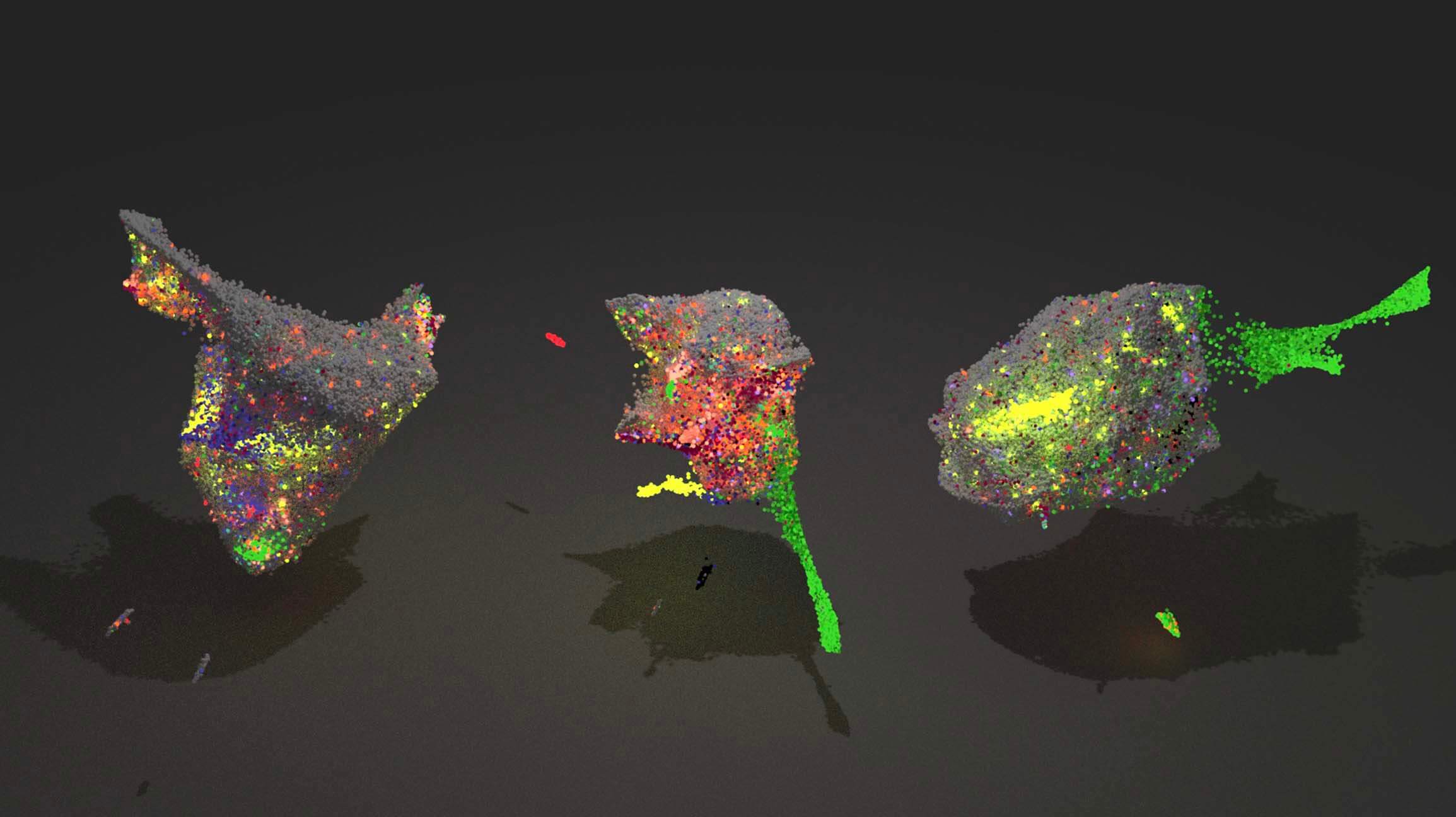
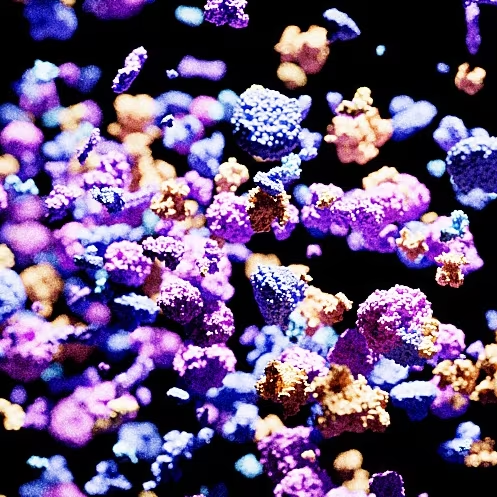
A 3D UMAP from a sci-Plex chemical perturbation screen of hundreds of small molecules on three different cancer cell lines. Cole Trapnell, PhD created the visualizations in Blender to make it easier to see how different types of cancer cells respond to different drugs. You can find the data from this rendering in Srivatsan et al, Science, 2020.
The Seattle Hub for Synthetic Biology is a collaboration between Allen Institute, Chan Zuckerberg Initiative and the University of Washington.

goals and approach

The Trapnell Lab mission is to understand how the genome encodes the program of development and the role this program plays in disease. It develops and applies genomic tools, especially single-cell sequencing, to a variety of in vitro and animal model systems.

The lab’s research strategy is to develop new algorithms and measurements technologies that will enable the scientific community to quantitatively model how every gene is regulated in every cell type found in an animal. Lab members draw from computer science, statistics, and molecular cell biology to jointly develop both new assays and algorithms that fully exploit their capabilities. The scientists are using their technologies to understand the genetic control of plasticity in zebrafish and other key model systems of development.

‍

Lead Investigator:
Dr. Cole Trapnell
‍

Cole Trapnell is a Professor of Genome Sciences at the University of Washington. He received his Ph.D in Computer Science at the University of Maryland and has formal training in both computational and experimental biology. As a graduate student with Steven Salzberg (of Johns Hopkins University) and Lior Pachter (of the California Institute of Technology), , Dr. Trapnell wrote “TopHat” and “Cufflinks”, two widely used tools for transcriptome sequencing (RNA-seq) analysis. He also co-developed (with Johns Hopkins University’s Ben Langmead) the ultrafast short read alignment program “Bowtie.”

As a postdoctoral fellow, Dr. Trapnell augmented his computational work with experimental training focused on analysis of cell differentiation, and developed “single-cell trajectory analysis,” an approach for studying cell differentiation using single-cell RNA-Seq. Dr. Trapnell’s lab has introduced computational tools extracting biological insights from single-cell data, such as “Monocle,” as well as experimental workflows for ultra-scalable single-cell molecular profiling experiments. The lab has used these tools to explore pancreatic islet development, olfactory neurogenesis, and thyroid hormone-dependent pigmentation, and is currently applying them to dissect the genetic program of zebrafish embryonic development.  Dr Trapnell is a recipient of ISCB Overton Prize (2018), NIH Director’s New Innovator Award, and the Alfred P. Sloan Foundation Research Fellowship (2015), and Damon Runyon Dale F. Frey Award for Breakthrough Scientist (2014).
‍

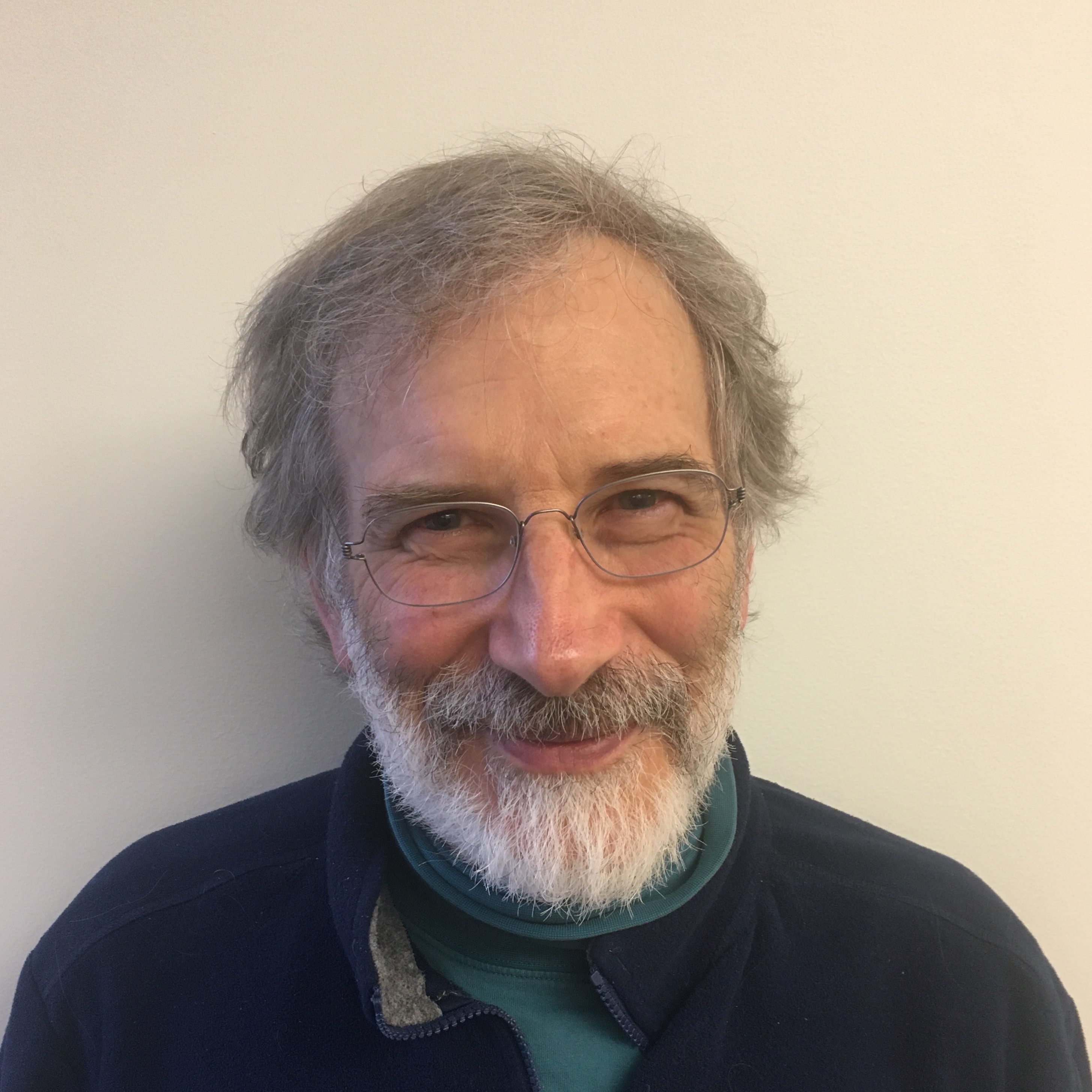
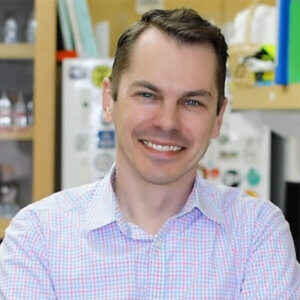
Cole Trapnell, Ph.D., Co-Director, Seattle Hub for Synthetic Biology; Associate Professor of Genome Sciences, University of Washington

research details/

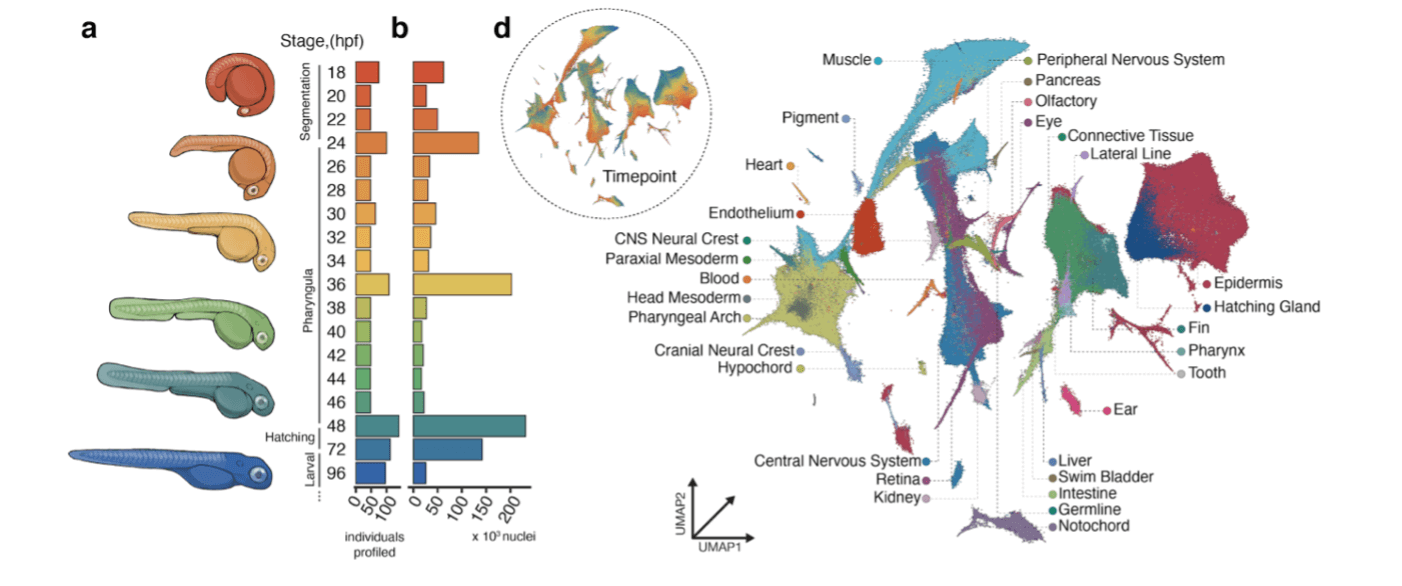
zebrafish developmental genetics at single-cell resolution

The Trapnell Lab is working to systematically perturb zebrafish embryonic development and read out the effects using massively multiplexed single-cell molecular profiling. These experiments will not only facilitate the mapping of the gene networks that control vertebrate development, but all shed light on how those networks buffer variability and confer robustness.

Fish developmental stages with segmentation chart and anatomical cell type mapping visualizations

new methods for statistical and AI-driven developmental genetics

The Trapnell Lab develops statistical and artificial intelligence–based approaches to infer how genes collectively control vertebrate development. By integrating large-scale single-cell perturbation data with probabilistic and machine learning models, the lab aims to construct a quantitative map of genetic requirements in zebrafish and to understand how regulatory programs confer robustness and plasticity. A central goal is to develop principled methods for transferring these insights across species, helping connect human genetic variation to developmental mechanisms.

‍

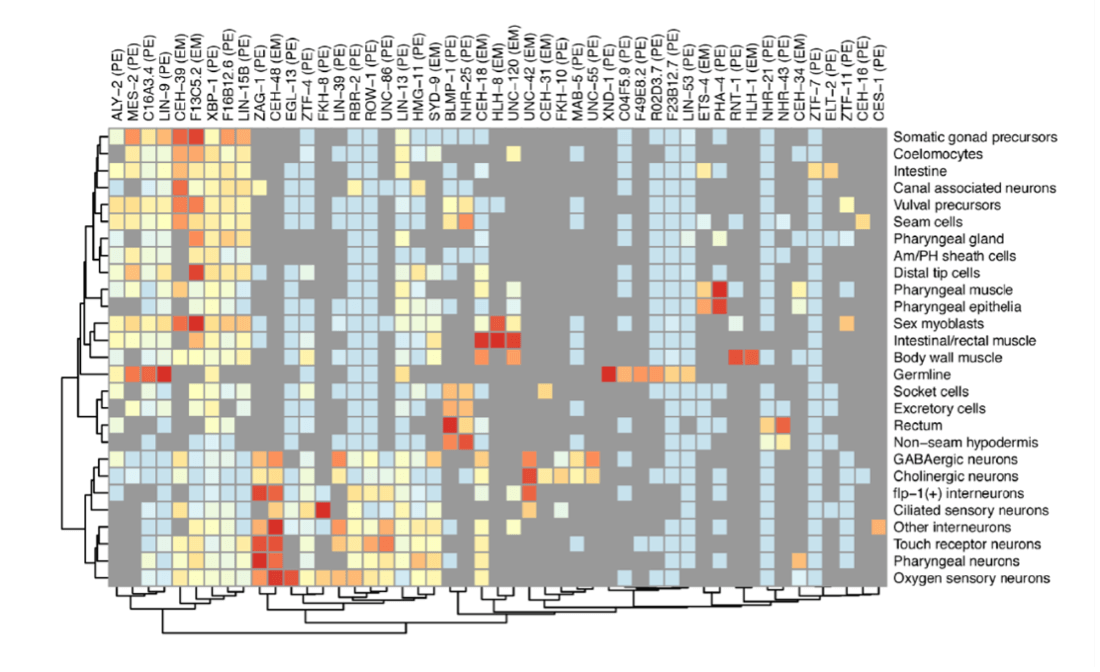
Heatmap showing gene expression levels across different C. elegans cell types and tissues

massively multiplexed single-cell perturbation experiments

Genetic screening has been a cornerstone in efforts to dissect the program that controls how cells exert their function or breakdown in disease. Single-cell sequencing provides a means of interrogating the molecular consequences of genetic, chemical, or environmental perturbations, but limited sample multiplexing in commercial platforms makes screening infeasible. Members of the Trapnell Lab have developed and continue to improve various methods for highly multiplexed single-cell sequencing experiments. They have applied these tools to study diverse biological systems including cancer cells and whole zebrafish embryos.

‍

Three colorful heatmaps showing population density across India, displayed as pixelated geographic regions.

software

Heatmap showing gene expression levels across different C. elegans cell types and tissues
Hooke
Hooke is a new software package that uses Poisson-Lognormal models to perform differential analysis of cell abundances for perturbation experiments read out by single-cell RNA-seq.
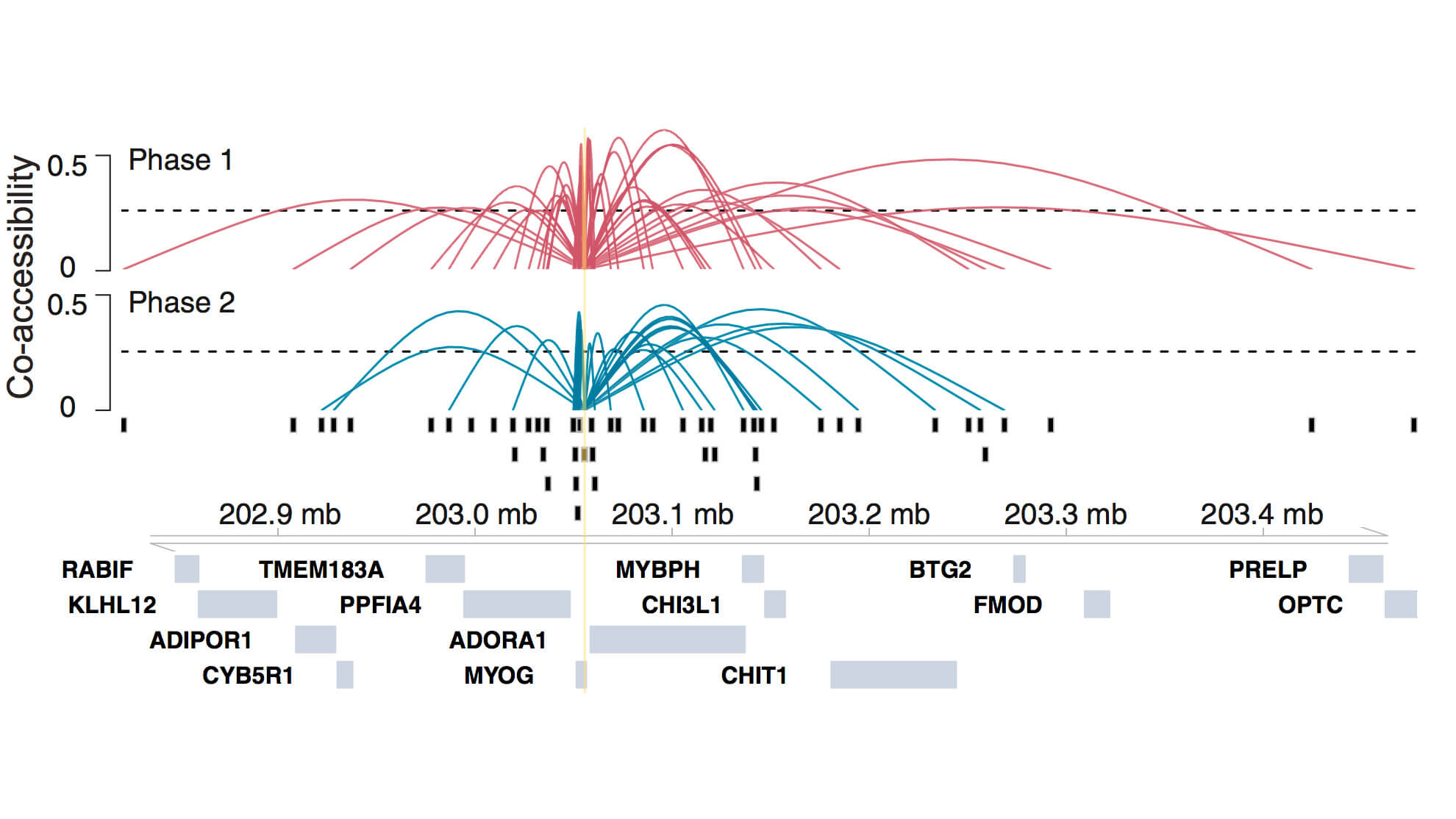
Co-accessibility graph showing Phase 1 and Phase 2 genomic regions with gene annotations spanning chromosome position 202.9-203.4 mb.
Cicero
Cicero is an R package that provides tools for analyzing single-cell chromatin accessibility experiments.
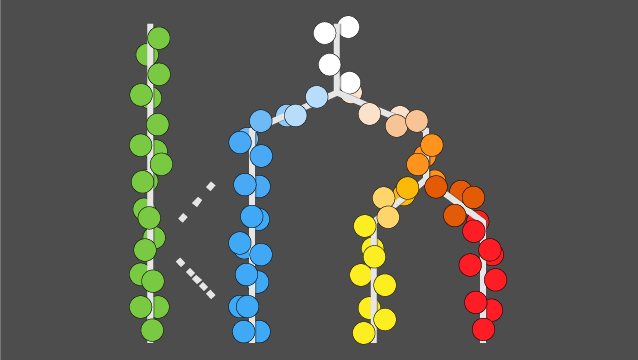
Molecular structure diagram showing color-coded chain atoms: green, blue, yellow, orange, and red spheres connected with bonds
Monocle
Monocle is a toolkit for analyzing single-cell gene expression experiments. It was designed for RNA-Seq, but can also work with single cell qPCR.

trapnell lab team
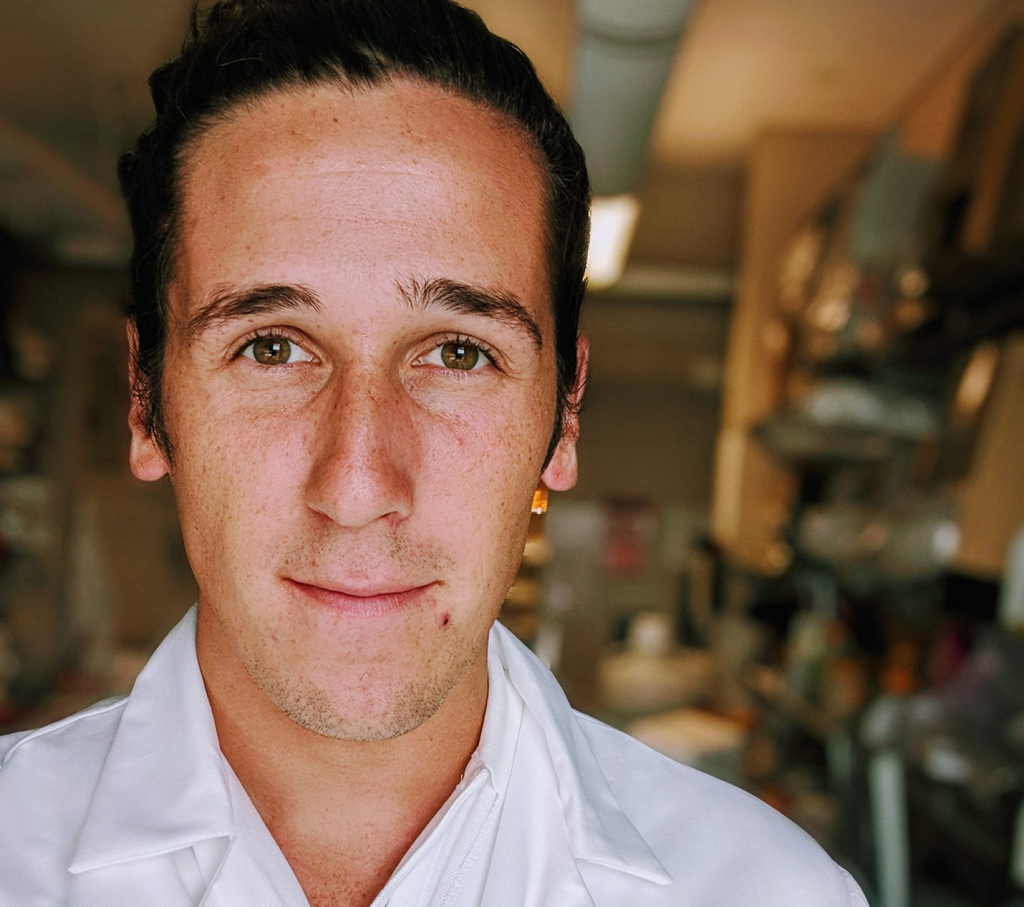
Eliza Barkan
University of Washington / Trapnell Lab
Marazzano Colon
University of Washington / Trapnell Lab
Maddy Duran
University of Washington / Trapnell Lab
Brent Ewing
University of Washinton / Trapnell Lab
Ryan Friedman
University of Washington / Trapnell Lab
Stephen Gonzalez
University of Washington / Trapell Lab
Benjamin Haagen
University of Washington / Trapnell Lab
Morgan Hamm
University of Washington / Trapnell Lab
Alex Hopkins
University of Washington / Trapnell Lab
Dana Jackson
University of Washington / Trapnell Lab
David Kimelman
University of Washington / Trapnell Lab
Nick Lammers
University of Washington / Trapnell Lab
Heidi Lee
University of Washingon / Trapnell Lab
Jyoti Rai
University of Washington / Trapnell Lab
Cliff Rostomily
University of Washington / Trapnell Lab
Amy Tresenrider
University of Washington / Trapnell Lab
Olivia Waltner
University of Washington / Trapnell Lab
Alex Weitzel
University of Washington / Trapnell Lab
Morgan Wu
University of Washington / Trapnell Lab
Riku Yasutomi
University of Washington / Trapnell Lab
Karl Young
University of Washington / Trapnell Lab
we acceleratedevelopcatalyzeimpact

science done differently. shared openly.

explore our accelerators

brain science

Mapping every cell, connection, and circuit in the brain—openly shared with the world.

cell science

Decoding how cells become tissues, then programming that knowledge into powerful new research tools.

neural dynamics

Revealing the brain's hidden algorithms that transform neural activity into real-world behavior.

immunology

Creating the deepest open reference for the healthy human immune system ever built.

synthetic biology

Engineering cells to record their own histories, transforming how we understand disease over time.

research

Big questions, open answers, and science built to be shared.

education

Inspiring the next generation of scientists through open science resources.

impact

Our science is empowering researchers and advancing health worldwide.
advancing science through open, collaborative research
Get the allen institute newsletter
Stay informed on the latest breakthroughs in neuroscience, bioscience, and AI-driven research.
allen institute
impactpeople & teamscareers & opportunitiesalumnihistory & founder
science resources
allencell.orgallenimmunology.orgallenneuraldynamics.orgbrain-bican.orgbrain-map.orgmicrons-explorer.org
research
brain sciencecell scienceneural dynamicsimmunologysynthetic biologypublications
education
science educationfield tripsprofessional developmenteducation resources
quick links
newseventsopen sciencepodcastscience resourceshuman brain donationvisit uscontact
follow us/

allen institute, 615 Westlake Ave North, Seattle, WA 98109 +12065487055

© 0000 allen institute. all rights reserved.
privacy policyterms of usecitation policyemployee portalpolicy & compliancecookie settings