Amity Addrisi: Our brains help us make decisions, solve problems, and understand the people around us. They shape our memories, our personalities, and how we experience the world. And yet, for something so central to who we are, we still know surprisingly little about the human brain, or the diseases that affect it.
Ed Lein: The problem is really quite astonishing. Brain diseases really represent the last frontier of health that we need to solve. One in three people worldwide, that’s over 3 billion people, suffer from some form of neurologic condition.
Ed Muir: Scientists have long studied the brain and brain diseases, though not often in large, coordinated attempts. But that’s about to change thanks to a bold new mission…
Dirk Keene: The Brain Health Accelerator is a really exciting development in which we are trying to assemble a comprehensive resource of people, patients, families, information about those people who will ultimately donate their blood and other sort of biofluids and biospecimens.
Ed Muir: It’s a global collaboration to advance our understanding of the brain and find new treatments for diseases afflicting it.
I’m Ed Muir.
Amity Addrisi: And I’m Amity Addrisi. Welcome to Lab Notes.
Ed Lein: This effort is really intended to try to make significant advances and accelerate our understanding of the human brain, both in health and disease.
Ed Muir: That’s Ed Lein, the Allen Institute’s executive vice president and director of the Brain Health Accelerator, also known as “Brain Health.”
It’s a bold, global research effort led by the Allen Institute, involving more than 30 research organizations and NGOs, all unified in the goal of understanding the brain and finding new treatments for diseases that affect it.
Ed Lein: In the US alone, this is almost a societal cost of about $1 trillion per year. This is only growing. Alzheimer’s alone is thought to be approaching $1 trillion a year in economic burden by 2050. So it’s just an enormous problem that continues to grow and we’re not keeping pace with our advances in science and medicine.
Amity Addrisi: In the US alone, the number of people with Alzheimer’s is expected to double by 2050.
It’s a health crisis moving in slow motion. And the stakes keep rising. Brain Health is bringing together scientists, tools, and resources on a scale we’ve never seen before to meet this challenge head-on.
Ed Lein: We’re built for scale and we’re able to actually apply modern technologies at scale… That’s necessary to tackle the complexity of this problem.
Ed Muir: In general, research into brain diseases has been fragmented and uncoordinated.
For example, one institution might study Alzheimer’s in human patients while another studies postmortem brain specimens but might not widely share their findings. Or they might focus on preclinical studies and clinical trials.
But Brain Health takes a different approach in several important ways. For one, it takes a “human first” approach, studying actual patients who volunteer to have their brains studied after they die.
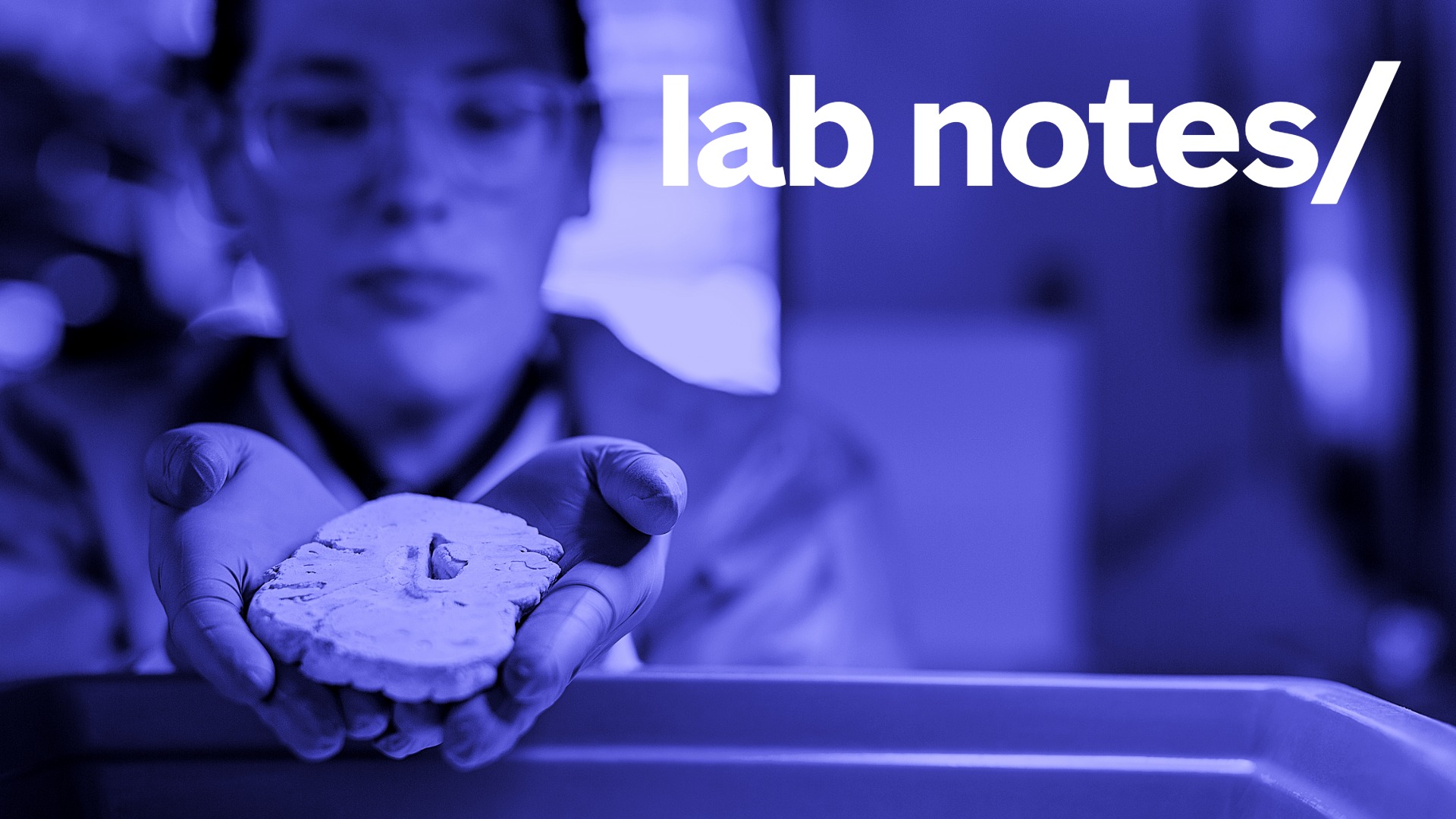
Dirk Keene: Ultimately, these people will be donating their brains and it’ll be my responsibility and my team’s to build a network so that we can collect those brains, make sure that they’re preserved in the best way possible, and can provide as much information as possible for the Brain Health Accelerator, which will maximize our chances for success, but also honor the gift that this brain donation is for this incredible endeavor.
Amity Addrisi: That’s Dirk Keene, a neuropathologist at UC San Diego. For Brain Health, he’ll help lead the effort to study donated brains from people who lived with Alzheimer’s, Parkinson’s, and other diseases.
Dirk Keene: If we’re testing something in a cell culture or in a computer, that doesn’t happen in people, it may be interesting, but it’s not relevant to the human disease. So human tissue is critical for us to really be pointed in the right direction and to dive into the key elements of what’s underlying a disease.
Amity Addrisi: In other words, if we want to understand what’s happening in people, we need to look at human brains.
And that’s where Brain Health takes a different approach. A lot of brain research looks for molecules or proteins tied to disease. This team is asking another question: which cells are most vulnerable? And what happens to the connections between them?
If they can pinpoint where things start to go wrong, the hope is to develop gene therapies that reach the right cells, with far greater precision.
Ed Lein: This is quite different from the pharmaceutical approach at the moment, which typically takes a gene-centric approach or a protein-centric approach, and doesn’t really pay much attention to the anatomy of the brain. The brain is so complex, you have to understand it at the level of its components and its functional circuitry. And we have the tools to do that.
Ed Muir: Another distinguishing factor behind the Brain Health mission is a centralized approach, which also allows scientists to study multiple brain diseases at once, which is rare in research.
Ed Lein: This is really critical because in many cases you can have pathology that overlaps between diseases, you can have symptoms that overlap between diseases, and we don’t really understand the full spectrum of the overlap of these and how these might represent different patient trajectories, and that would require different kinds of treatments. By taking a much broader approach to study all of these diseases together and to put this together into one big data modeling effort, we can really let the data tell us what these diseases are and really, hopefully, rapidly advance our understanding of disease towards true clinically actionable outcomes.
Ed Muir: Alzheimer’s, Parkinson’s, and other brain diseases are different. But they may have more in common than we think. By studying them together, researchers could uncover shared pathways and find new places to target treatments. That’s what makes this approach so promising: it brings different kinds of human brain research together to look for answers across diseases.
And for some scientists, this work is highly personal.
Amity Addrisi: Meet Jeff Carroll, an Allen Institute investigator leading the research into Huntington’s disease as part of Brain Health.
Huntington’s causes nerve cells in the brain to decay over time, and it affects people both physically and mentally. It can cause involuntary jerking or other muscular problems, while also affecting patients’ ability to organize thoughts and even lead to severe depression.
While Jeff was serving in the U.S. Army in his 20s, he learned his mother had Huntington’s. Then he got another piece of news: he carries the gene, too. For Jeff, the question isn’t if he’ll develop the disease. It’s when.
Amity Addrisi: Jeff went on to earn his Ph.D. and become a scientist. Now he’s working to understand Huntington’s and find answers for families like his…
Jeff Carroll: The brain is a big, complicated organ that we’re trying to stop doing something that for all of human history has happened, right? People who inherit this mutation die of it. And they die because these particular cells in the deep part of their brain die before they should. And we know that, but we can’t stop it. And that’s a bigger problem than one person can solve.
Jeff Carroll: And I think what’s important to say is that the way the Allen Institute has this structured, this Brain Health Accelerator is qualitatively very, very different than what anyone else is doing.
Ed Muir: A charge as bold and ambitious as unraveling the complexity of the human brain to find new treatments for disease doesn’t happen alone. Brain Health is backed by some big names, including AWS, University of Washington, and the Bezos family…
It builds upon major investments from the National Institute on Aging and the National Institutes of Health’s BRAIN Initiative.
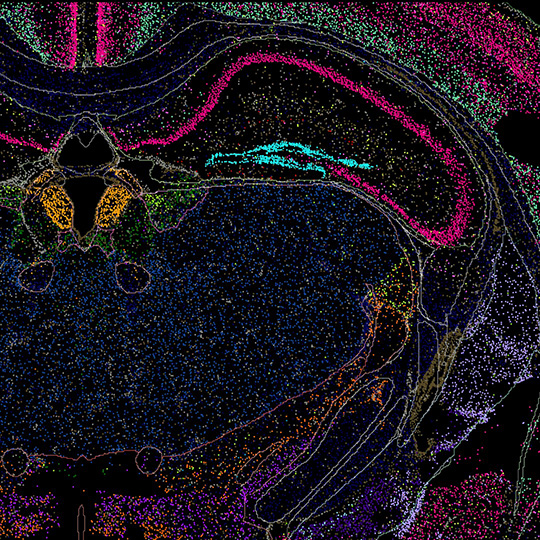
Ed Lein: NIH has made really critical investments that have allowed this initiative to happen. And in particular, I’d like to mention the NIH BRAIN Initiative, which really put an emphasis on first developing new technologies to study the brain and to manipulate the brain and then to apply them at scale. We’ve been extremely fortunate to be able to lead efforts within the NIH BRAIN Initiative on creating cell atlases, using single-cell genomics technologies to really create a foundational resource that maps out the brain. Think of Google Earth or the Human Genome Project.
This is the style of resource that we’re talking about that we now get to build on.
Ed Muir: Brain Health brings together a vast and deep well of expertise under one roof.
Ed Lein: There are areas of the field that study human patients. There are areas of the field that study postmortem brain specimens to try to understand disease mechanism. There are other parts of the field that try to advance therapeutics through preclinical studies and then into actual clinical practice. All of these are currently dissociated from one another, and one of the things that Brain Health will try to do is to bring them together into an integrated end-to-end approach.
Dirk Keene: We won’t replicate effort, but we’ll continue to push in our own ways in a unique way that will then benefit the rest of science in these different areas, right?
Amity Addrisi: Brain Health scientists say the pieces are finally in place for a major push against brain disease. Why now? Technology, data, and AI have all reached a turning point.
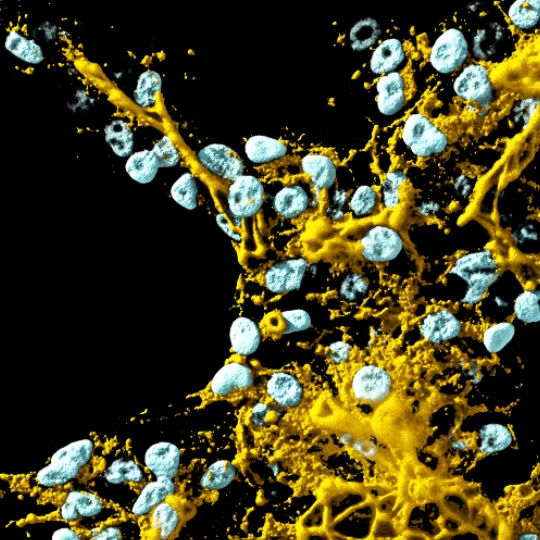
With advances in single-cell genomics and high-resolution imaging, scientists can see the brain in remarkable detail. That creates a massive amount of data, far more than any person could sort through alone.
Now AI can help make sense of it. These models can bring the data together, build models of disease, identify new biomarkers, and help predict how diseases may progress.
Ed Lein: You know, this has to be approached as a community. And we hope to be able to build on this work and to bring the community together to really accelerate progress. And now we’ll have these incredible data sets that are married with AI. And I think that we’re going to start to see the biology unfold. I think we’re going to start to see a redefinition of disease based on the kinds of data that we’re able to generate. And the community is starting to really benefit from this data in ways that they haven’t imagined yet.
Ed Muir: Knowledge, they say, is power, but it’s also hope.
Ed Lein: Hope comes from understanding, and we have the tools now to really understand at a whole different level what happens in some of these most severe diseases, such as ALS, which progresses only in a matter of years. And we have the tools to maybe be able to do something about that. And the combination of these things really can give us an accelerated path towards a new type of treatment and a sense of urgency to make these advances as quickly as possible.
Dirk Keene: Once we start to understand how the disease is working, what’s happening, especially along the way, especially early, then we have more hope and more realistic hope that the end is near, that we’re going to be able to find some effective treatment that will ultimately, hopefully, eliminate these things from the earth.
Ed Muir: From mouse to man… Brain Health can be seen as a culmination of the Allen Institute’s efforts in understanding the brain since it was founded in 2003.
Ed Lein: So I really see this as an outcome of the foundational work that’s been done over the history of the institute.
Dirk Keene: And so the Allen Institute really provides, you know, the shining example of how we get past our siloed science and go into what we call team science, where we all get together and we focus on a common problem.
Dirk Keene: As a person who, from the very beginning of my professional career, has been focused on trying to make an impact in neurodegenerative disease, and as a person involved in Brain Health with all of this coming together for me, it’s just a privilege to be involved. It gets me up in the morning and it’s what I think about before I go to bed. And I am driven to do as much as I can as part of this initiative and this network to make a difference because it’s really, truly unique.
Amity Addrisi: A new approach to fighting brain diseases that have affected families for generations. Scientists are hopeful Brain Health will bring answers, and one day, relief to millions of people.
I’m Amity Addrisi.
Ed Muir: And I’m Ed Muir.
Thank you to Ed Lein, Dirk Keene, and Jeff Carroll for sharing their insight.
This episode of Lab Notes was produced by Ed Muir, Peter Kim, and Amity Addrisi.
Amity Addrisi: For more episodes and science research news, visit our website: alleninstitute.org.
Thanks for listening.
This episode of Lab Notes was produced by Ed Muir, Amity Addrisi, Peter Kim, and Lisa Gray