what is open science?
sharing knowledge accelerates innovation and advances discovery
Science can be expensive, competitive, and challenging to share.
Research requires costly staff hours, laboratory space, and specialized materials.
The first scientists to announce a discovery or advancement are more likely to secure grants, patents, and other opportunities. There are other barriers to sharing science including cloud storage costs, data formatting, and online publishing hurdles.
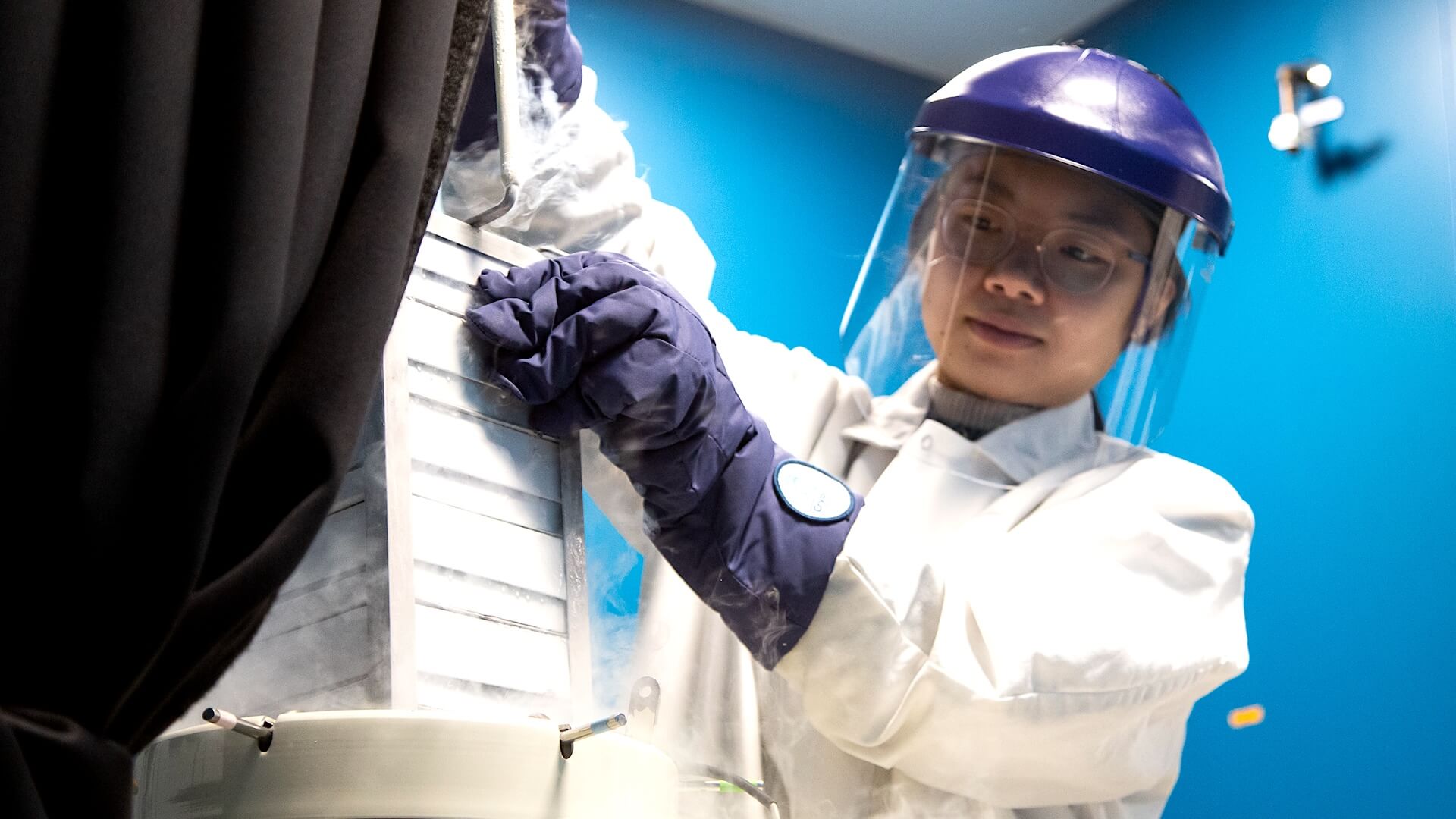
This image shows an Allen Institute researcher removing human iPS cell lines from liquid nitrogen storage.
A new path for science/
In recent decades, fueled by increasing global collaborations and technological advancements including the internet and cloud computing, there has been a growing movement to remove paywalls and barriers to sharing scientific data and resources to accelerate research.
This movement is called: Open Science.

access for all
Open Science aims to make scientific resources available to everyone.
Often this includes sharing data, but it also applies to any other scientific resource including custom microscope designs, stem cell lines, machine learning algorithms, software, and more.

leading in open science
The Allen Institute has been a leader in open science since our founding in 2003.
Open science is core to our mission and all we do at the Allen Institute. We share our science – formatted, visualized, and published to enable usability – along with software, lab protocols, cell lines, and more.
More collaboration in science through open resources leads to faster discoveries, such as treatments for diseases.