in this article
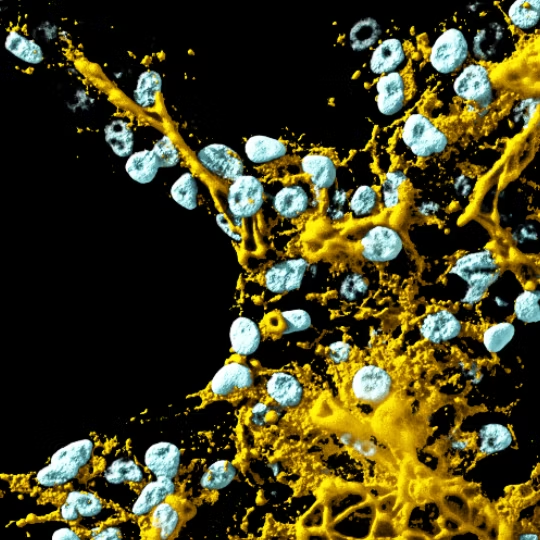
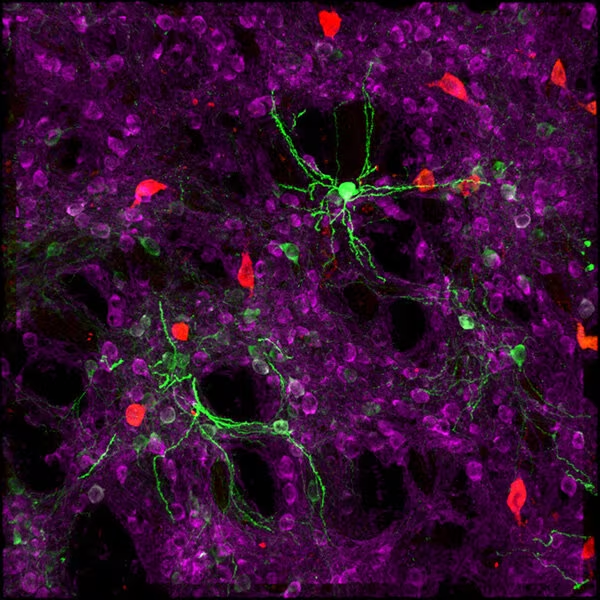
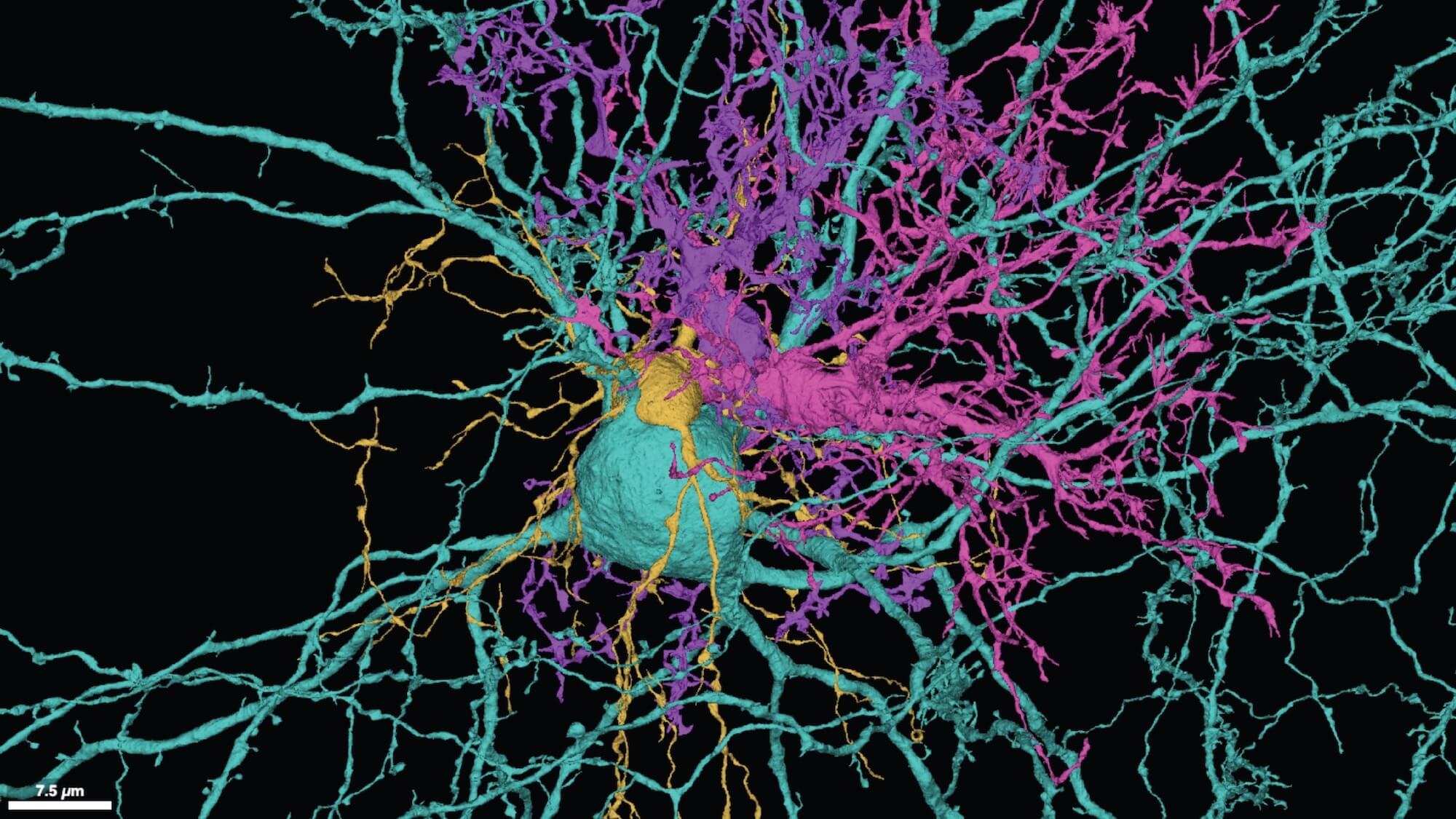
Neuroscientists have recently created a treasure trove: a dataset containing the complete 3D structures and connections from a cubic millimeter-sized chunk of mouse brain. Now, scientists at the Allen Institute — who were part of the collaborative effort to map this piece of brain — are sifting through the 200,000 cells present in that dataset to make new insights about their shapes, functions and patterns of connections. JoAnn Buchanan, an Allen Institute neuroscientist, is mining the dataset for cells known as glia — a class of brain cells historically thought of as “support cells” to neurons, but which play many important and still mysterious roles. In this image Buchanan captured, three different kinds of glia cluster around an inhibitory neuron (in turquoise), a kind of neuron that inhibits activity in other neurons. Buchanan and her colleagues are studying the interaction between two of these kinds of glia, a microglia (shown in purple) and an oligodendrocyte precursor cell (pink). Oligodendrocyte precursor cells give rise to oligodendrocytes (the gold cell in this image) through division and microglia are scavenger cells of the brain, cleaning up unwanted cells and other material. Buchanan speculates that the microglia may have been hanging around to consume the precursor cell at the moment the scientists captured their structures. — Rachel Tompa, Ph.D.
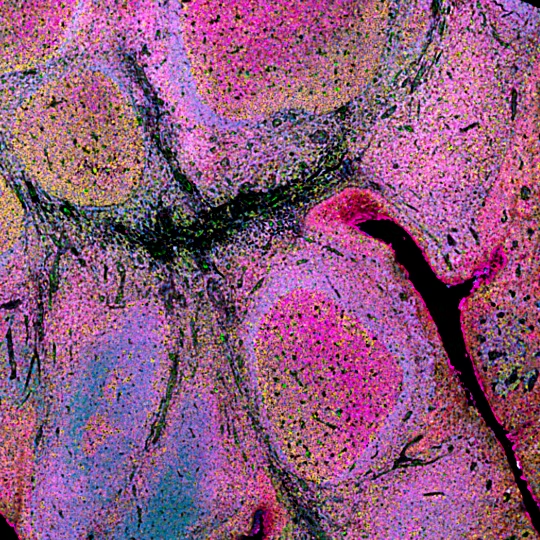
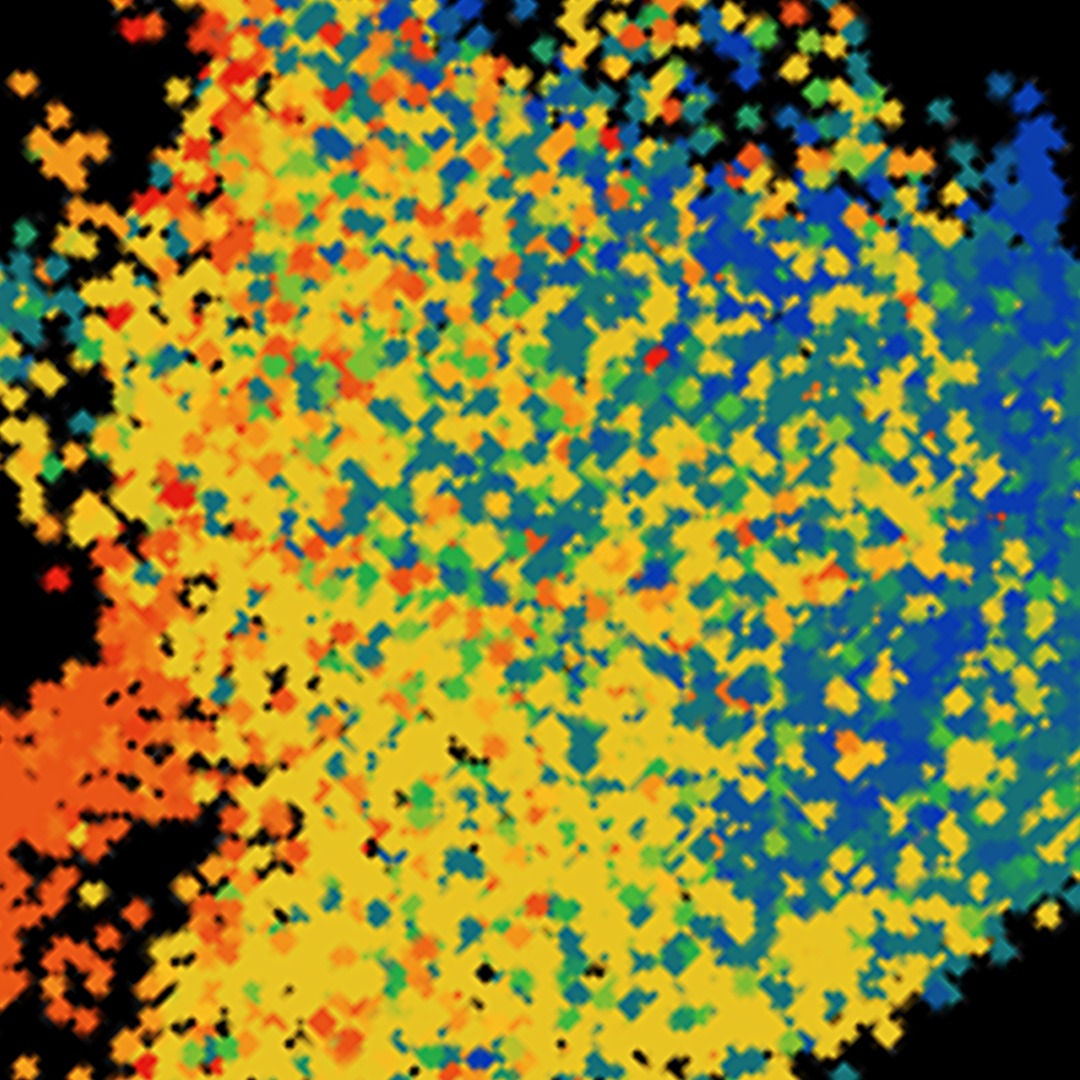
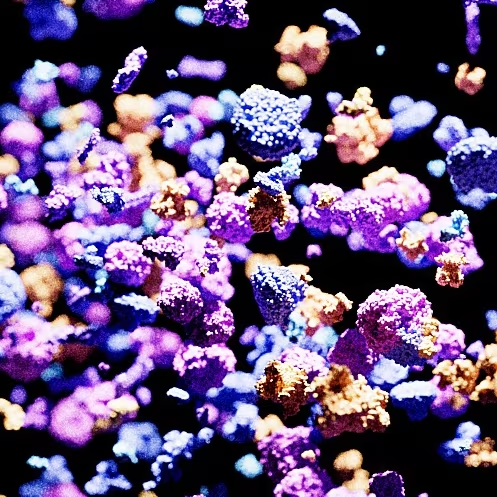
Microscopic viewpoints, computer-generated models, intricate tracings and more — see a new side of science with SciShots.
Citations
about the allen institute
Allen Institute is a 501(c)(3) tax exempt organization dedicated to accelerating science for a healthier world. Through large-scale, multidisciplinary research initiatives, the Institute generates foundational knowledge, data, tools, and models that are shared openly with the world to advance our understanding of life and health. Founded by Jody Allen and the late Paul G. Allen, Allen Institute is supported primarily by Fund for Science and Technology.
.gif)

.avif)

.avif)