news
stories from the front lines of discovery
From scientific breakthroughs to new open‑source tools, the Allen Institute’s work is reshaping how science is done—and who it’s for. Explore the latest news, stories, and highlights from across our research, partnerships, and open science efforts.


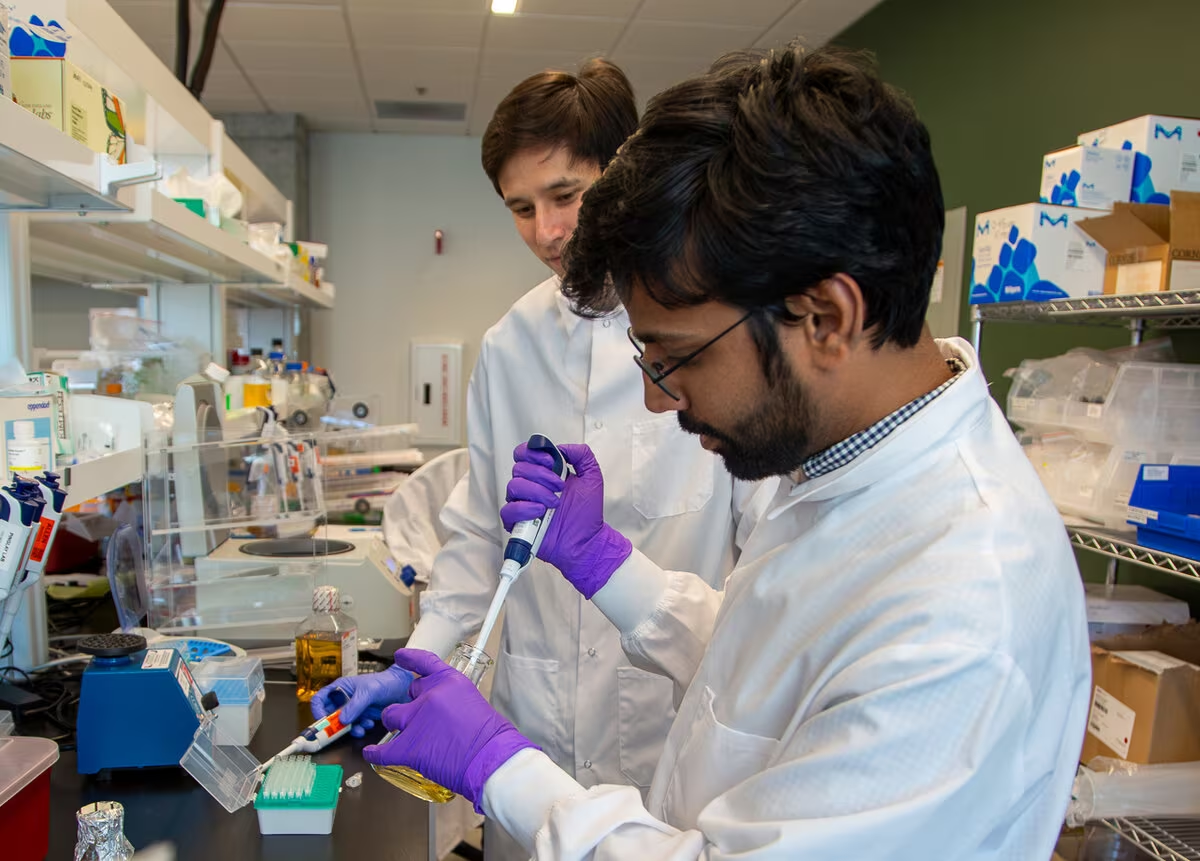
AI BioDesign accelerator combines experimental biology and artificial intelligence to learn nature’s design rules
Researchers from the Allen Institute, University of Washington, and Fred Hutch Cancer Center, supported by Fund for Science and Technology, will build open AI models, datasets, and tools to accelerate biological design for health, sustainability, and other global challenges
Thank you! Your submission has been received!
Oops! Something went wrong while submitting the form.
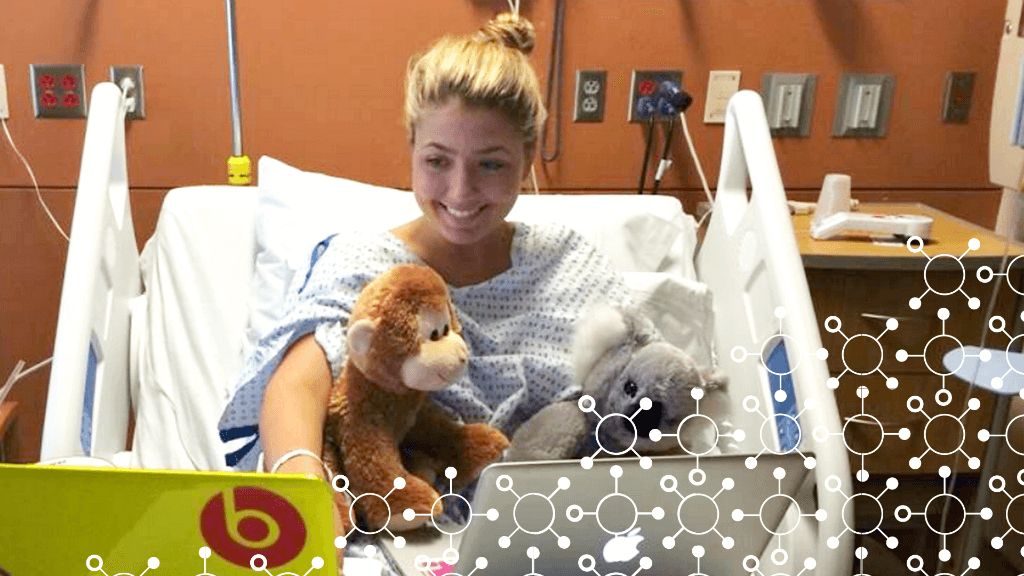

Out of Balance | Alyssa’s life with Crohn’s disease
Ever since Alyssa Clements can remember, she’s wanted to be a doctor. Her father is a chiropractor in south New Jersey, and his business partner was...
immunology
news
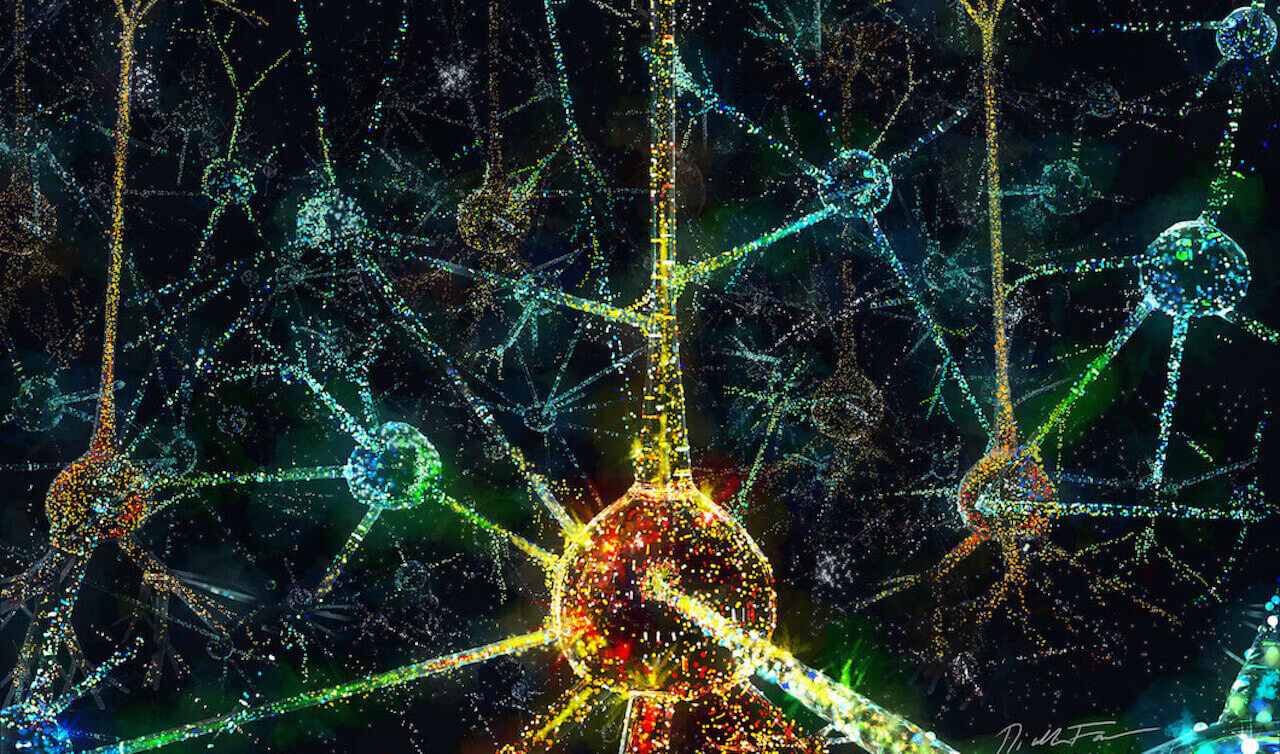
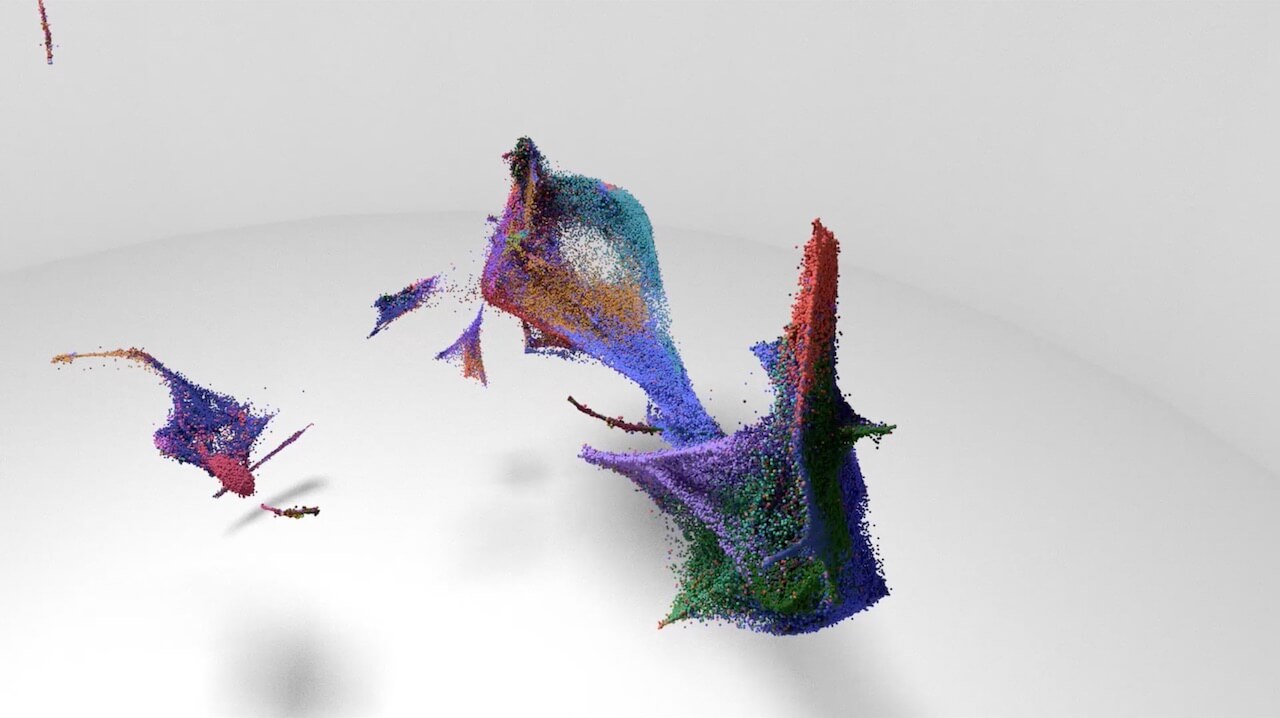
New Cell Registry enables exploration of multiple brain cell type datasets
The Allen Institute for Brain Science, a division of the Allen Institute, has debuted a new data exploration tool for brain cell type data.
No items found.
news

How do living creatures take shape?
Think of the shape of life. Living creatures have forms ranging from a tiny rod-shaped bacterium, to a wrinkled, tusked behemoth of an elephant, to a...
No items found.
news
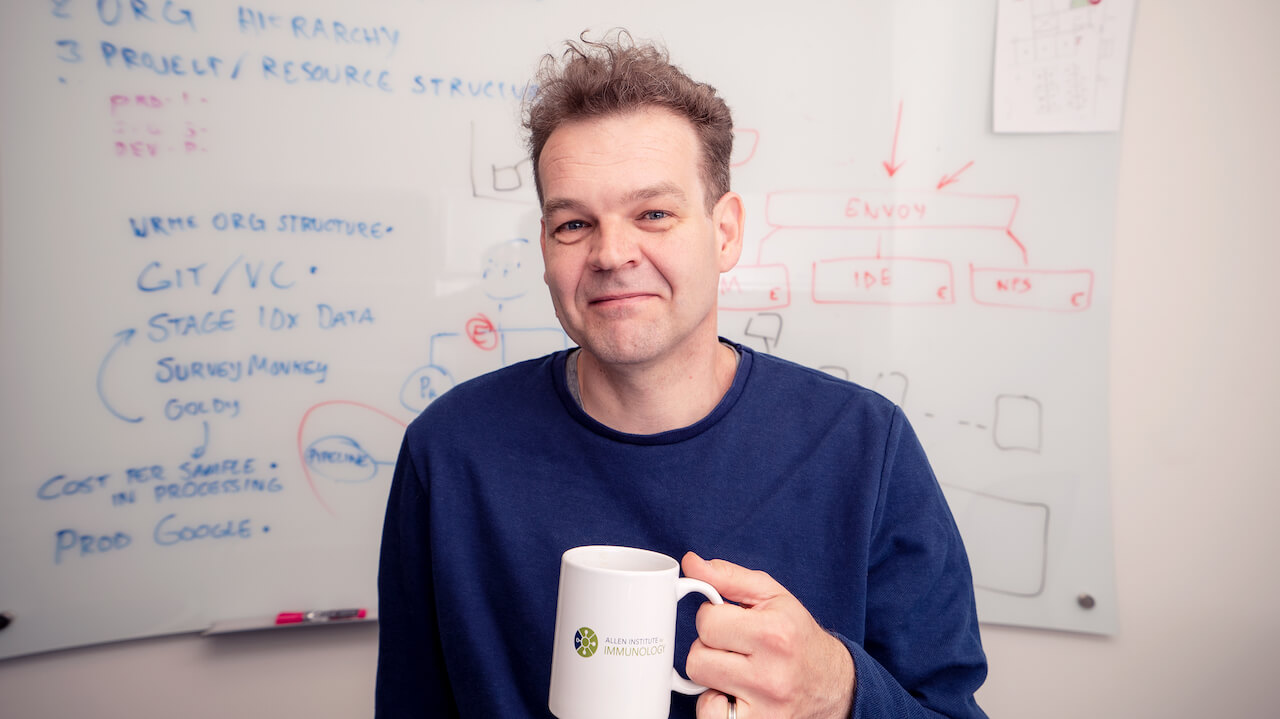
Q&A: A former experimental psychologist with a passion for data governance
Scientists everywhere are struggling with data. Paul Meijer, Ph.D., Director of Software Development at the newly launched Allen Institute for...
immunology
news
Gene drives get a precision upgrade
Gene drives, a method to “drive” a new gene through a population in a way that bypasses the natural order of inheritance, were first developed...
No items found.
news

A new technique to make beating human heart cells glow
Allen Institute for Cell Science researchers have developed a new technique that will enable better understanding of human heart muscle cells.
No items found.
news
Data Stories | Addiction & the visual system
Researcher Randy Ellis studies computational neuroscience and addiction. Ellis uses the Allen Brain Observatory dataset in his work to find new ways...
brain science
news
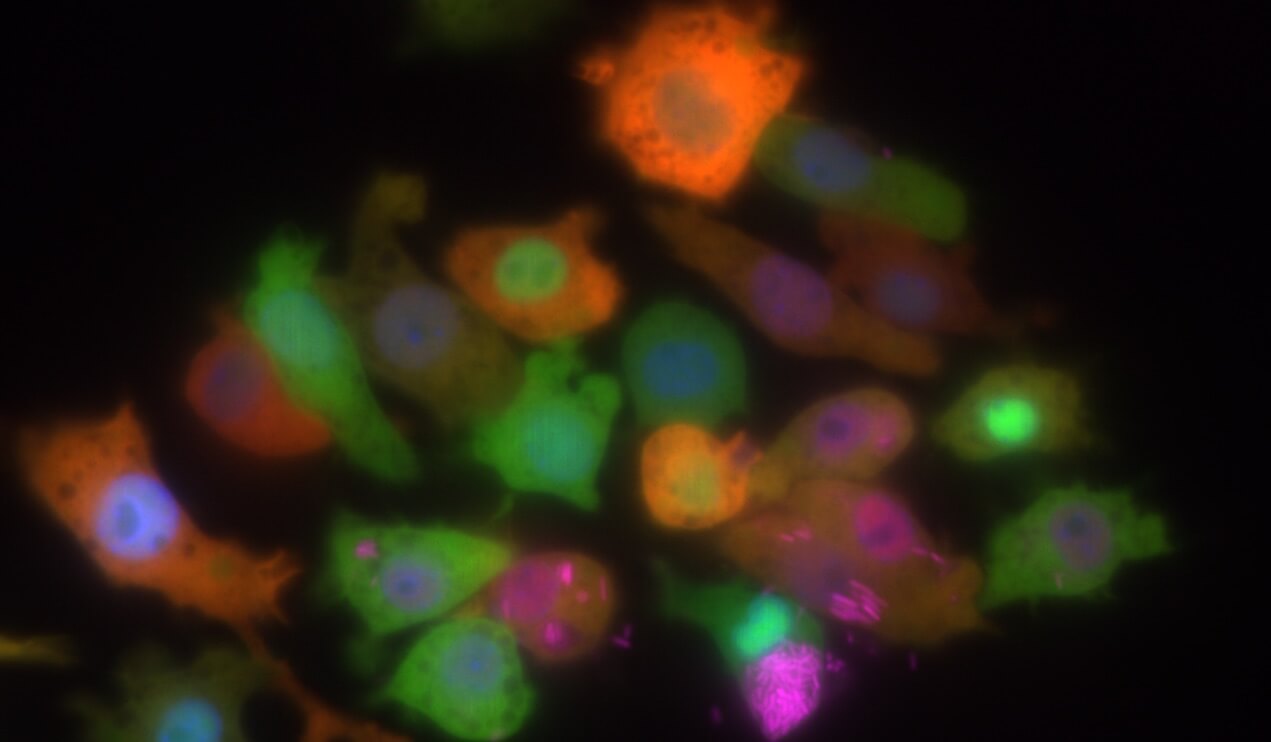
How immune cells detect different threat levels from salmonella
Your immune system has a tough job.
No items found.
news
5 unsolved mysteries about the brain
Can we understand our own brains? We have a long way to go, neuroscientists say.
brain science
news

Out of Balance | Tom Bumol’s life after lymphoma
What happens when an immunologist gets a life-threatening, immune-related disease? In Bumol’s case, he doubles down on his research.
No items found.

No results found, try reducing your search parameters.
press & media contact
Get in touch for media inquiries and resources for covering science at the scale of greatest impact.
Thank you! Your submission has been received!
Oops! Something went wrong while submitting the form.





Billionaire Paul Allen Donates $100 Million To Fund A 'Manhattan Project' For Human Disease
Paul Allen, the Microsoft cofounder turned billionaire philanthropist, will donate $100 million to create a research center tasked with investigating the inner workings of human cells. The ultimate goal is to deepen our understanding of how diseases emerge and how they can be treated and prevented.

Biologists Get $100 Million From Billionaire Paul Allen To Investigate Cells
With a gift of $100 million from billionaire philanthropist Paul G. Allen, scientists will embark on an effort to understand how cells work and how they malfunction in disease. Leaders of this new endeavor announced the launch of the Seattle-based Allen Institute for Cell Science today at the annual meeting of the American Society for Cell Biology in Philadelphia.



Billionaire Paul Allen donates $100m to new ‘industrial scale’ effort to understand human cells
Microsoft co-founder Paul G. Allen is donating $100 million of his fortune to launch what he calls an “industrial-scale” effort to understand the basic building block of all living things: the cell.
No results found, try reducing your search parameters.