news
stories from the front lines of discovery
From scientific breakthroughs to new open‑source tools, the Allen Institute’s work is reshaping how science is done—and who it’s for. Explore the latest news, stories, and highlights from across our research, partnerships, and open science efforts.


AI BioDesign accelerator combines experimental biology and artificial intelligence to learn nature’s design rules
Researchers from the Allen Institute, University of Washington, and Fred Hutch Cancer Center, supported by Fund for Science and Technology, will build open AI models, datasets, and tools to accelerate biological design for health, sustainability, and other global challenges
Thank you! Your submission has been received!
Oops! Something went wrong while submitting the form.

‘For most of us, the immune system does the impossible’: Q&A with an immunology expert
Immunologist Troy Torgerson shares insights on research in the time of coronavirus, why the immune system is so fascinating, and the largest mysteries of human health and disease
No items found.
news


Science Matters | Science that stands the test of time
It’s almost impossible to make further scientific advances without basic - foundational - science. Baljit Khakh a scientist at UCLA and Allen...
No items found.
video

Allen Institute announces new phase of neuroscience research
Cell Types and MindScope research programs to enter new stages of resource generation and discovery; another neuroscience division to launch in 2022
No items found.
news
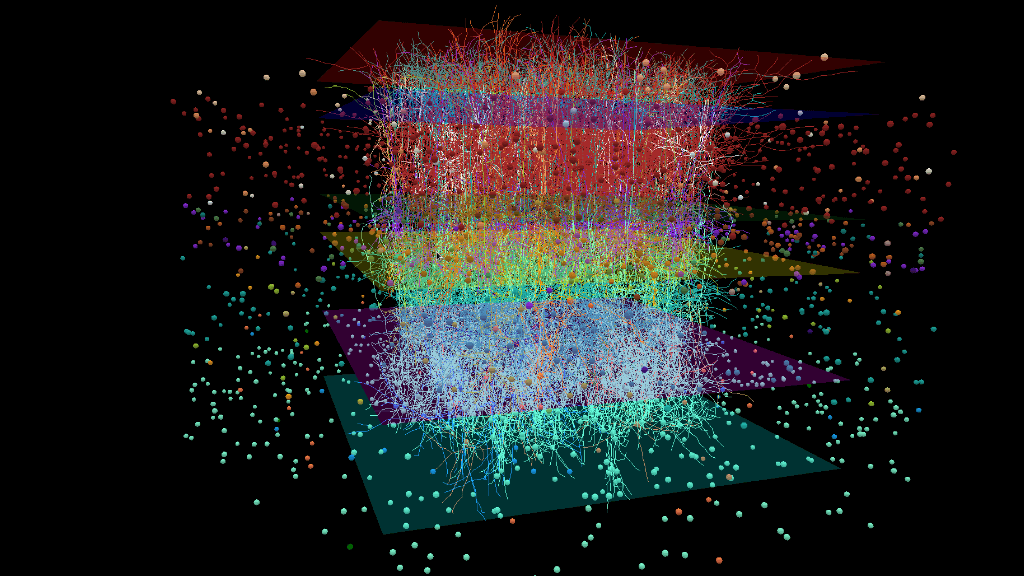
Scientists recreated part of the mouse brain on a computer - and showed it movies
The 230,000-cell simulation of part of the visual system can serve as a testbed for understanding general principles of the brain, its creators say
brain science
news

what’s your favorite neuron? we asked five neuroscientists.
Once you’ve read this, you might have one too
No items found.
news
Data Stories | What our heartbeats reveal about our brains
The human brain pulses every time the heart beats. Scientists have used that tiny jiggle to reveal new insights about our neurons.
No items found.
news

Competition yields new approaches to trace development, cell by cell
The Allen Institute and Sage Bionetworks announced winners of the Allen Institute Cell Lineage Reconstruction DREAM Challenge
No items found.
news
New clues about a huge, rare human brain cell
Study finds human von Economo neurons’ closest cellular cousins and captures first electrical recordings from these large spindle-shaped brain cells
No items found.
news
The neurons that respond to novelty
When mice see unfamiliar images, certain neurons in the visual part of their brains kick into high gear. Scientists think these neurons could be...
No items found.
news

A new discovery about ALS
Stem cell researcher Evangelos Kiskinis and his colleagues discovered a strange — literal — wrinkle in neurons from ALS patients. Allen Institute for Cell Science resources are helping them study these features in more detail.
No items found.
news


No results found, try reducing your search parameters.
press & media contact
Get in touch for media inquiries and resources for covering science at the scale of greatest impact.
Thank you! Your submission has been received!
Oops! Something went wrong while submitting the form.



Seattle researchers lead ambitious project to map the human brain
We could be on the cusp of breakthrough treatments for brain diseases, from Alzheimer's Disease to depression and ADHD. Local scientists from the Allen Institute for Brain Science are spearheading a five-year project to map the human brain.

NIH launches the next stage of its ‘human genome project’ for the brain
The National Institutes of Health on Thursday announced more than $600 million in fresh funding for an expansive and ongoing push to unravel the mysteries of the human brain, bankrolling efforts to create a detailed map of the whole brain, and devise new ways to target therapeutics and other molecules to specific brain cell populations.




Data Trove Released by Seattle Alzheimer’s Disease Brain Cell Atlas
Neuroscientists at the Allen Institute for Brain Science and their collaborators have released their first research data set on Alzheimer’s disease, in which they categorized cell types based on gene activity. The team hope this approach could ultimately identify new targets for better therapies.


No results found, try reducing your search parameters.