impact
about
our story
explore our impact
careers and opportunities
join us
open science
sharing science to speed discovery
open science week
celebrating open science
team science
people & teams
discovery is a team effort
allenites
the people who make our work possible
advisors
their input shapes our science
board of directors
they help us fulfill our mission
shanahan foundation fellowship
at the interface of data and neuroscience
next generation leaders
fostering emerging leaders in bioscience
research
overview
our approach
science at the scale of greatest impact
publications
explore our publications
open science
sharing science to speed discovery
science accelerators
brain science
building a blueprint of the brain
cell science
understanding how cells become organs
neural dynamics
revealing the brain’s hidden algorithms
immunology
creating the ultimate immune system reference
synthetic biology
seattle hub for synthetic biology
brain health
accelerating human brain research and disease therapeutics
education
overview
science education
science is for everyone
open science
sharing science speeds discovery
engagement
education resources
real science. real skills.
field trips
experience science where it happens
educator development
empowering educators
news
overview
all news
explore the latest news
podcast
the human stories behind discovery
sign up for our newsletter
stay connected to our science
events
overview
all events
public engagement, workshops, seminars and more
conferences
connect with us
science resources
science resources
allencell.org
allenimmunology.org
allenneuraldynamics.org
brain-bican.org
brain-map.org
microns-explorer.org
impact
back to menu
team science
our story
explore our impact
careers and opportunities
join us
open science
sharing science to speed discovery
open science week
celebrating open science
team science
people & teams
discovery is a team effort
allenites
the people who make our work possible
advisors
their input shapes our science
board of directors
they help us fulfill our mission
shanahan foundation fellowship
at the interface of data and neuroscience
next generation leaders
fostering emerging leaders in bioscience
research
back to menu
overview
our approach
science at the scale of greatest impact
publications
explore our publications
open science
sharing science to speed discovery
science accelerators
brain science
building a blueprint of the brain
cell science
understanding how cells become organs
neural dynamics
revealing the brain’s hidden algorithms
immunology
creating the ultimate immune system reference
synthetic biology
seattle hub for synthetic biology
brain health
accelerating human brain research and disease therapeutics
education
back to menu
overview
science education
science is for everyone
open science
sharing science speeds discovery
engagement
education resources
real science. real skills.
field trips
experience science where it happens
educator development
empowering educators
news
back to menu
overview
all news
explore the latest news
podcast
the human stories behind discovery
newsletter
stay connected to our science
events
back to menu
overview
all events
public engagement, workshops, seminars and more
conferences
connect with us
science resources
back to menu
science resources
allencell.org
allenimmunology.org
allenneuraldynamics.org
brain-bican.org
brain-map.org
microns-explorer.org
Heading
search
news

rogue DNA can move from cell to cell and change how they function

Scientists used Allen Institute cell lines to discover an important new way that cells trade genetic material

July 22, 2026
0 min read
share/
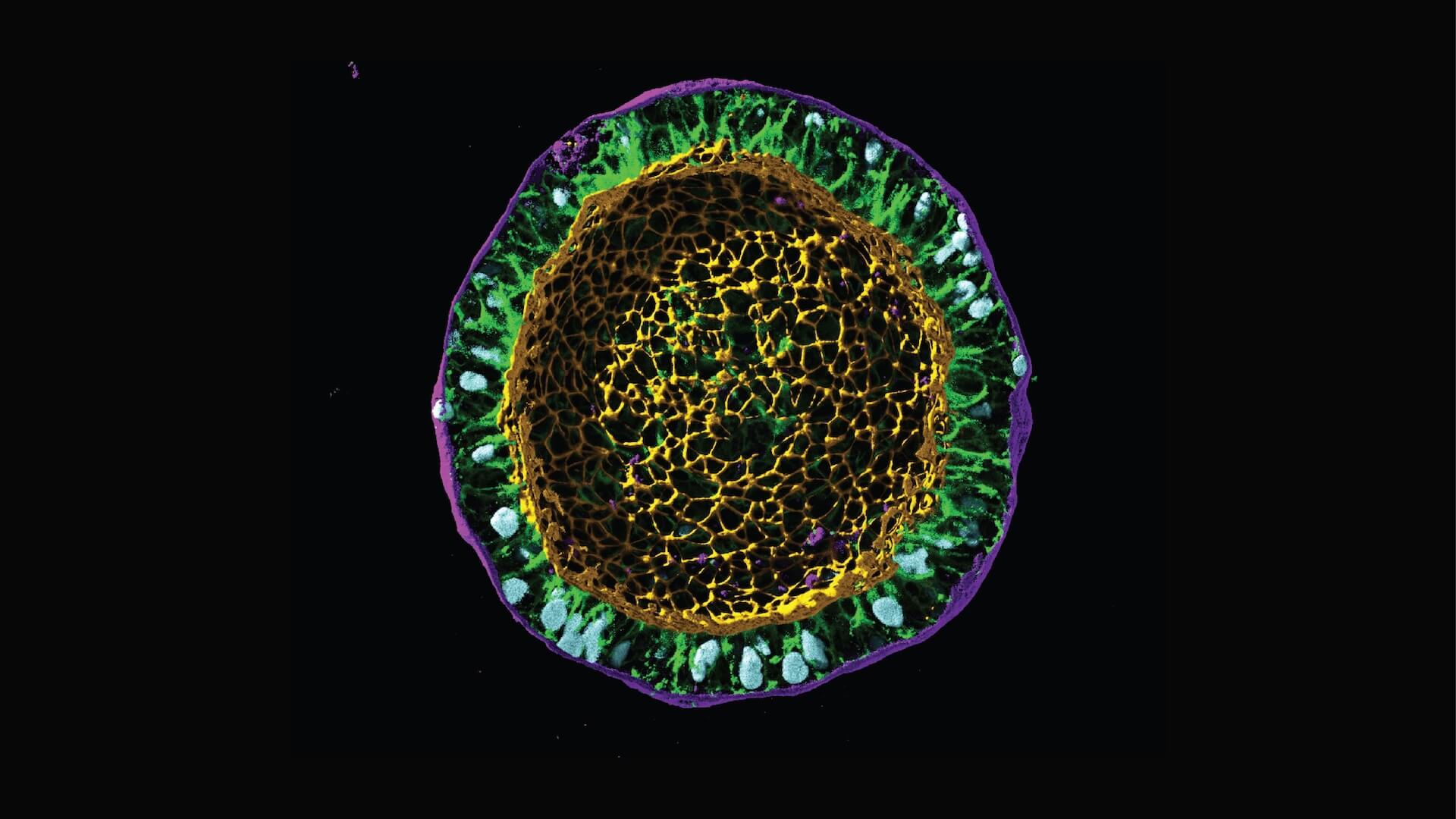
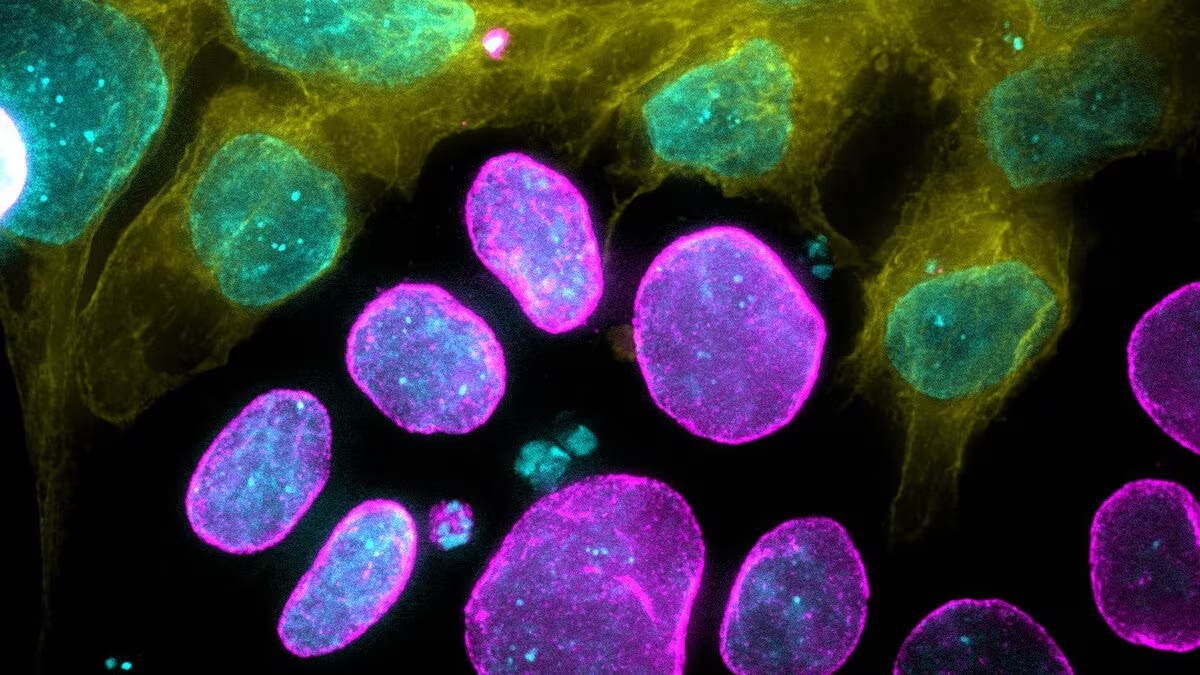
Co-cultured Allen Cell Collection iPSC lines AICS-0034 (Lamin B1-RFP) and AICS-0012 (α-tubulin-GFP). DNA is shown in cyan, Lamin B1 in magenta, and α-tubulin in yellow.
Scientists used Allen Institute cell lines to discover an important new way that cells trade genetic material

in this article

table of contents will display on published page only
set h2 to populate the table of contents here

authors

Ed Muir
Sr. Communications Specialist

Scientists generally agree that cells are self-contained units, with the human genome — made up of chromosomes, which are comprised of our genes and DNA — residing in the cell's nucleus.  

When cells divide through mitosis, they pass on the genetic information carried in their chromosomes down to their daughter cells, including any genetic mutations caused by radiation or infections. But what if segments of DNA could also move between cells through an entirely different process?

A new study published in the journal Cell reveals just that: an alternate, previously unknown, route for DNA to travel between cells. Scientists from the Children's Medical Center Research Institute at UT Southwestern and the Oklahoma Medical Research Foundation found that in some cases when chromosomes failed to divide equally, DNA fragments remained behind in tiny sacs called micronuclei, which float in the cell's cytoplasm rather than the nucleus. Using fluorescently tagged Allen Institute cell lines, the researchers observed these micronuclei migrating from one cell to another carrying their DNA passengers with them, which was a surprising discovery.

“This has been well-established in organisms such as bacteria through a process called horizontal gene transfer, where bacteria share DNA with neighboring bacteria, allowing them to acquire a new function, such as resistance to antibiotics,” said Peter Ly, Assistant Professor in the Children’s Medical Center Research Institute at UT Southwestern and senior author of the study. “But we were not aware of this type of transfer before in human cells.”

Time-lapse movie of live hiPS cell colony expressing mTagRFP-T-tagged lamin B1. A single, mid-level plane of the cells was imaged every 3 min on a spinning-disk confocal microscope. Movie plays at 1800x real time. Scale bar, 5 µm.

Ly’s team found that in cases of genomic instability, donor cells transferred micronuclei to recipient cells through bridge-like structures called nanotubes. The transfer occurred across multiple human cell types, including retinal pigment epithelial cells, kidney cells, and cancer cells. Ly then collaborated with OMRF scientists who work with human induced pluripotent stem cells (iPSCs) to confirm the phenomenon in stem cells.

“We were looking at this in a two-dimensional culture, but in actual human tissue where cells are packed together very tightly, you might anticipate that this would occur even more frequently,” said Gary Gorbsky, OMRF professor and study co-author. “This opens up the possibility of a new process of genetic transfer of information.”

What effect did rogue DNA have on the new cell?

To test whether this new DNA that came from another cell had a functional impact on the new cell, the scientists engineered donor cells with resistance to a specific antibiotic. After combining donor and recipient cells in culture and inducing chromosome damage, they found that recipient cells acquired the same antibiotic resistance – direct evidence that mammalian cells can trade genetic material through simple cell-to-cell contact.
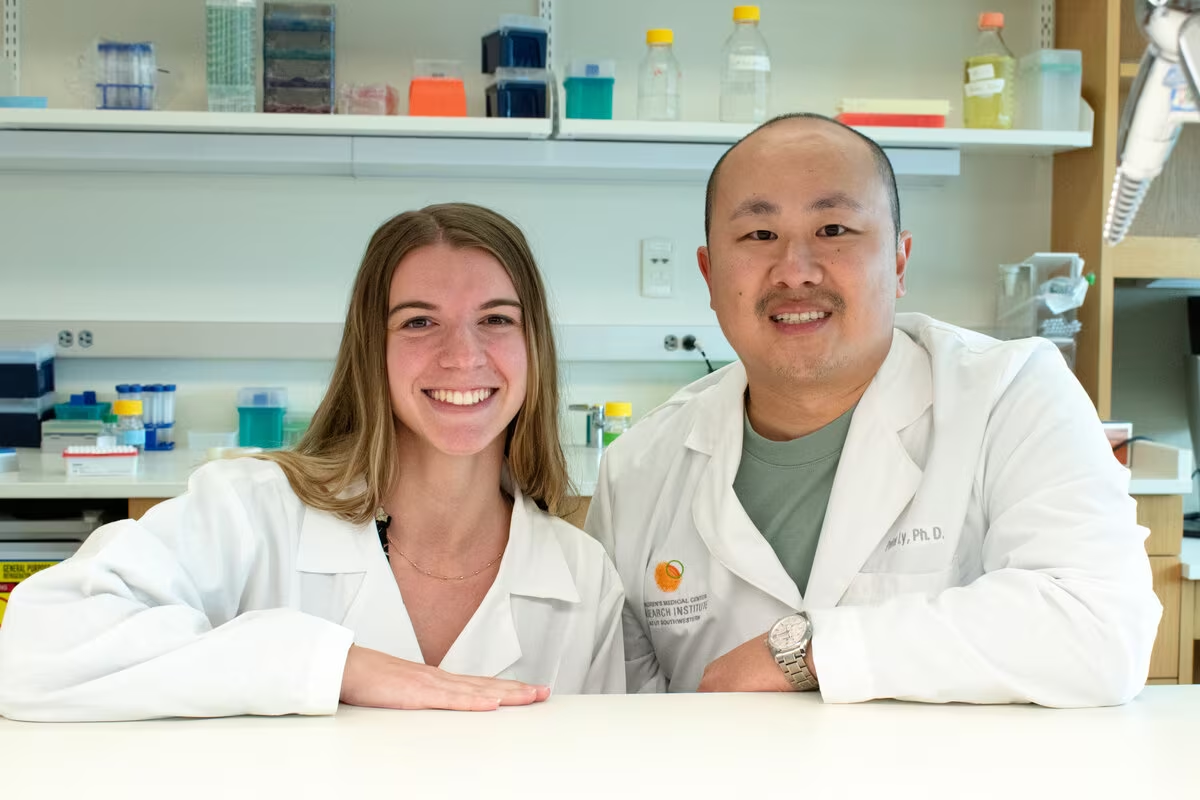
Study co-authors Elizabeth Maurais and Peter Ly in a lab together. (Credit: Children’s Medical Center Research Institute at UT Southwestern.)

“One exciting aspect of the study was that once the DNA transfers, it can actually become a part of that recipient cell’s genome, express genes, and change the function of that cell,” Ly said.

Scientists are still researching the full implications of these findings and the extent that recipient cells could be infected by damaged DNA, but they’re actively exploring those areas.  

The work relied on Allen Institute cell lines AICS-0012 and AICS-0034, which express fluorescently-tagged proteins specific to the research: alpha-tubulin in the case of AICS-0012, and lamin B1 in the case of AICS-0034.
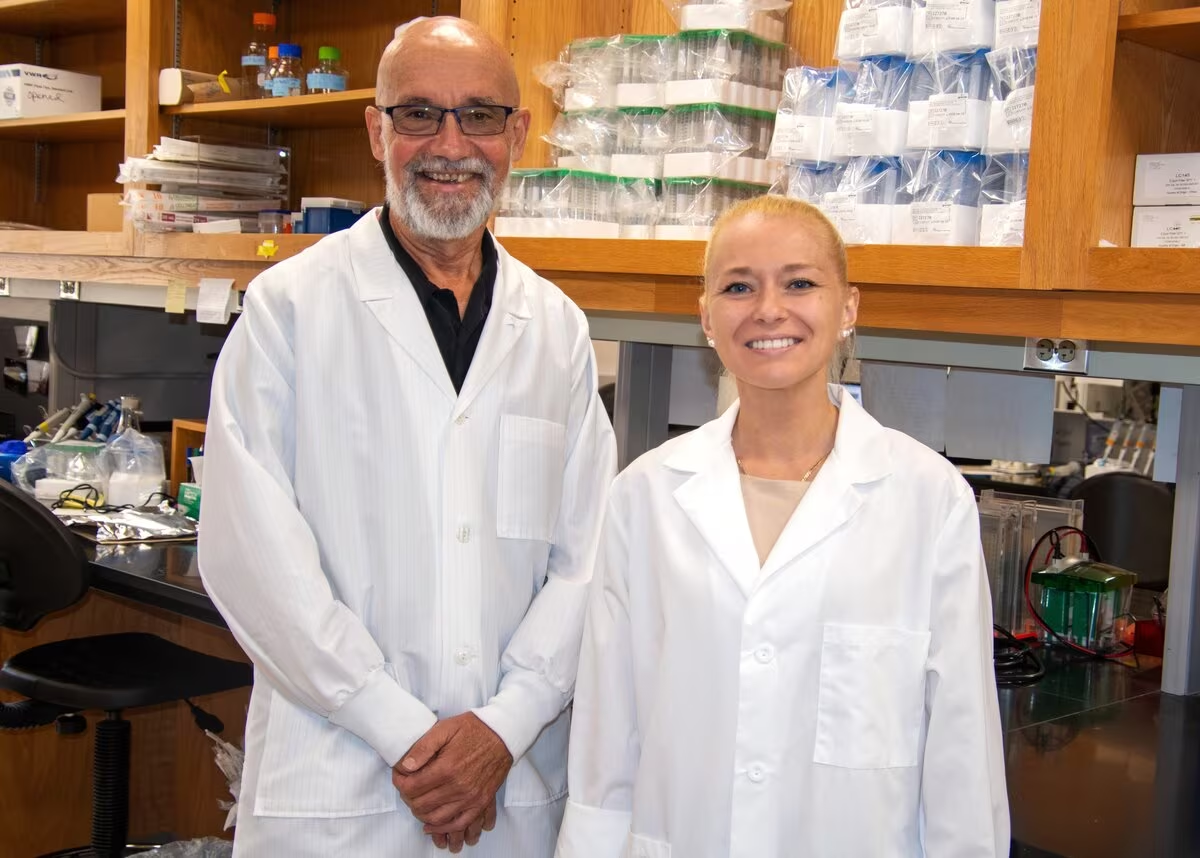
Gary Gorbsky and Maria Narozna in a laboratory at OMRF. (Credit: OMRF)

“All of the iPSC lines offered by Allen Institute are derived from the same parental cell line, providing a shared genetic background, which is crucial to our study of genomic instability,” said Maria Narozna, OMRF researcher and study co-author. “The diverse number of genes that are endogenously tagged and made available from the Institute allows you to design experiments creatively and gives you the specific answer you’re looking for.”

Looking ahead, the researchers hope to determine how this form of DNA transfer might contribute to how cancer spreads. For now, they're excited about its broader implications for how genetic instability may propagate through tissues.

‍

Citations
No items found.

about the allen institute

Allen Institute is a 501(c)(3) nonprofit medical research organization dedicated to accelerating science for a healthier world. Through large-scale, multidisciplinary research initiatives, the Institute generates foundational knowledge, data, tools, and models that are shared openly with the world to advance our understanding of life and health. Founded by Jody Allen and the late Paul G. Allen, Allen Institute is supported primarily by the Fund for Science and Technology.
related news

all news
news
the genetic defect in cancer that turns cells into “rule breakers”
Scientists use Allen Institute cell lines to learn how the genetic defect spreads in stem cells
video
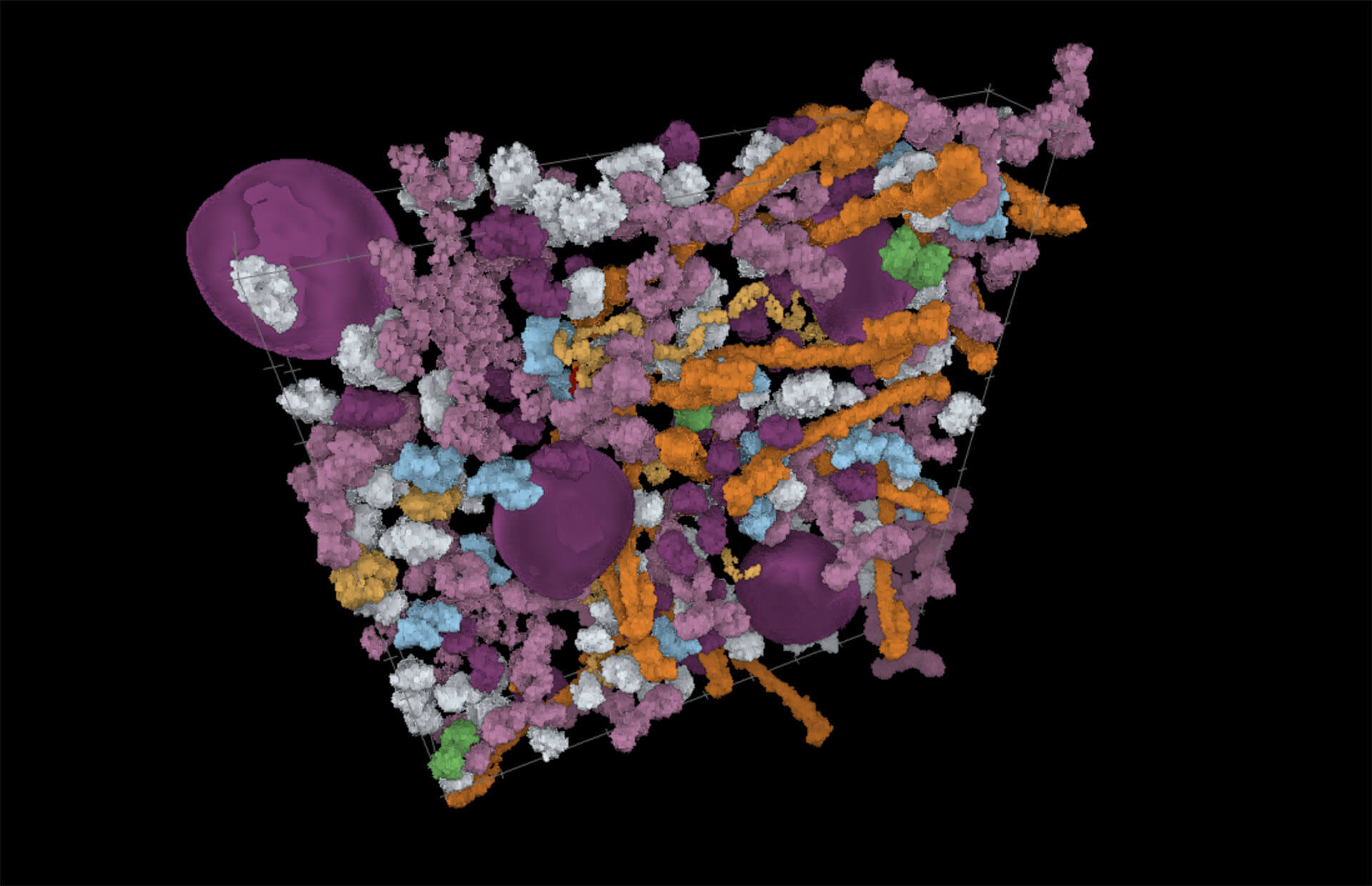
Simularium: accelerating discovery by animating insight
Simularium is an innovative online tool designed by the Allen Institute’s Cell Science team that visualizes 4D simulations (animations) of complex...
news
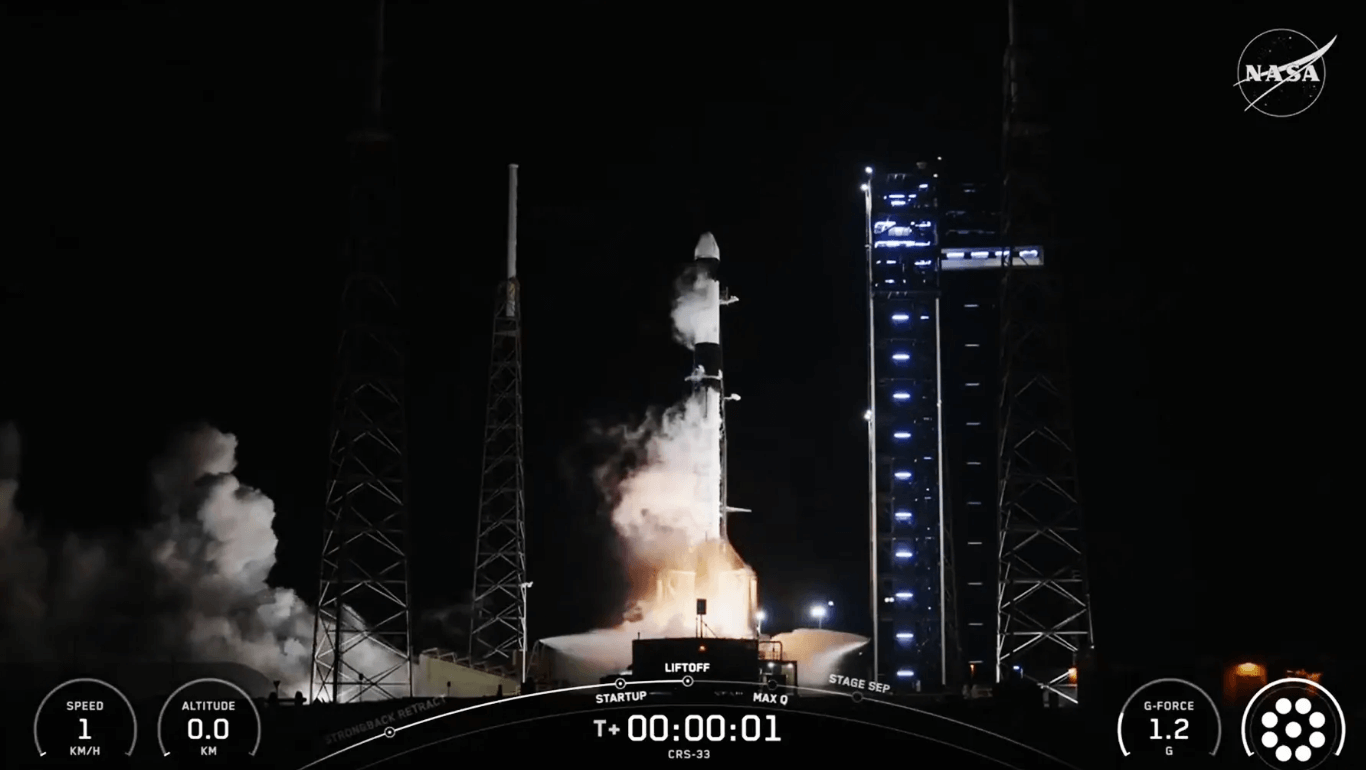
Allen Institute cells blast off into outer space
Researchers from Cedars-Sinai are using Allen Institute cell lines to grow organoids in space, which could help design better drugs for disease
video
what are the parts of a cell?
From mitochondria to endoplasmic reticulum, this educational video explores the major cell organelles and their functions.
news
Allen Institute names Sarah Norris Hall as next Chief Financial Officer
Norris Hall’s experience and insight into financial operations will help enable and propel transformative science at the Allen Institute.
video
CellScapes: Launching a new era of cellular biology
CellScapes introduces a groundbreaking approach that will combine cutting-edge imaging and powerful computer models to track how cells change, communicate, and organize.
we acceleratedevelopcatalyzeimpact

science done differently. shared openly.

explore our accelerators

brain science

Mapping every cell, connection, and circuit in the brain—openly shared with the world.

cell science

Decoding how cells become tissues, then programming that knowledge into powerful new research tools.

neural dynamics

Revealing the brain's hidden algorithms that transform neural activity into real-world behavior.

immunology

Creating the deepest open reference for the healthy human immune system ever built.

synthetic biology

Engineering cells to record their own histories, transforming how we understand disease over time.

Brain Health

Accelerating human brain research and new therapeutic strategies for neurological conditions

research

Big questions, open answers, and science built to be shared.

education

Inspiring the next generation of scientists through open science resources.

impact

Our science is empowering researchers and advancing health worldwide.
advancing science through open, collaborative research
Get the allen institute newsletter
Stay informed on the latest breakthroughs in neuroscience, bioscience, and AI-driven research.
allen institute
impactpeople & teamscareers & opportunitiesalumnihistory & founder
science resources
allencell.orgallenimmunology.orgallenneuraldynamics.orgbrain-bican.orgbrain-map.orgmicrons-explorer.org
research
brain sciencecell scienceneural dynamicsimmunologysynthetic biologybrain healthpublications
education
science educationfield tripsprofessional developmenteducation resources
quick links
newseventsopen sciencepodcastscience resourceshuman brain donationvisit uscontact
follow us/

allen institute, 615 Westlake Ave North, Seattle, WA 98109 +12065487055

© 0000 allen institute. all rights reserved.
privacy policyterms of usecitation policyemployee portalpolicy & compliancecookie settings