impact
about
our story
explore our impact
careers and opportunities
join us
open science
sharing science to speed discovery
open science week
celebrating open science
team science
people & teams
discovery is a team effort
allenites
the people who make our work possible
advisors
their input shapes our science
board of directors
they help us fulfill our mission
shanahan foundation fellowship
at the interface of data and neuroscience
next generation leaders
fostering emerging leaders in bioscience
research
overview
our approach
science at the scale of greatest impact
publications
explore our publications
open science
sharing science to speed discovery
science accelerators
brain science
building a blueprint of the brain
cell science
understanding how cells become organs
neural dynamics
revealing the brain’s hidden algorithms
immunology
creating the ultimate immune system reference
synthetic biology
seattle hub for synthetic biology
education
overview
science education
science is for everyone
open science
sharing science speeds discovery
engagement
education resources
real science. real skills.
field trips
experience science where it happens
educator development
empowering educators
news
overview
all news
explore the latest news
podcast
the human stories behind discovery
sign up for our newsletter
stay connected to our science
events
overview
all events
public engagement, workshops, seminars and more
conferences
connect with us
science resources
science resources
allencell.org
allenimmunology.org
allenneuraldynamics.org
brain-bican.org
brain-map.org
microns-explorer.org
impact
back to menu
team science
our story
explore our impact
careers and opportunities
join us
open science
sharing science to speed discovery
open science week
celebrating open science
team science
people & teams
discovery is a team effort
allenites
the people who make our work possible
advisors
their input shapes our science
board of directors
they help us fulfill our mission
shanahan foundation fellowship
at the interface of data and neuroscience
next generation leaders
fostering emerging leaders in bioscience
research
back to menu
overview
our approach
science at the scale of greatest impact
publications
explore our publications
open science
sharing science to speed discovery
science accelerators
brain science
building a blueprint of the brain
cell science
understanding how cells become organs
neural dynamics
revealing the brain’s hidden algorithms
immunology
creating the ultimate immune system reference
synthetic biology
seattle hub for synthetic biology
education
back to menu
overview
science education
science is for everyone
open science
sharing science speeds discovery
engagement
education resources
real science. real skills.
field trips
experience science where it happens
educator development
empowering educators
news
back to menu
overview
all news
explore the latest news
podcast
the human stories behind discovery
newsletter
stay connected to our science
events
back to menu
overview
all events
public engagement, workshops, seminars and more
conferences
connect with us
science resources
back to menu
science resources
allencell.org
allenimmunology.org
allenneuraldynamics.org
brain-bican.org
brain-map.org
microns-explorer.org
search
news

The genetic defect in cancer that turns cells into “rule breakers”

Scientists use Allen Institute cell lines to learn how the genetic defect spreads in stem cells

May 6, 2026
 min read
2 scientists at computer
share/
Oklahoma Medical Research Foundation researchers Maria Narozna and Gary Gorbsky examine a miscroscopy image in their lab. (Credit: Oklahoma Medical Research Foundation)
Scientists use Allen Institute cell lines to learn how the genetic defect spreads in stem cells
Thank you! Your submission has been received!
Oops! Something went wrong while submitting the form.

in this article

table of contents will display on published page only
set h2 to populate the table of contents here

authors

Ed Muir
Sr. Communications Specialist

Stem cells are the adaptable all-stars of the human body. Adult stem cells help maintain and repair certain tissues such as skin and intestines. Human-induced pluripotent stem cells, or iPSCs, are different; they’re made by reprogramming a patient’s own cells into cells that can become nearly any cell type. Because of that shapeshifting property, they hold tremendous promise for regenerative medicine and the repair of damaged tissues and organs. They’re also key players in cancer and Alzheimer’s research, among other diseases.

Timelapse video of iPSC colony expressing alpha-tubulin-mEGFP, a fluorescentfusion protein that allows for live-cell imaging of microtubules. The movie is sped up 1200x over real time.


Having such a versatile biological tool is critical for research. But before scientists can use iPSCs, they need to grow and multiply them into larger numbers, and during that process many of these cells acquire genetic defects. One of the most common is trisomy 12, where a cell has three copies of chromosome 12 instead of the usual two. Trisomy 12 is associated with multiple types of cancer, making it a major concern not only because it can distort experimental results, but also because it may compromise the safety and usefulness of iPSCs in new therapies.

what scientists discovered about trisomy 12

Researchers thought they knew how trisomy 12 developed, but findings published in the Journal of Cell Biology reshaped that understanding. Previously, scientists believed the genetic defect was the result of a rare mistake in a single cell that gradually spread because cells carrying the extra chromosome grew faster than normal.
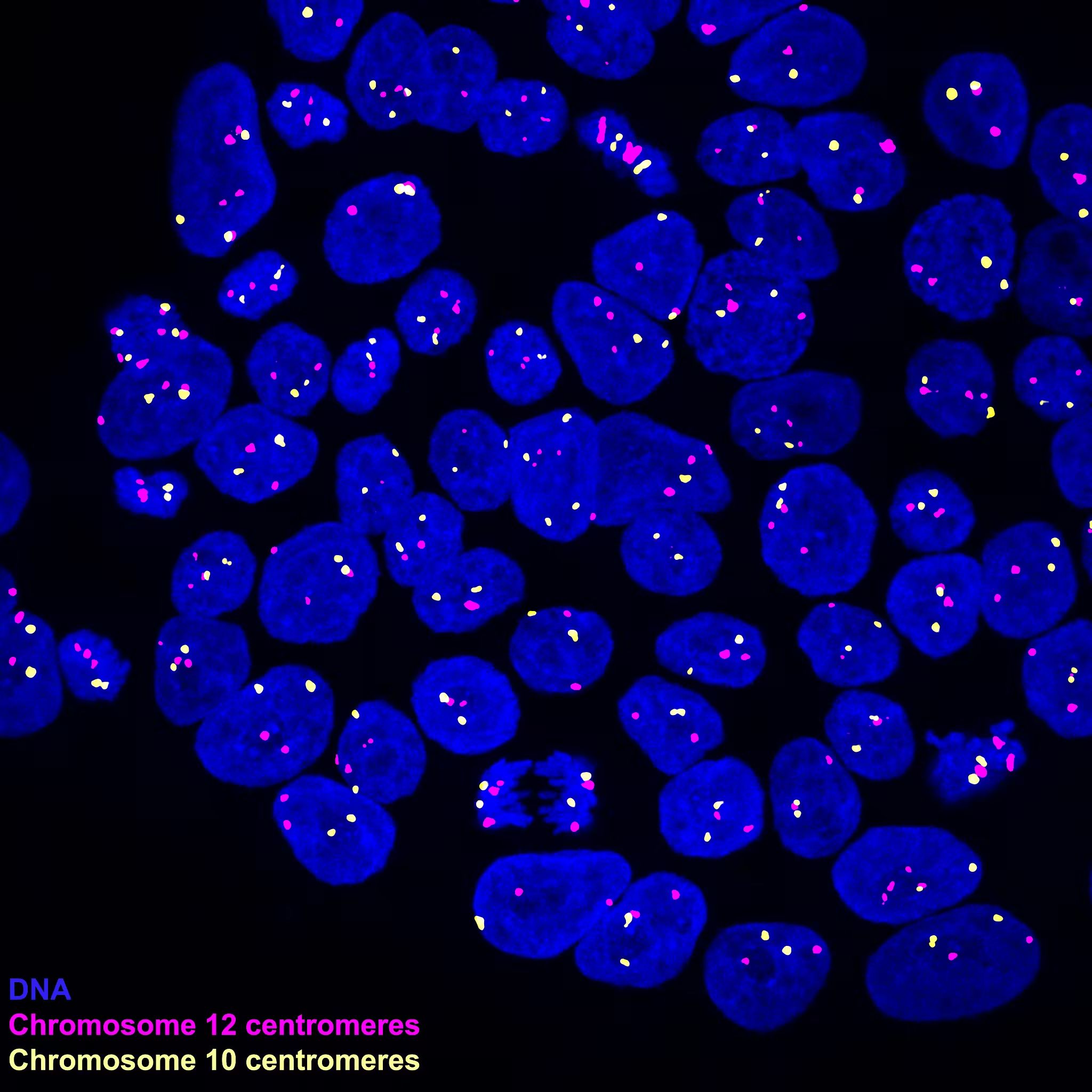
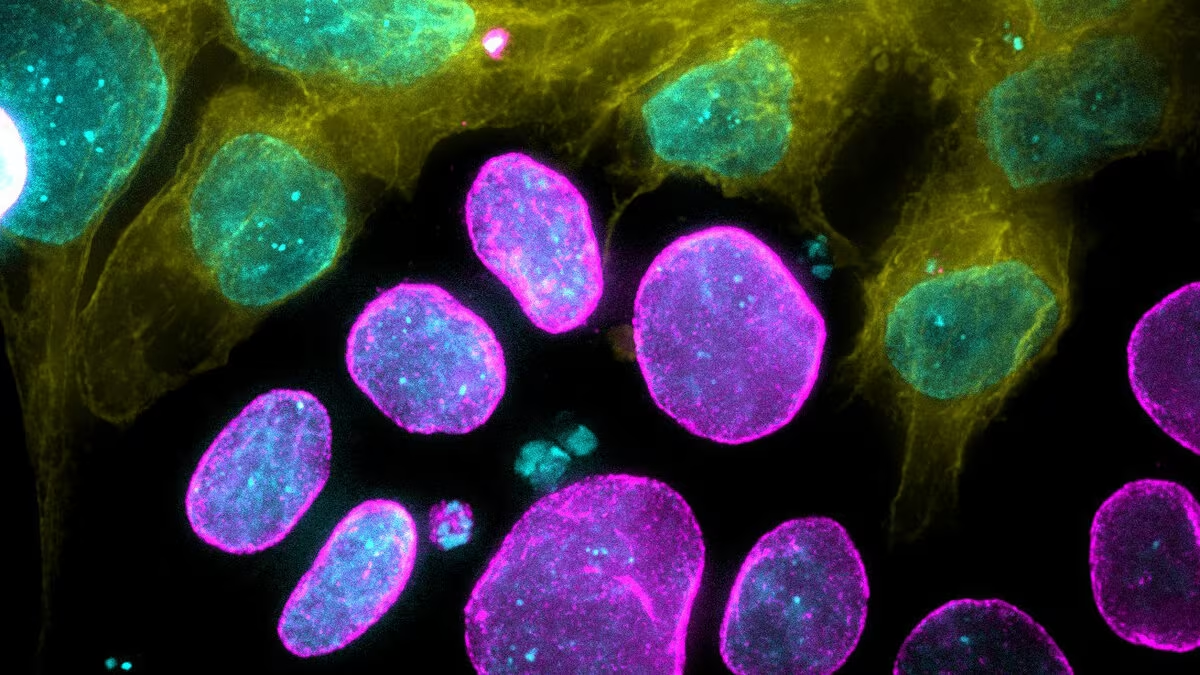
This miscroscopy image shows the AICS 0012 cell line at passage 21, when about one-third of the cells were trisomic for chromosome 12. The cells were fixed and labeled with FISH probes: the yellow signals mark the control chromosome 10 centromeres, and the magenta signals mark chromosome 12 centromeres.

But researchers at the Oklahoma Medical Research Foundation (OMRF) discovered that trisomy 12 appears simultaneously in many cells and spreads quickly during the various phases of growth.

“In our study, we saw trisomy 12 presence increase from about five percent of cells to almost 100 percent in a period of 40 days,” said Maria Narozna, a researcher at OMRF and co-author of the study.

Narozna and her team discovered that chromosome 12 — one of the tiny packages of DNA inside our cells — is especially prone to mistakes, known as missegregation, when cells divide. Normally, when a cell divides into two it first makes a full copy of every chromosome and then splits into two cells so that each cell has one copy of the complete chromosome. But where there is a trisomy 12 defect, chromosome 12 gets "stuck," like a rope pulled between two sides in a tug of war. This results in two chromosomes that are tied together with the second copy unable to migrate to the new cell, leaving it trapped in a tiny DNA structure called the micronucleus. This leaves one of the cells with an extra, incomplete piece of chromosome 12. When that cell divides again, the chromosome 12 trapped in the micronucleus is added back into the new cell, giving it three copies of chromosome 12 instead of the normal two.

Scientists calculated that about one to two out of every 100 normal cells made this genetic mistake each time they divided, which in the world of cell biology is a very high number. “Given how many cell divisions occur in the human body, a one- to two-percent conversion rate for every passage would be catastrophic to a person,” said Gary Gorbsky, OMRF professor and study co-author.

The study findings can help scientists better understand and perhaps treat cancer. Trisomy 12 cells are frequently found in chronic lymphocytic leukemia (CLL) and other cancers, suggesting that these study findings may help researchers better understand chromosome abnormalities beyond stem cell cultures. Normally, if a cell has an extra chromosome, the body detects that something is wrong with it and tells that cell to stop dividing, like an automatic shutoff mechanism. But cells with the trisomy 12 abnormality have figured out a way to ignore those orders and keep growing and may even gain a growth advantage. By better understanding these "rule-breakers," scientists may eventually find ways to detect, limit, or prevent them from occurring.

Researchers also studied why chromosome 12 is more likely to develop abnormalities. Chromosomes have a protective cap at the end of each strand known as a telomere. Think of it like the plastic at the end of a shoelace keeping it from fraying. Telomeres protect chromosomes from degradation, but chromosome 12 has one of the shortest “protective caps” in the human genome, making it susceptible to damage when cells are duplicating their DNA before division.

how researchers used Allen Institute tools and resources

Researchers from the OMRF used Allen Institute’s cell lines AICS 0012 and AICS 0013 in their study. AICS 0012 proved especially valuable because it could, in some situations and specific conditions, reproduce the trisomy 12 defect. This allowed scientists to track that process with high precision and uncover the origin and mechanisms behind the defect. AICS 0013, which reveals the nuclear protein of the cell, helped researchers determine whether the tiny DNA structures (micronuclei), where chromosome 12 often became trapped, were stable or unstable.

“We’re very grateful to the Allen Institute for developing these cell lines because they gave us a powerful human stem cell system in which we could follow key mitotic and nuclear structures in living cells,” said Gorbsky. “More importantly, these models are far better than cancer cell lines for studying how cells acquire the wrong number of chromosomes. In cancer cells, chromosome abnormalities are often so numerous that it becomes very difficult to trace where the problem began or which change is driving the biology.”

Citations
No items found.

about the allen institute

The Allen Institute is an independent, 501(c)(3) nonprofit research organization founded by philanthropist and visionary, the late Paul G. Allen. The Allen Institute is dedicated to answering some of the biggest questions in bioscience and accelerating research worldwide. The Institute is a recognized leader in large-scale research with a commitment to an open science model. For more information, visit alleninstitute.org.

related news

all news
video
Simularium: Accelerating discovery by animating insight
Simularium is an innovative online tool designed by the Allen Institute’s Cell Science team that visualizes 4D simulations (animations) of complex...
news
Allen Institute cells blast off into outer space
Researchers from Cedars-Sinai are using Allen Institute cell lines to grow organoids in space, which could help design better drugs for disease
video
What Are the Parts of a Cell?
From mitochondria to endoplasmic reticulum, this educational video explores the major cell organelles and their functions.
news
Allen Institute names Sarah Norris Hall as next Chief Financial Officer
Norris Hall’s experience and insight into financial operations will help enable and propel transformative science at the Allen Institute.
video
CellScapes: Launching a new era of cellular biology
CellScapes introduces a groundbreaking approach that will combine cutting-edge imaging and powerful computer models to track how cells change, communicate, and organize.
multimedia
Allen Institute launches CellScapes initiative to transform our understanding of how human cells build tissues and organs
we acceleratedevelopcatalyzeimpact

science done differently. shared openly.

explore our accelerators

brain science

Mapping every cell, connection, and circuit in the brain—openly shared with the world.

cell science

Decoding how cells become tissues, then programming that knowledge into powerful new research tools.

neural dynamics

Revealing the brain's hidden algorithms that transform neural activity into real-world behavior.

immunology

Creating the deepest open reference for the healthy human immune system ever built.

synthetic biology

Engineering cells to record their own histories, transforming how we understand disease over time.

research

Big questions, open answers, and science built to be shared.

education

Inspiring the next generation of scientists through open science resources.

impact

Our science is empowering researchers and advancing health worldwide.
advancing science through open, collaborative research
Get the allen institute newsletter
Stay informed on the latest breakthroughs in neuroscience, bioscience, and AI-driven research.
allen institute
impactpeople & teamscareers & opportunitiesalumnihistory & founder
science resources
allencell.orgallenimmunology.orgallenneuraldynamics.orgbrain-bican.orgbrain-map.orgmicrons-explorer.org
research
brain sciencecell scienceneural dynamicsimmunologysynthetic biologypublications
education
science educationfield tripsprofessional developmenteducation resources
quick links
newseventsopen sciencepodcastscience resourceshuman brain donationvisit uscontact
follow us/

allen institute, 615 Westlake Ave North, Seattle, WA 98109 +12065487055

© 0000 allen institute. all rights reserved.
privacy policyterms of usecitation policyemployee portalpolicy & compliancecookie settings