impact
about
our story
explore our impact
careers and opportunities
join us
open science
sharing science to speed discovery
open science week
celebrating open science
team science
people & teams
discovery is a team effort
allenites
the people who make our work possible
advisors
their input shapes our science
board of directors
they help us fulfill our mission
shanahan foundation fellowship
at the interface of data and neuroscience
next generation leaders
fostering emerging leaders in bioscience
research
overview
our approach
science at the scale of greatest impact
publications
explore our publications
open science
sharing science to speed discovery
science accelerators
brain science
building a blueprint of the brain
cell science
understanding how cells become organs
neural dynamics
revealing the brain’s hidden algorithms
immunology
creating the ultimate immune system reference
synthetic biology
seattle hub for synthetic biology
education
overview
science education
science is for everyone
open science
sharing science speeds discovery
engagement
education resources
real science. real skills.
field trips
experience science where it happens
educator development
empowering educators
news
overview
all news
explore the latest news
podcast
the human stories behind discovery
sign up for our newsletter
stay connected to our science
events
overview
all events
public engagement, workshops, seminars and more
conferences
connect with us
science resources
science resources
allencell.org
allenimmunology.org
allenneuraldynamics.org
brain-bican.org
brain-map.org
microns-explorer.org
impact
back to menu
team science
our story
explore our impact
careers and opportunities
join us
open science
sharing science to speed discovery
open science week
celebrating open science
team science
people & teams
discovery is a team effort
allenites
the people who make our work possible
advisors
their input shapes our science
board of directors
they help us fulfill our mission
shanahan foundation fellowship
at the interface of data and neuroscience
next generation leaders
fostering emerging leaders in bioscience
research
back to menu
overview
our approach
science at the scale of greatest impact
publications
explore our publications
open science
sharing science to speed discovery
science accelerators
brain science
building a blueprint of the brain
cell science
understanding how cells become organs
neural dynamics
revealing the brain’s hidden algorithms
immunology
creating the ultimate immune system reference
synthetic biology
seattle hub for synthetic biology
education
back to menu
overview
science education
science is for everyone
open science
sharing science speeds discovery
engagement
education resources
real science. real skills.
field trips
experience science where it happens
educator development
empowering educators
news
back to menu
overview
all news
explore the latest news
podcast
the human stories behind discovery
newsletter
stay connected to our science
events
back to menu
overview
all events
public engagement, workshops, seminars and more
conferences
connect with us
science resources
back to menu
science resources
allencell.org
allenimmunology.org
allenneuraldynamics.org
brain-bican.org
brain-map.org
microns-explorer.org
search
research
brain science

brain science management

leading and organizing institute-wide efforts in deciphering the cellular and circuit organization of the mammalian brains, and how it changes in development, evolution, and diseases
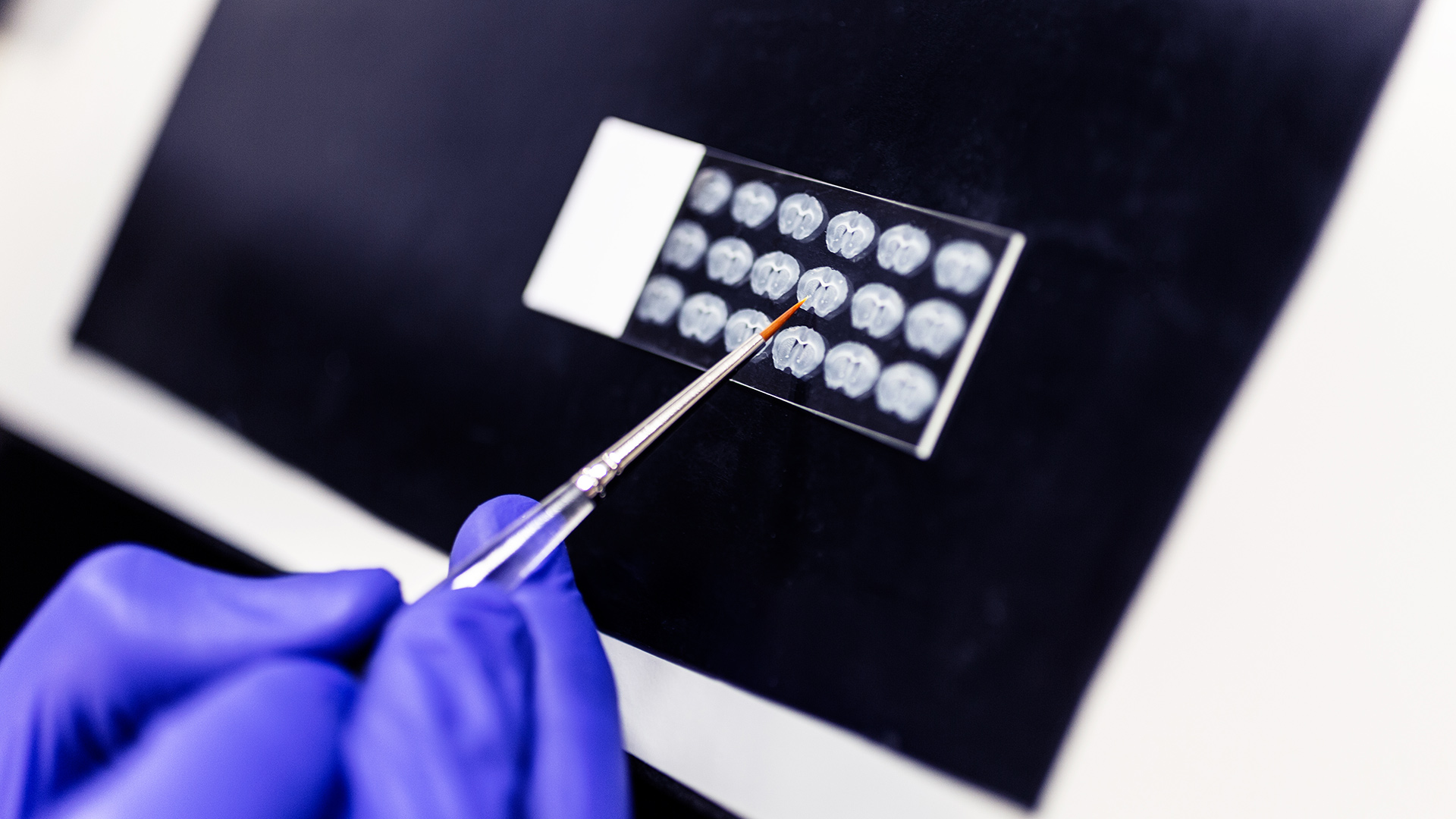
Scientist holding brush pointing at chest X-ray images on dark background

goals and approach/

The Brain Science Management team of the Allen Institute's brain science accelerator leads our foundational scientific research in deciphering the cellular and circuit organization of the mammalian brains, from mouse to human, and providing open-access resources of data, knowledge and tools to accelerate neuroscience discoveries across the field. We do this by setting strategic goals, leading the development of new technology platforms and pipelines, leading the generation and public dissemination of comprehensive, multimodal datasets characterizing brain cell types and circuit networks, managing scientific operations, and engaging in collaborations with external researchers.

The mammalian brain is our most complex and mysterious organ, comprising millions to billions of cells and orchestrating our behaviors, emotions, cognition, and metabolism. To understand the function of the brain and how its dysfunction leads to brain diseases, it is essential to uncover the cell type composition of the brain, how the cell types are connected with each other and what their roles are in circuit function. At the brain science accelerator, we have built multiple technology platforms, including single-cell transcriptomics and multiomics, spatial transcriptomics, single and multi-patching electrophysiology, 3D reconstruction of neuronal morphology, brain-wide connectivity mapping, and synaptic-level connectomics by electron microscopy to characterize the molecular, anatomical, physiological, and connectional properties of brain cell types in a systematic manner, towards the creation of multi-modal cell atlases for the mouse, non-human primate and human brains. Our studies reveal extraordinary cellular diversity and underlying principles of brain organization. They establish foundational resources for deep and integrative investigations of cellular and circuit function, development, and evolution of the mammalian brain.

Scientists in the Brain Science Management department also carry out focused, cross-disciplinary research projects to gain a deeper understanding of the relationship between cell types’ molecular identities and connectional properties, and how cell types respond in various behavioral, pharmacological and diseased conditions.
scientific projects/

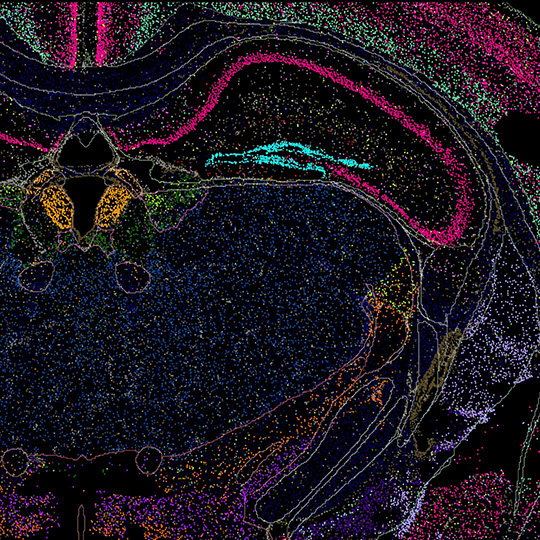
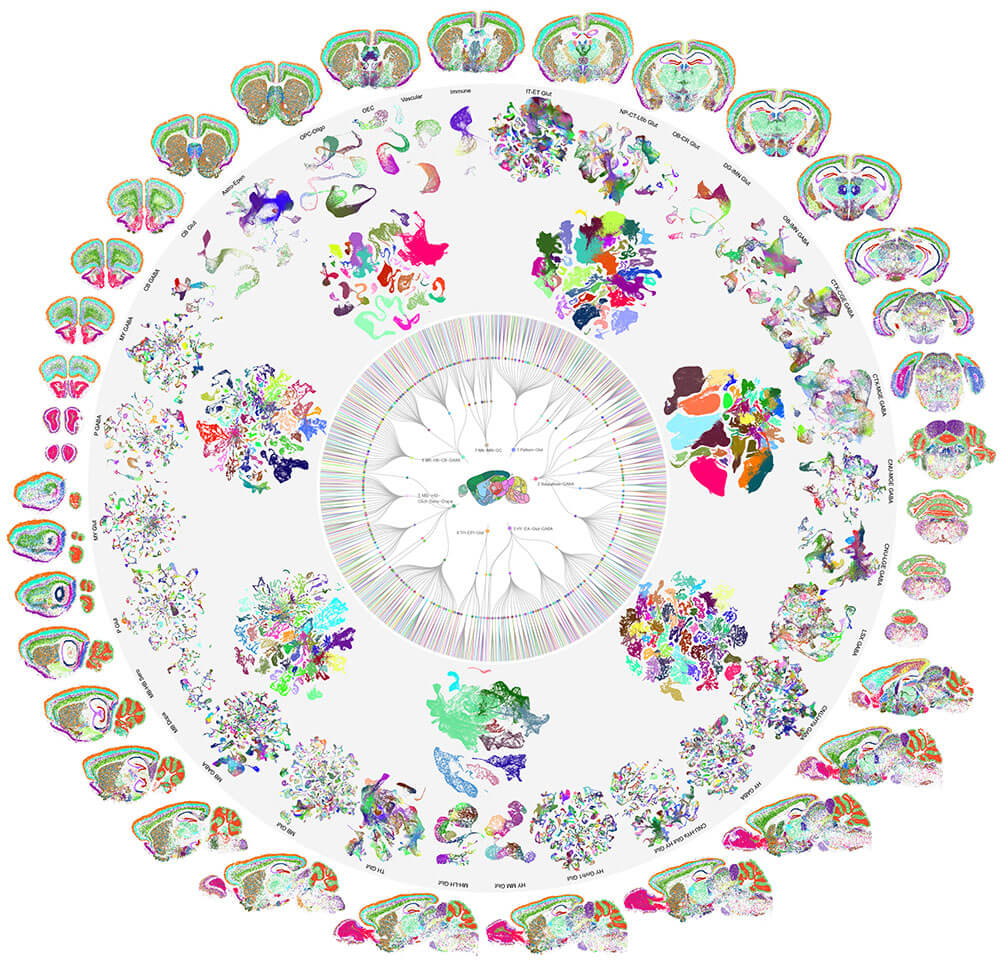
allen whole mouse brain cell type atlas

By combining two whole-brain scale datasets with multi-millions of cells profiled by single-cell RNA-sequencing or the spatial transcriptomic method, MERFISH, we have created a comprehensive and high-resolution transcriptomic and spatial cell type atlas for the whole adult mouse brain. The atlas identified over 5,300 potential cell types, revealing astonishing cell type diversity across the brain, a high degree of correspondence between transcriptomic identity and spatial specificity for each cell type, and unique characteristics of cell type organization in different brain regions. The study also reveals highly diverse expression patterns of various neurotransmitters and neuropeptides in different cell types, and that transcription factors are major determinants of cell type classification in the adult brain. This project is supported by the BRAIN Initiative Cell Census Network (BICCN) with funding from NIH/NIMH.

Allen Brain Cell (ABC) Atlas

Circular brain atlas showing colorful neuroanatomical cross-sections and gene expression maps

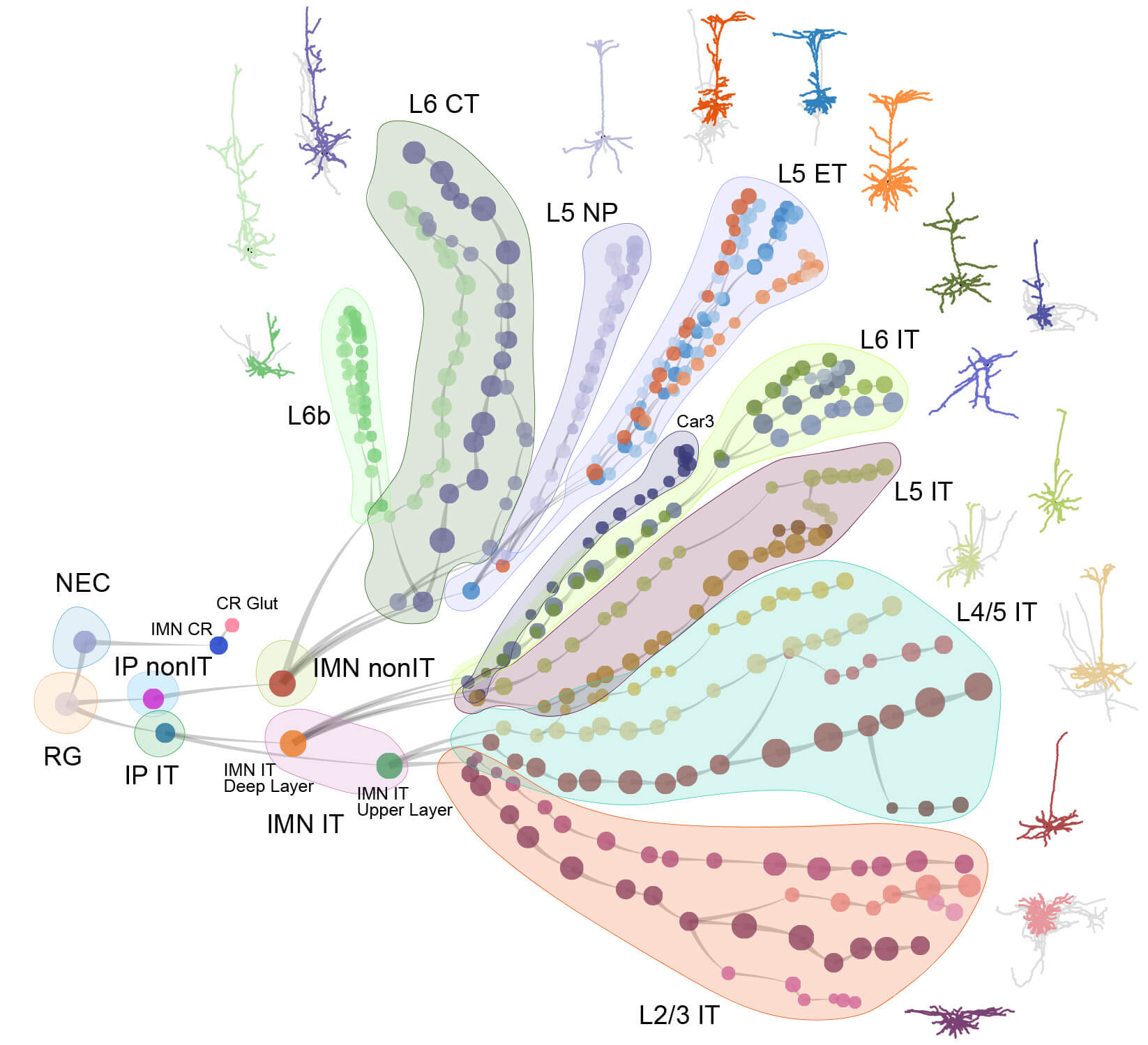
developmental mouse brain cell type atlas

The developing mouse brain is a foundational experimental model for investigation of the origins of cell types in the mammalian brain. We are generating a comprehensive, spatially and temporally resolved, cellular-resolution atlas of the whole developing mouse brain, spanning the entire period of embryonic and postnatal brain development, using single-cell and spatial transcriptomic and multiomic technologies. This work will enable a deep understanding of the mechanisms of mammalian brain development and neurodevelopmental disorders. This project is supported by the BRAIN Initiative Cell Atlas Network (BICAN) with funding from NIH/NIMH.

BICAN: A cell census of the developing human brain

Diagram showing neuron connections and spinal cord layers labeled with anatomical regions and cell types

molecular and cellular adaptations during drug abuse

Drugs of abuse devastate the life of millions of people, yet how these drugs (such as cocaine and opioids) affect the brain remains poorly understood. Utilizing the massive amount of cell-type information we have accumulated, we are conducting a systematic investigation of brain-wide, single-cell level gene expression changes induced by acute or chronic use of cocaine or opioids in mice. This work will lead to the identification of specific cell types and gene targets, as well as generalizable mechanisms, that mediate the addictive effects of these drugs, and facilitate the development of better treatments for drug abuse and addiction. This project is supported by funding from NIH/NIDA.

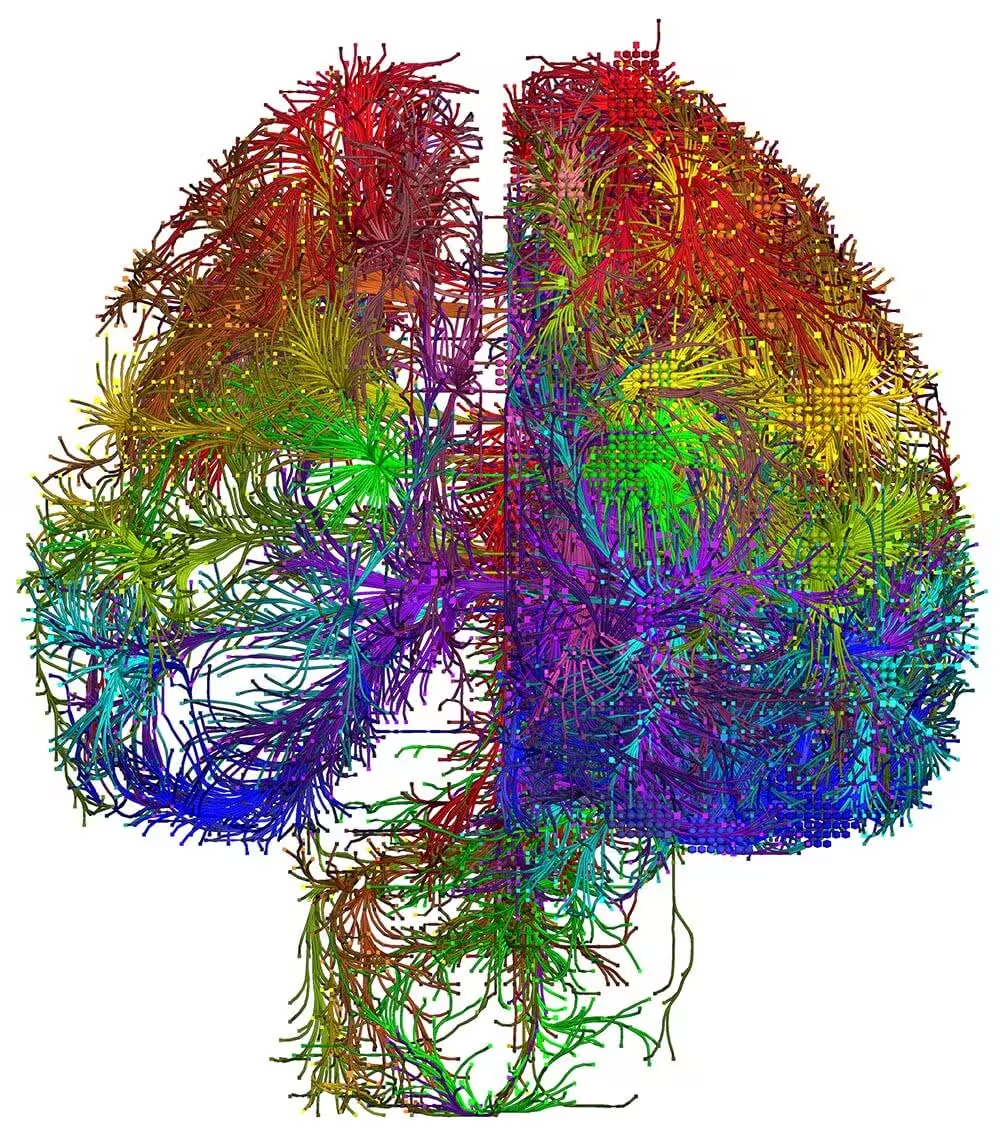
cell-type based mesoscale connectome of the mouse brain

Brain cell types form functionally specific circuits via synaptic and extra-synaptic connections. To unravel the brain-wide circuit networks and create a mesoscale connectome, we have been mapping the input and output connections of specific cell types in the mouse brain using recombinant adeno–associated virus (AAV) mediated anterograde tracing and recombinant rabies virus mediated retrograde trans-synaptic tracing, combined with cell-type targeting genetic tools. A current focus is on understanding the cortex-basal ganglia-thalamus network that mediates brain functions such as movement, reward and cognition. This project is partly supported by the BRAIN Initiative Cell Census Network (BICCN) with funding from NIH/NIMH.

Allen Mouse Brain Connectivity Atlas

Transgene mouse line characterization

Colorful brain neural network visualization with red, green, blue, and purple interconnected lines.

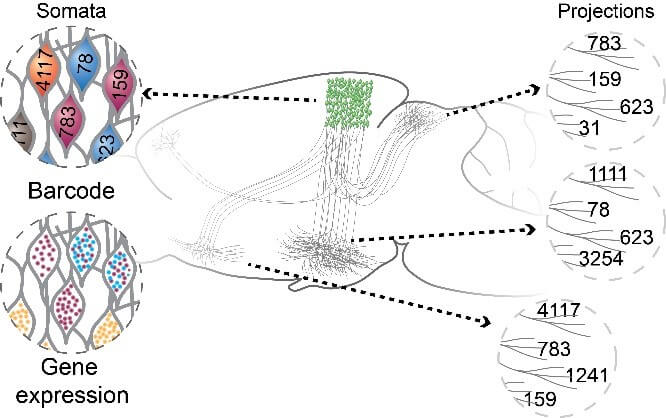
barcoded connectomics

Neural circuits, the physical substrates that enable conscious thoughts and complex behaviors, are composed of myriad interconnected neurons. Unraveling the connections of different types of neurons thus provides a foundation for understanding brain structures and functions. However, tracing thin individual axons with nanometer-scale diameters, which are also tightly packed with many other axons, across centimeters of brain matter is very labor intensive and error-prone. To overcome these challenges, we develop RNA barcoding and in situ sequencing-based techniques to map neuronal types and connections with unprecedented throughput and resolution. By making circuit mapping expotentially faster, cheaper, and more accurate, we aim to understand brain-wide organization of cell type connectivity, their development, and their evolution.

Barcoded Connectomics team

Diagram showing neural projections from somata, barcode, and gene expression to brain regions with numerical labels.

brain science leadership team

Ed Lein
Executive Vice President and Director
Hongkui Zeng
Executive Vice President and Director, Brain Science

scientific staff members

Kareena Villalobos
Research Associate 1
Sarah Walling-Bell
Data Analyst III
Yiliu Wang
Shanahan Fellow
Quanxin Wang
Principal Scientist
Jack Waters
Associate Director, Imaging
Sharon Way
Scientific Project and Alliance Manager
Isaak Willett
Software Engineer II
Julia Wilson
Research Associate II
Morgan Wirthlin
Scientist II
Matt Wood
PwC
Vonn Wright
Research Associate, Sr.
Brooke Wynalda
Research Associate II
Shenqin Yao
Assistant Investigator
Zizhen Yao
Assistant Investigator
Rob Young
Associate Director, Data & Technology
Wan-Qing Yu
Scientist II
Hongkui Zeng
Executive Vice President and Director, Brain Science
Aixin Zhang
Data Analyst II
Chi Zhang
Scientist II
Previous
3 / 3
we acceleratedevelopcatalyzeimpact

science done differently. shared openly.

explore our accelerators

brain science

Mapping every cell, connection, and circuit in the brain—openly shared with the world.

cell science

Decoding how cells become tissues, then programming that knowledge into powerful new research tools.

neural dynamics

Revealing the brain's hidden algorithms that transform neural activity into real-world behavior.

immunology

Creating the deepest open reference for the healthy human immune system ever built.

synthetic biology

Engineering cells to record their own histories, transforming how we understand disease over time.

research

Big questions, open answers, and science built to be shared.

education

Inspiring the next generation of scientists through open science resources.

impact

Our science is empowering researchers and advancing health worldwide.
advancing science through open, collaborative research
Get the allen institute newsletter
Stay informed on the latest breakthroughs in neuroscience, bioscience, and AI-driven research.
allen institute
impactpeople & teamscareers & opportunitiesalumnihistory & founder
science resources
allencell.orgallenimmunology.orgallenneuraldynamics.orgbrain-bican.orgbrain-map.orgmicrons-explorer.org
research
brain sciencecell scienceneural dynamicsimmunologysynthetic biologypublications
education
science educationfield tripsprofessional developmenteducation resources
quick links
newseventsopen sciencepodcastscience resourceshuman brain donationvisit uscontact
follow us/

allen institute, 615 Westlake Ave North, Seattle, WA 98109 +12065487055

© 0000 allen institute. all rights reserved.
privacy policyterms of usecitation policyemployee portalpolicy & compliancecookie settings