news
stories from the front lines of discovery
From scientific breakthroughs to new open‑source tools, the Allen Institute’s work is reshaping how science is done—and who it’s for. Explore the latest news, stories, and highlights from across our research, partnerships, and open science efforts.


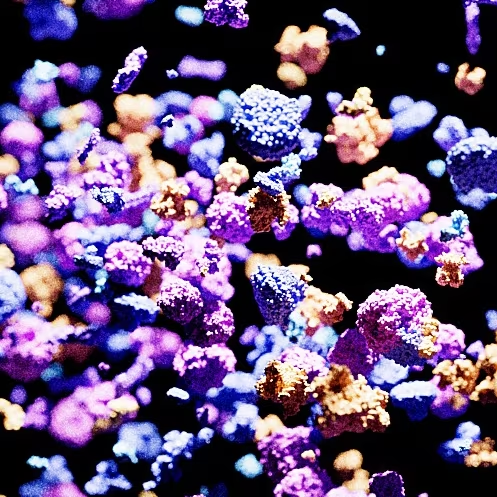
AI BioDesign accelerator combines experimental biology and artificial intelligence to learn nature’s design rules
Researchers from the Allen Institute, University of Washington, and Fred Hutch Cancer Center, supported by Fund for Science and Technology, will build open AI models, datasets, and tools to accelerate biological design for health, sustainability, and other global challenges
Thank you! Your submission has been received!
Oops! Something went wrong while submitting the form.


The Paul G. Allen Frontiers Group Announces Allen Discovery Center at Boston Children's Hospital and Harvard Medical School
The Paul G. Allen Frontiers Group announced today the creation of an Allen Discovery Center for Human Brain Evolution at Boston Children’s Hospital...
No items found.
news
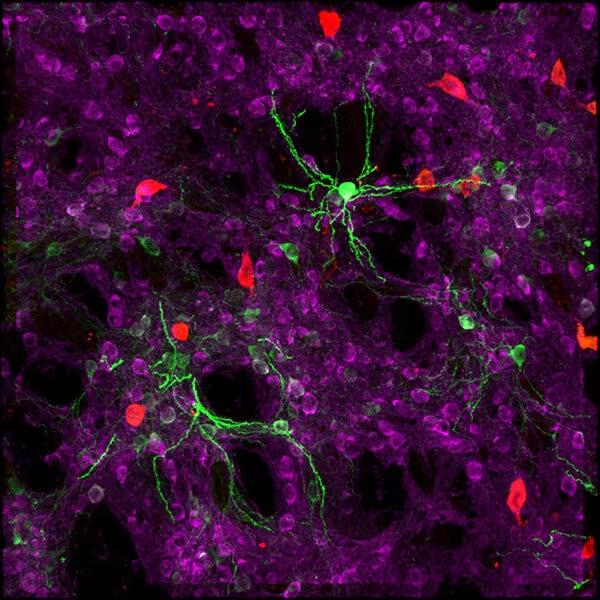
Getting deep into the brain
As we try to uncover how many cell types are in the brain, researchers are recognizing the importance of characterizing neurons by several features:...
No items found.
news
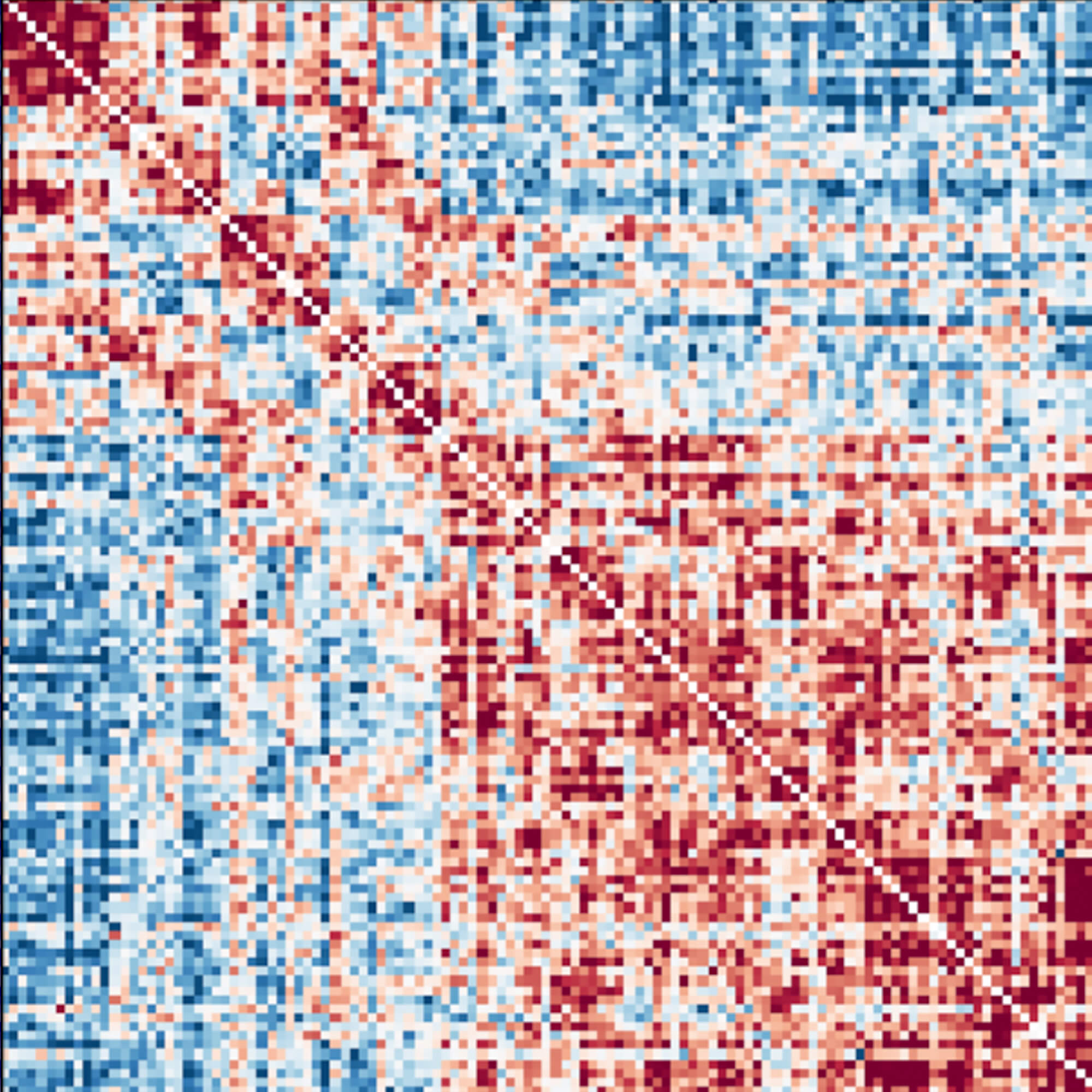
Allen Institute for Brain Science releases new data and visualizations for Allen Brain Observatory
The Allen Institute for Brain Science today announced the release of new data and analysis tools for the Allen Brain Observatory: a highly...
brain science
news
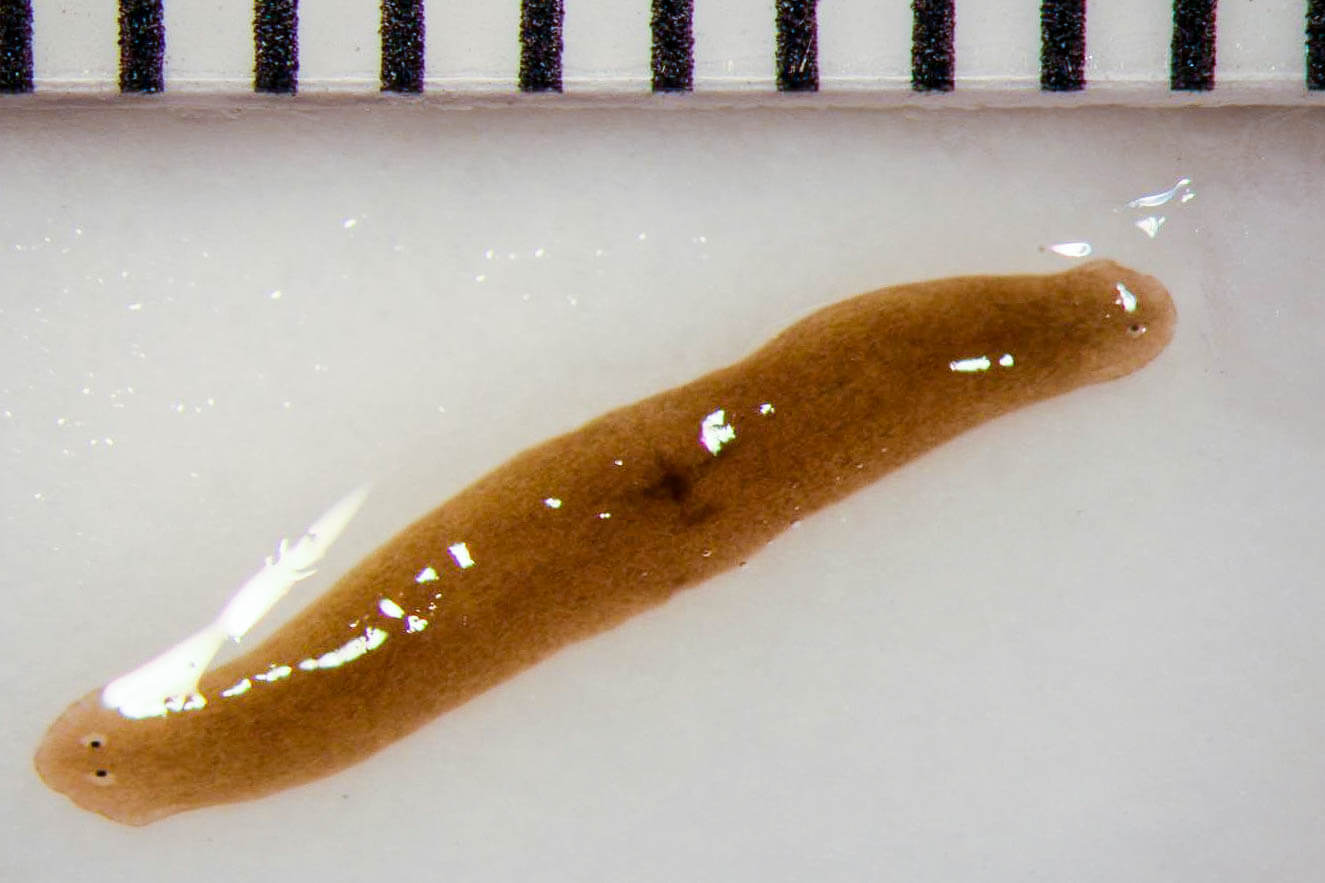
Allen Discovery Center researchers use space-traveling worms to understand regenerative health
Researchers led by the Allen Discovery Center at Tufts have used space-traveling worms to gain insights on how gravity and geomagnetic fields can impact anatomy.
No items found.
news
A wiring diagram for sleep
Anyone who suffers from insomnia knows how sleep is not so easily untangled from being awake-and recent research shows that the brain’s own wiring...
brain science
news

A turbo engine for tracing neurons
Putting a turbo engine into an old car gives it an entirely new life-suddenly it can go further, faster.
No items found.
news

Svante Pääbo | Explorer
Dr. Svante Pääbo is using the Neanderthal genome to identify genomic and gene differences that are truly human-specific and separate modern humans...
No items found.
news
Allen Cell Explorer launched
The Allen Institute for Cell Science today announces the launch of the Allen Cell Explorer: a one-of-a-kind portal and dynamic digital window into the...
No items found.
news
Eyes on tadpole tails may revolutionize regenerative medicine
Researchers demonstrate that blind tadpoles can now process visual information, providing a potentially valuable roadmap for encouraging nerves to serve various parts of the body: a key milestone in regenerative medicine.
No items found.
news
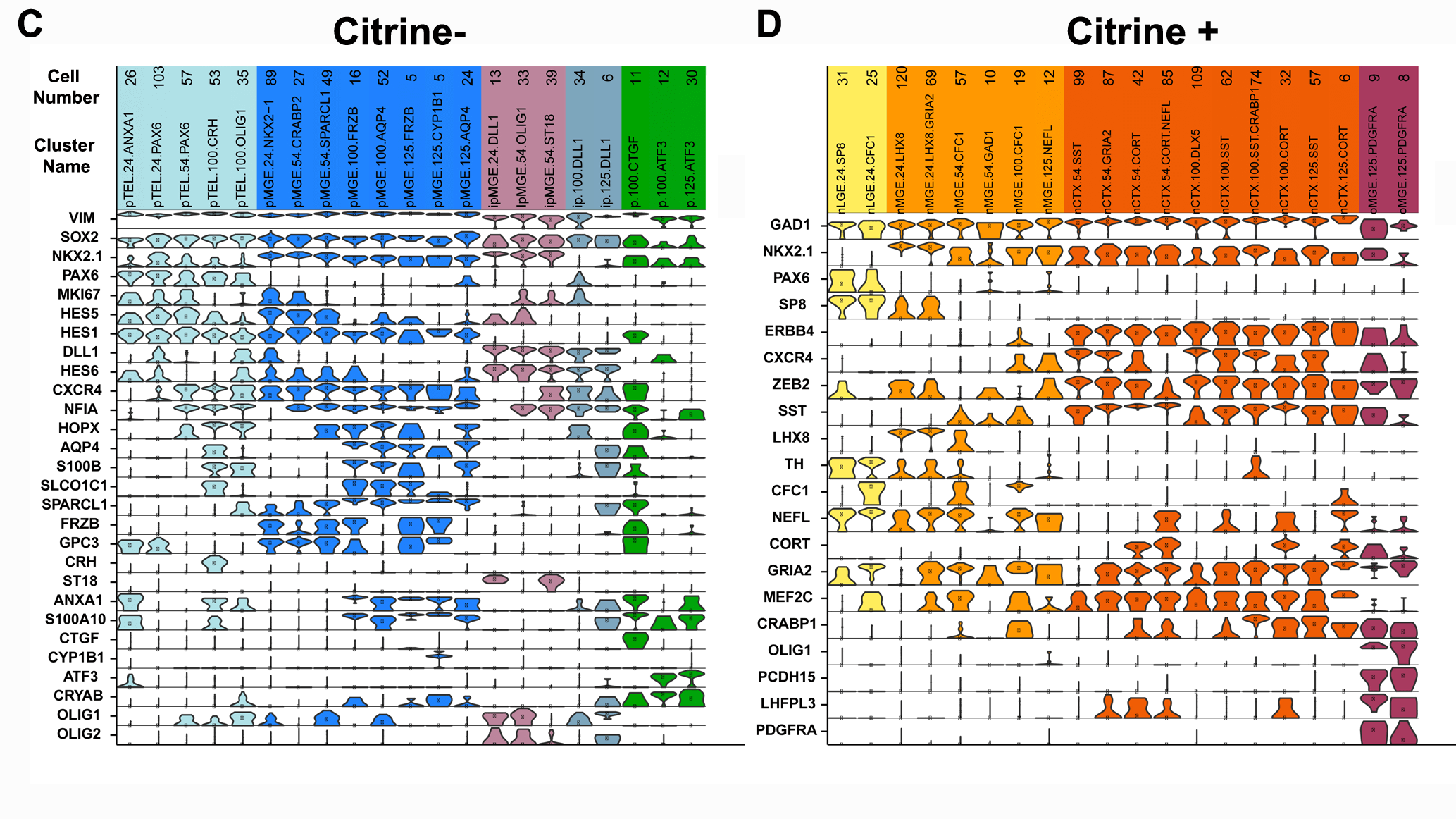
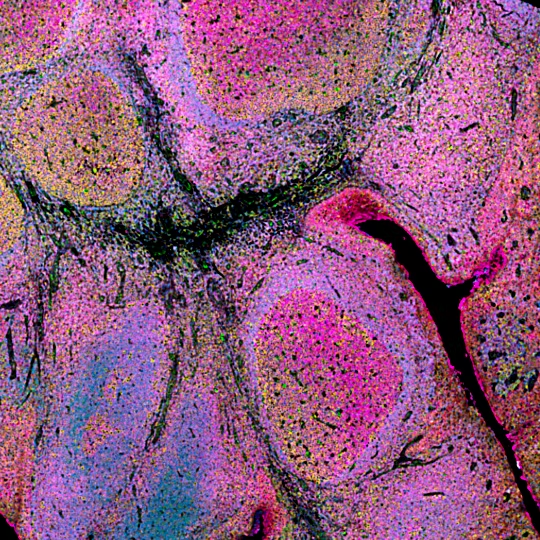
New knowledge on how the brain develops
Researchers at the Allen Institute for Brain Science and Harvard University have published a series of papers that identify patterns in the gene...
No items found.
news

No results found, try reducing your search parameters.
press & media contact
Get in touch for media inquiries and resources for covering science at the scale of greatest impact.
Thank you! Your submission has been received!
Oops! Something went wrong while submitting the form.
.png)



Seattle scientists launch $95 million AI biology effort
The Allen Institute, University of Washington, and Fred Hutch Cancer Center are launching a $95 million effort to use AI to design biology that doesn’t exist in nature. Called AI BioDesign and led scientifically by Nobel laureate David Baker and genome scientist Jay Shendure, the initiative will use AI models to propose new DNA sequences and biological molecules.

AI learns nature’s code: Allen Institute, UW and Fred Hutch launch $95M open science initiative
Three of Seattle’s top scientific institutions are launching a nearly $95 million research initiative that will generate data and train AI models to design proteins and genes that don’t exist in nature — sharing the results freely to help others develop new medicines and materials.



‘It’s going to come quicker than we think’: Parkinson’s advocate shares hope for treatment as Allen Institute launches AI-powered initiative
The institute has launched the Brain Health Accelerator, an international collaboration involving about 30 research organizations that will use artificial intelligence, human brain tissue and advanced cellular mapping to better understand diseases including Parkinson’s, Alzheimer’s disease, ALS, Huntington’s disease and Lewy body dementia.



load more press & media
1 / 46
No results found, try reducing your search parameters.