


SciShots: Nervous and immune systems team up to take on parasites
Pain-sensing neurons in the intestine give marching orders to the immune system to kick off an attack against parasites
Nerves in the gut do more than sense pain—they help the body fight off parasitic infections. When worms infect the intestine, the body launches a protective response called type 2 inflammation, which helps remove the parasites and repair damaged tissue. A key player in triggering this process is a rare intestinal cell called a tuft cell, which acts like a sensor and alarm system.
In a new Nature study, researchers from Weill Cornell Medicine and the Allen Institute found that pain-sensing nerves in the gut, known as TRPV1⁺ neurons, help regulate these tuft cells. The nerve endings sit very close to tuft cells in the lining of the intestine. When activated during infection, the nerves release a signaling molecule called CGRP.
When the researchers turned these nerves off in mice, tuft cells were reduced, immune responses were weaker, and worms were cleared more slowly. But when the nerves were activated, tuft cells increased, immune cells became more active, and the parasites were expelled faster. To study this, the researchers used a new technique called spatial transcriptomics, which allows them to visualize the genetic information of cells in tissues.
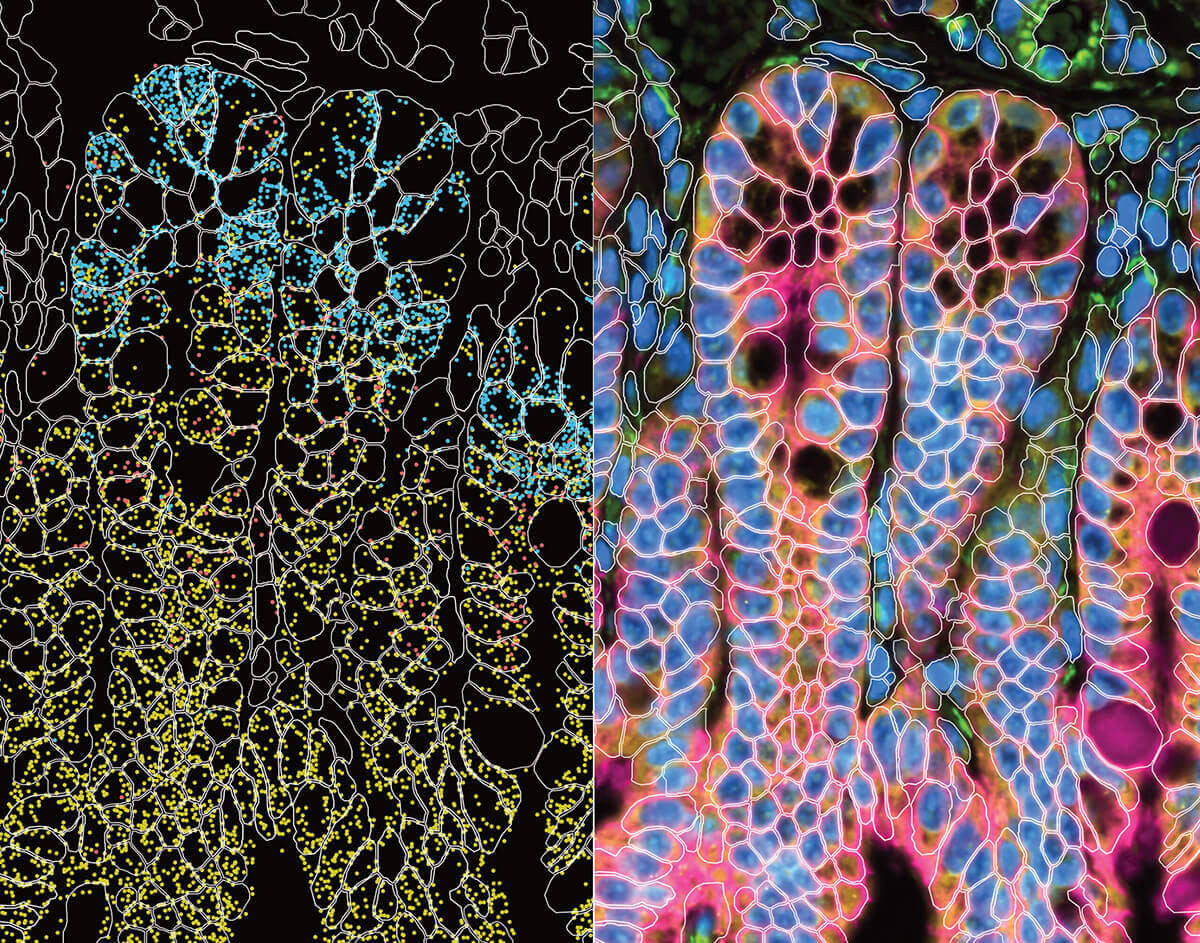
The images above show crypts of a mouse’s small intestine. Crypts are tiny tube-shaped pits that line inside of the intestine. In both images, multiple cell types—including tuft cells—are outlined in white. The left image shows individual RNA molecules Lgr5, Mki67 and Dll1, which are the small dots you see inside the cells. In the right image, blue is nuclear staining, cell boundary is shown in pink, RNA is yellow and protein is depicted in green.
Together, the study reveals a direct link between the nervous system and the immune system in the gut. Pain-sensing nerves don’t just detect danger—they help organize the body’s defense against infection.
Citations
about the allen institute
Allen Institute is a 501(c)(3) tax exempt organization dedicated to accelerating science for a healthier world. Through large-scale, multidisciplinary research initiatives, the Institute generates foundational knowledge, data, tools, and models that are shared openly with the world to advance our understanding of life and health. Founded by Jody Allen and the late Paul G. Allen, Allen Institute is supported primarily by Fund for Science and Technology.



.avif)