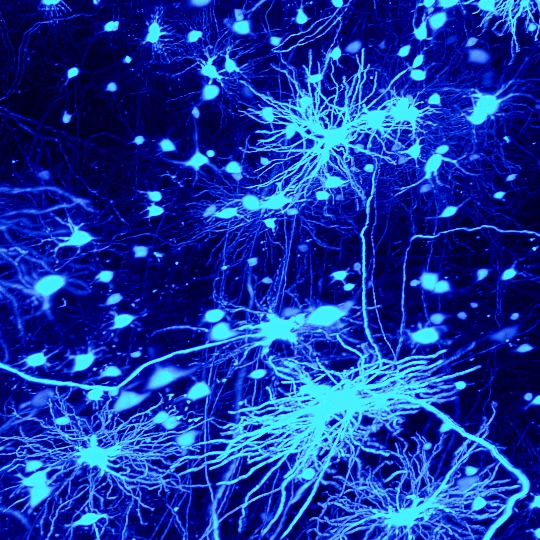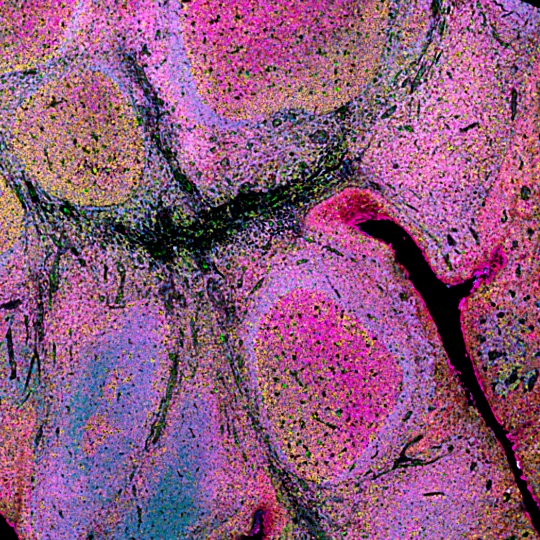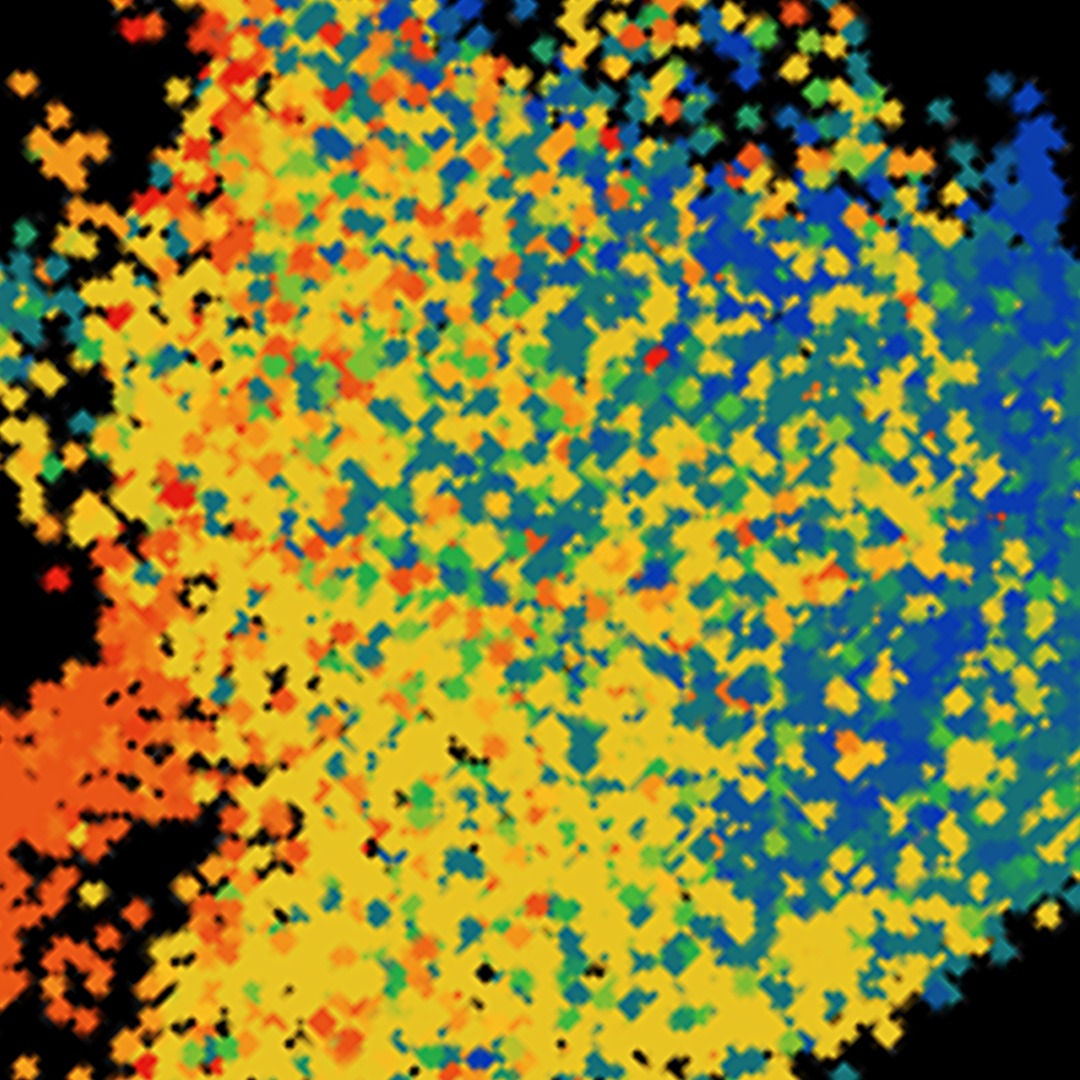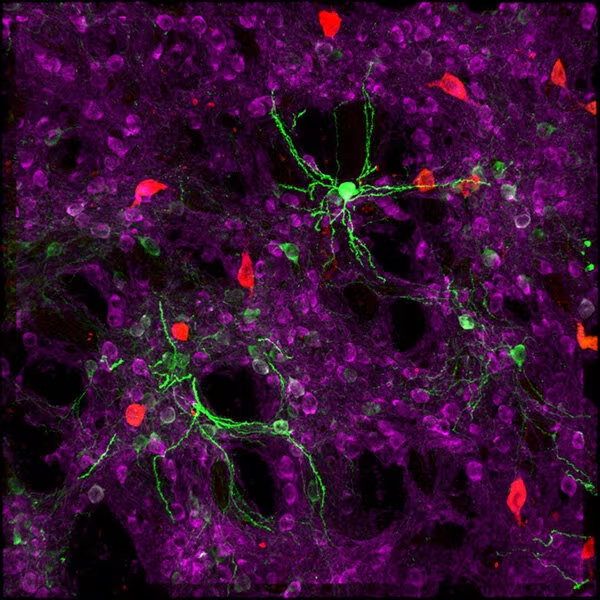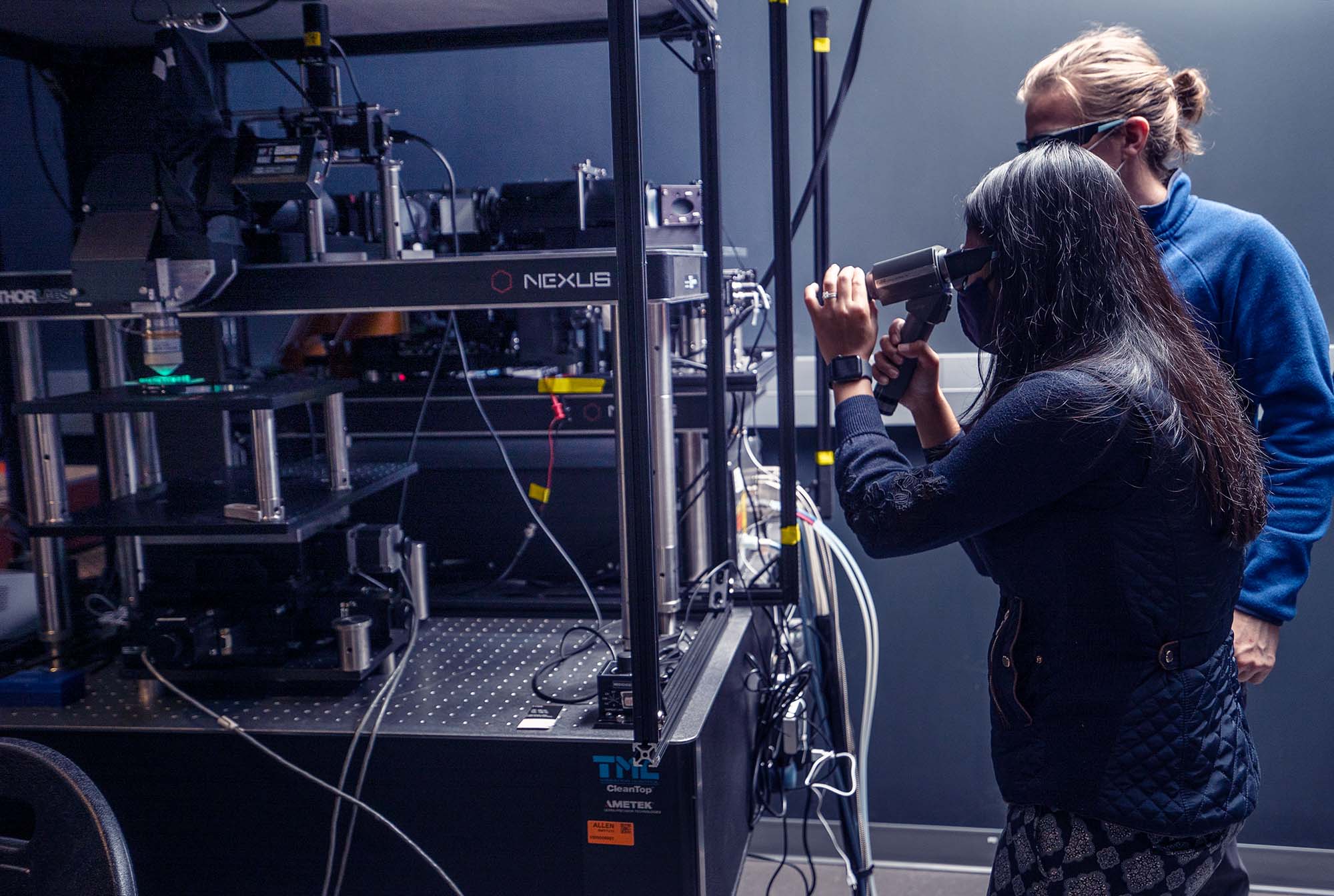

Scientists have engineered a protein able to record the incoming chemical signals of brain cells (as opposed to just their outgoing signals). These whisper-quiet incoming messages are the release of the neurotransmitter glutamate, which plays a critical role in how brain cells communicate with one another but until now has been extremely difficult to capture.
Why it matters
- Understanding the brain’s code: Scientists can now study how neurons compute—how they take thousands of input signals and—based off those—produce an output signal that could underlie decision, thought, or memory, decoding long-held mysteries about the brain.
- New avenues for disease research: Disrupted glutamate signaling is linked to Alzheimer’s, schizophrenia, autism, epilepsy, and more. These sensors could help uncover the root causes of these conditions.
- Smarter drug development: Drug companies can test how new treatments affect actual synaptic activity—speeding up the search for better therapies.
The special protein that researchers at the Allen Institute and HHMI’s Janelia Research Campus have engineered is a molecular “glutamate indicator” called iGluSnFR4 (pronounced ‘glue sniffer’). It’s sensitive enough to detect the faintest incoming signals between neurons in the brain, offering a new way to decipher and interpret their complex cascade of electrical activity that underpins learning, memory, and emotion. iGluSnFR4 could help decode the hidden language of the brain and deepen our understanding of how its complex circuitry works.
This discovery allows researchers to watch neurons in the brain communicate in real time. The work was supported by the National Institutes of Health’s Brain Research Through Advancing Innovative Neurotechnologies® Initiative, or The BRAIN Initiative®, and others. The findings have just been published in Nature Methods and could transform how neuroscience research is done as it pertains to measuring and analyzing neural activity.
The brain’s hidden language uncovered
To understand the significance of this discovery, it helps to understand how the brain works: Billions of neurons “talk” to each other by sending pulses of electricity down their branch-like axons. When the electrical signals reach the end of the axons, they can’t jump the gap to the next brain cell, known as a synapse. Instead, they trigger the release of chemical messengers called neurotransmitters (glutamate being the most common and critical for memory, learning, and emotion) into the synapse that causes the next brain cell to fire in sequence.
It’s like a row of falling dominos, but vastly more complex: Each neuron receives inputs from thousands of other neurons, and specific patterns and combinations of those input neurons firing is what makes the next (receiving) neuron fire. With this new discovery, scientists can now identify the critical patterns and combinations of input neuron activity that cause the next neurons to fire. Until now, detecting these incoming signals in living brain tissue was nearly impossible. Older technologies were either too slow or not sensitive enough to pick up the action at the single-synapse level. Now researchers can hear the entire conversation rather than fragments of it.
“It’s like reading a book with all the words scrambled and not understanding the order of the words or how they’re arranged,” said Kaspar Podgorski, Ph.D., a lead author on the study and senior scientist at the Allen Institute.
Before these protein sensors existed, researchers could only record the outgoing signals from brain cells, leaving half of the communications equation (the cells’ inputs) a mystery. The incoming signals were always too faint and fast to capture, until now.
“Neuroscientists have pretty good ways of measuring structural connections between neurons; and in separate experiments, we can measure what some of the neurons in the brain are saying. But we haven’t been good at combining these two kinds of information. It’s hard to measure what neurons are saying to which other neurons,” said Podgorski. “What we have invented here is a way of measuring information that comes into neurons from different sources, and that’s been a critical part missing from neuroscience research.”
“The success of iGluSnFR4 stems from our close collaboration started at HHMI’s Janelia Research Campus between the GENIE Project Team and Kaspar’s Lab. That research has extended to the phenomenal in vivo characterization work done by the Allen Institute’s Neural Dynamics group,” said Jeremy Hasseman, Ph.D, a scientist with HHMI’s Janelia Research Campus. “This was a great example of collaboration across labs and institutes to enable new discoveries in neuroscience.”
This discovery removes a significant barrier in modern neuroscience: the inability to clearly monitor and make sense of how brain cells receive information. With this powerful new tool available to researchers through Addgene, some of the brain’s deepest mysteries may soon be revealed.
Citations
about the allen institute
Allen Institute is a 501(c)(3) tax exempt organization dedicated to accelerating science for a healthier world. Through large-scale, multidisciplinary research initiatives, the Institute generates foundational knowledge, data, tools, and models that are shared openly with the world to advance our understanding of life and health. Founded by Jody Allen and the late Paul G. Allen, Allen Institute is supported primarily by Fund for Science and Technology.