impact
about
our story
explore our impact
careers and opportunities
join us
open science
sharing science to speed discovery
open science week
celebrating open science
team science
people & teams
discovery is a team effort
allenites
the people who make our work possible
advisors
their input shapes our science
board of directors
they help us fulfill our mission
shanahan foundation fellowship
at the interface of data and neuroscience
next generation leaders
fostering emerging leaders in bioscience
research
overview
our approach
science at the scale of greatest impact
publications
explore our publications
open science
sharing science to speed discovery
science accelerators
brain science
building a blueprint of the brain
cell science
understanding how cells become organs
neural dynamics
revealing the brain’s hidden algorithms
immunology
creating the ultimate immune system reference
synthetic biology
seattle hub for synthetic biology
education
overview
science education
science is for everyone
open science
sharing science speeds discovery
engagement
education resources
real science. real skills.
field trips
experience science where it happens
educator development
empowering educators
news
overview
all news
explore the latest news
podcast
the human stories behind discovery
sign up for our newsletter
stay connected to our science
events
overview
all events
public engagement, workshops, seminars and more
conferences
connect with us
science resources
science resources
allencell.org
allenimmunology.org
allenneuraldynamics.org
brain-bican.org
brain-map.org
microns-explorer.org
impact
back to menu
team science
our story
explore our impact
careers and opportunities
join us
open science
sharing science to speed discovery
open science week
celebrating open science
team science
people & teams
discovery is a team effort
allenites
the people who make our work possible
advisors
their input shapes our science
board of directors
they help us fulfill our mission
shanahan foundation fellowship
at the interface of data and neuroscience
next generation leaders
fostering emerging leaders in bioscience
research
back to menu
overview
our approach
science at the scale of greatest impact
publications
explore our publications
open science
sharing science to speed discovery
science accelerators
brain science
building a blueprint of the brain
cell science
understanding how cells become organs
neural dynamics
revealing the brain’s hidden algorithms
immunology
creating the ultimate immune system reference
synthetic biology
seattle hub for synthetic biology
education
back to menu
overview
science education
science is for everyone
open science
sharing science speeds discovery
engagement
education resources
real science. real skills.
field trips
experience science where it happens
educator development
empowering educators
news
back to menu
overview
all news
explore the latest news
podcast
the human stories behind discovery
newsletter
stay connected to our science
events
back to menu
overview
all events
public engagement, workshops, seminars and more
conferences
connect with us
science resources
back to menu
science resources
allencell.org
allenimmunology.org
allenneuraldynamics.org
brain-bican.org
brain-map.org
microns-explorer.org
search
research
brain science

integrated cell physiology

establishing connections between morphoelectric characteristics and transcriptomic-defined cell types
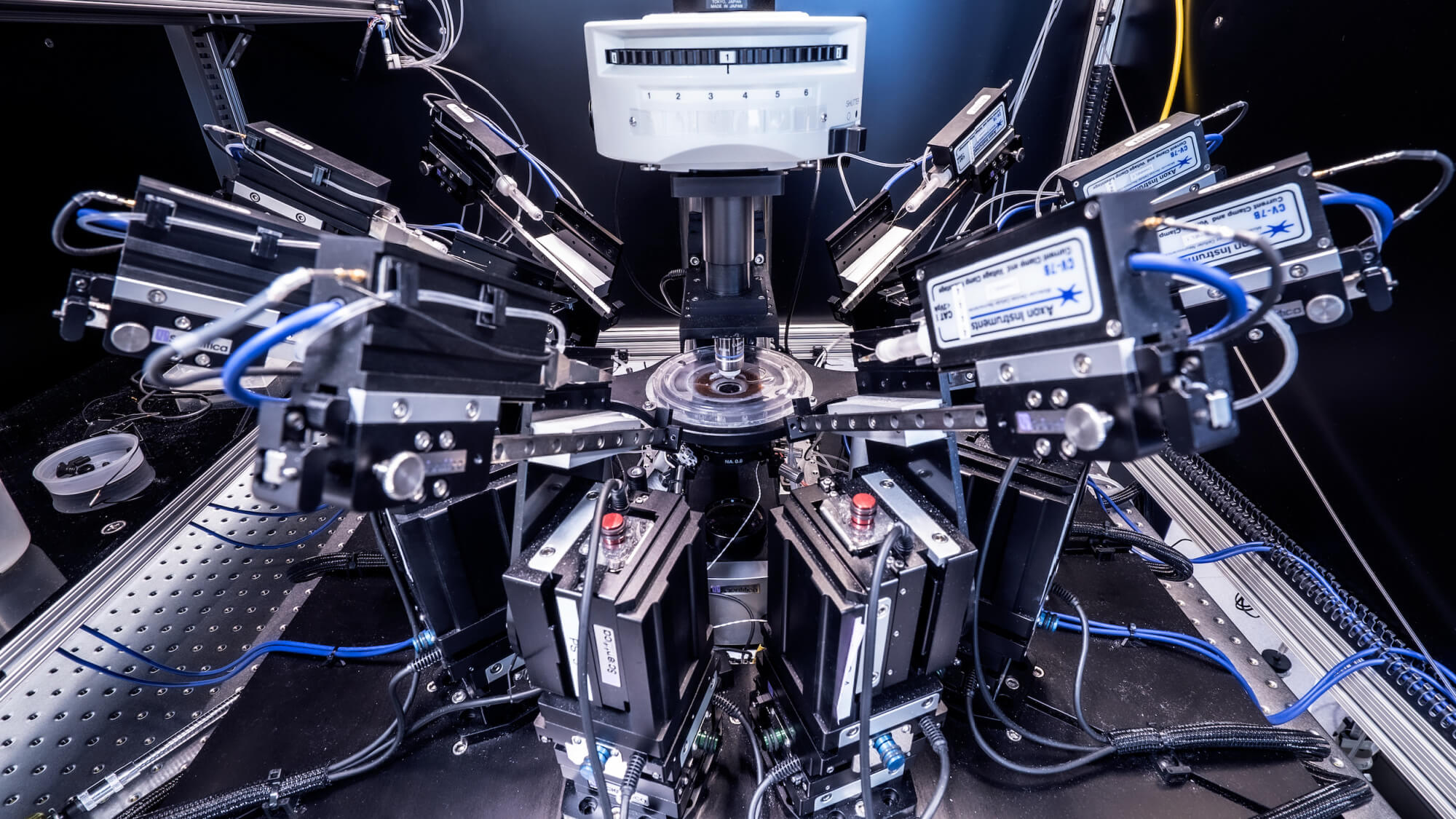
Advanced optical research equipment with multiple laser apparatus and measurement instruments on laboratory bench

goals and approach

The Integrated Cell Physiology team at the Allen Institute's brain science accelerator conducts Patch-seq experiments using a whole-cell patch clamp technique to establish connections between morphoelectric characteristics and transcriptomic-defined cell types. This research helps to bridge the gap between genotype and phenotype.

The efficient and automated pipeline developed by this team is generating high-quality large-scale data at rates previously deemed impractical for electrophysiology experiments. Investigators on the Integrated Cell Physiology team utilize animal models and human tissue specimens acquired through neurosurgical procedures in combination with state-of-the-art genetic tools to identify rare cell types.
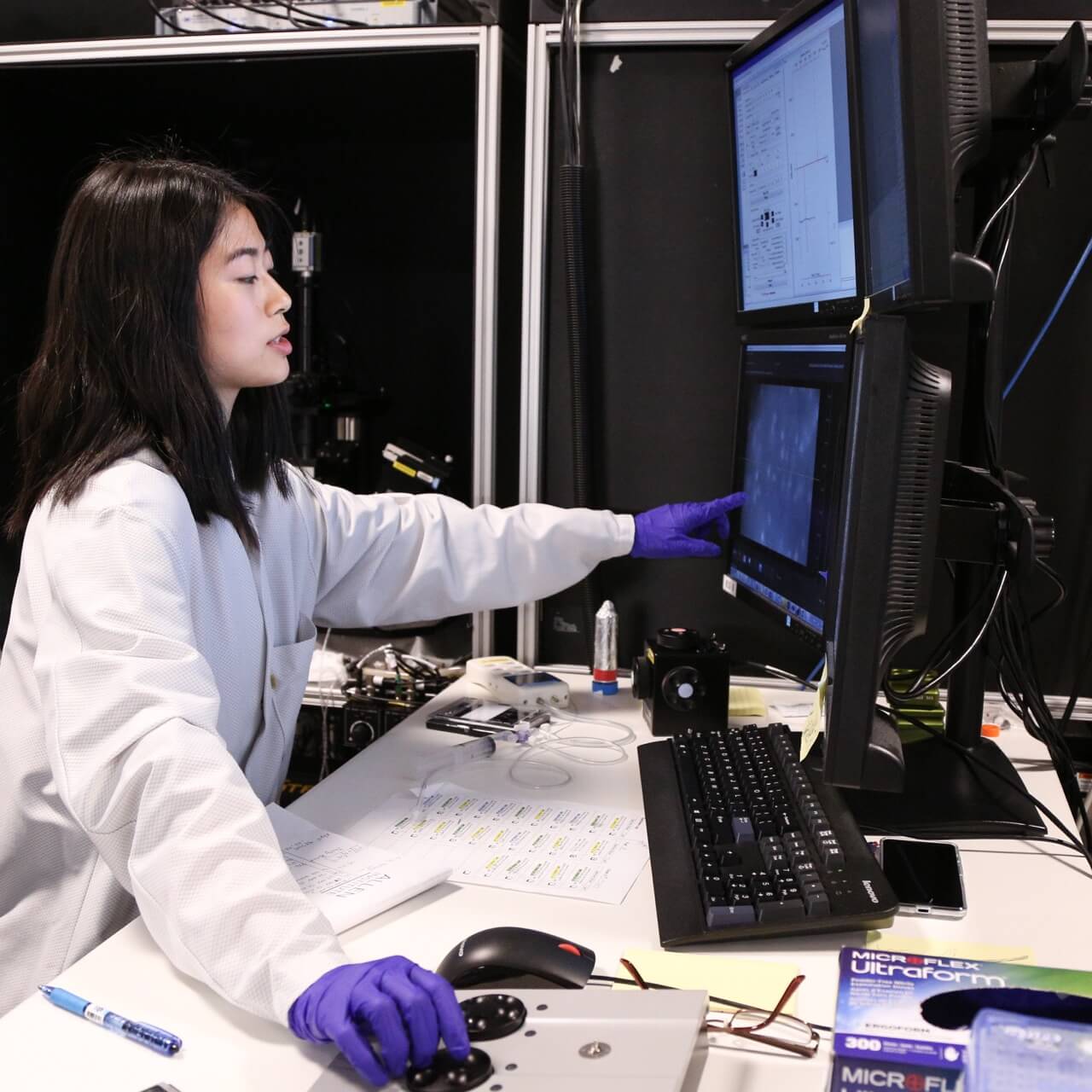
Lab technician wearing purple gloves working at computer station with multiple monitors in laboratory.

projects

in-vitro single cell characterization project

The “In-Vitro Single Cell Characterization Project (IVSCC)” employs a method called patch-seq to establish a direct link between the anatomical and electrical properties of individual cells and their genetic characteristics. This research is conducted using both animal models and human subjects.

gene therapy

The Integrated Cell Physiology department at the Allen Institute plays a crucial role in supporting gene therapy research. They provide important information about the effects of gene therapy interventions by conducting physiological assays that directly relate to gene function. These assays allow researchers to understand how the introduced genes are influencing the cellular behavior and function. By analyzing these physiological readouts, scientists gain valuable insights into the success and impact of the gene therapy interventions, which helps in advancing the field of gene therapy and its potential applications for various medical conditions.

PatchLink

The PatchLink project, supported by the National Institutes of Health (NIH), aims to create valuable tools that connect types of brain cells, defined by their genetics, to comprehensive brain circuit diagrams. The goal is to gain a deeper understanding of how different cell types are wired together. To achieve this, the project will develop cutting-edge automation technologies that allow us to measure shared features between genetic and circuit data sets at scale.

data and tools/

Data:

  1. Synaptic Physiology – Brain Map Portal
  2. Cell Types – Brain Map
  3. Specimens – Brain Map Knowledge

Tools:

  1. Acq4
  2. ipfx – Allen Institute GitHub
  3. MIES – Allen Institute GitHub
  4. Patchseqtools – Allen Institute GitHub

integrated cell physiology team

Luke Campagnola
Scientist III
Tamara Casper
Research Associate Sr. Supervisor
Nick Dee
Sr. Manager, Tissue Processing
Tim Jarsky
Associate Director, Electrophysiology
Megan Koch
Research Associate I
Rachel A McCue
Research Associate II
Kamiliam Nasirova
Research Associate II
Stephanie Seeman
Scientist III
Jessica Trinh
Research Associate III
we acceleratedevelopcatalyzeimpact

science done differently. shared openly.

explore our accelerators

brain science

Mapping every cell, connection, and circuit in the brain—openly shared with the world.

cell science

Decoding how cells become tissues, then programming that knowledge into powerful new research tools.

neural dynamics

Revealing the brain's hidden algorithms that transform neural activity into real-world behavior.

immunology

Creating the deepest open reference for the healthy human immune system ever built.

synthetic biology

Engineering cells to record their own histories, transforming how we understand disease over time.

research

Big questions, open answers, and science built to be shared.

education

Inspiring the next generation of scientists through open science resources.

impact

Our science is empowering researchers and advancing health worldwide.
advancing science through open, collaborative research
Get the allen institute newsletter
Stay informed on the latest breakthroughs in neuroscience, bioscience, and AI-driven research.
allen institute
impactpeople & teamscareers & opportunitiesalumnihistory & founder
science resources
allencell.orgallenimmunology.orgallenneuraldynamics.orgbrain-bican.orgbrain-map.orgmicrons-explorer.org
research
brain sciencecell scienceneural dynamicsimmunologysynthetic biologypublications
education
science educationfield tripsprofessional developmenteducation resources
quick links
newseventsopen sciencepodcastscience resourceshuman brain donationvisit uscontact
follow us/

allen institute, 615 Westlake Ave North, Seattle, WA 98109 +12065487055

© 0000 allen institute. all rights reserved.
privacy policyterms of usecitation policyemployee portalpolicy & compliancecookie settings