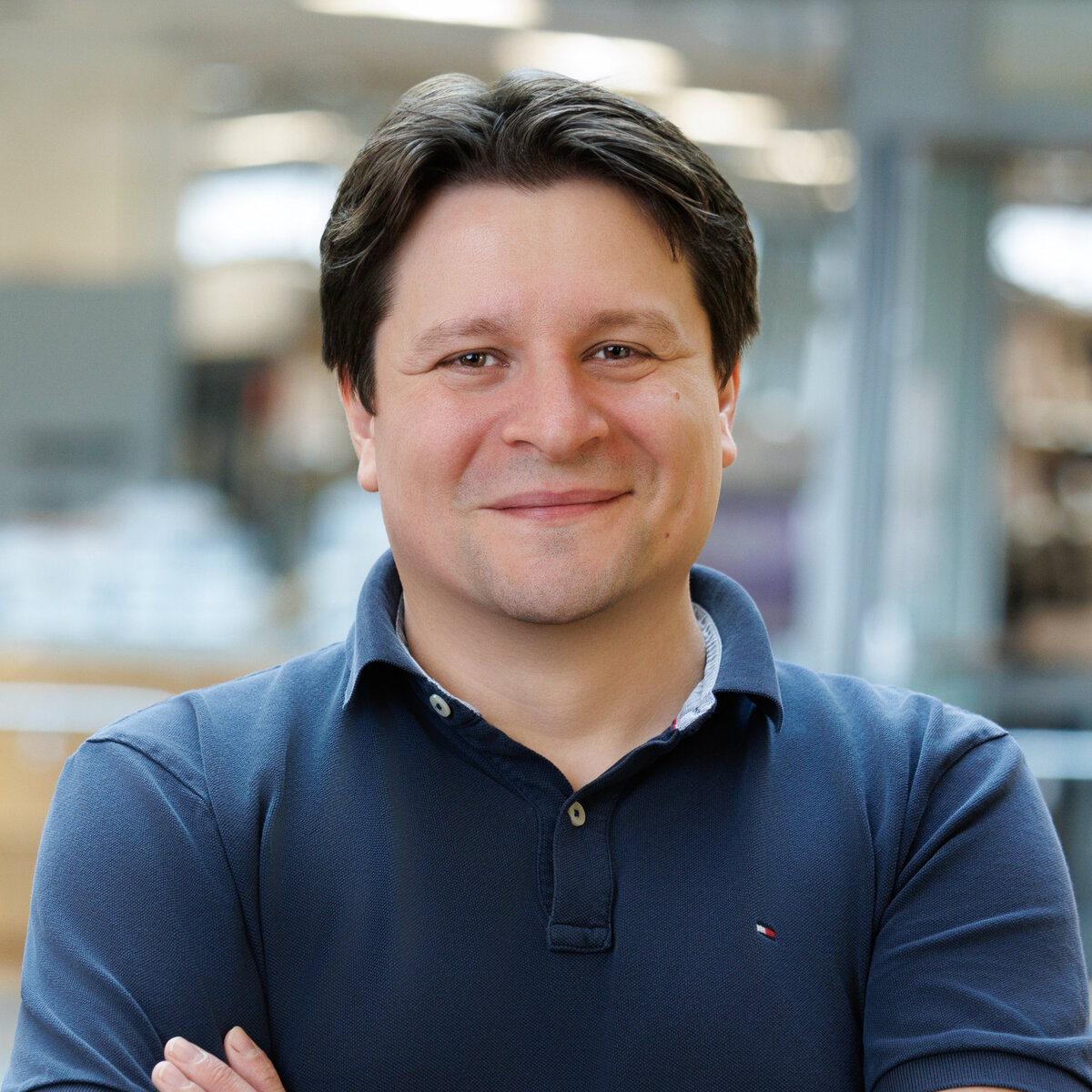
Alessio Ligabue
Senior Scientist

biography
Alessio completed his PhD in Cancer Biology at the University of Modena and Reggio Emilia in Italy, where his research focused on developing novel anticancer drugs. He then continued his scientific journey in Europe, working at École Polytechnique in Paris, France, and later at the Turku center for Biotechnology in Turku, Finland, where he investigated protein–protein and protein–DNA interactions in cancer development.
Alessio went on to the University of Washington in Seattle, where he further expanded his expertise in high-throughput assays for variant analysis. In 2019, he transitioned to industry, joining Proteios Technology, where he led a team in developing machine learning–driven biological pipelines for aptamer discovery and optimization.
Alessio joined the AI Powered Biological Design (AIPBD) team at the Allen Institute in May 2026 bringing his deep scientific and ML expertise.
Outside of work, Alessio enjoys playing indoor soccer, watching rugby, exploring new board games, spending time with his kids, and hiking.
research focus
Alessio's mission is to advance biological design through the application of machine learning.
His goal is to develop models that can accurately predict the effects of amino acid substitutions on protein interactions, including binding to other proteins, small molecules, and nucleic acids. To achieve this, we operate a Design–Build–Test–Learn (DBTL) cycle in which experimental data informs machine learning models, and machine learning models guide the design of subsequent experiments.
This iterative approach serves two critical purposes: it generates the high-quality experimental datasets required for robust model development, and it grounds model predictions in empirical biological reality. By tightly coupling experimentation and machine learning, we reduce the risk of generative artifacts or hallucinations while improving the accuracy and reliability of biological design predictions.