impact
about
our story
explore our impact
careers and opportunities
join us
open science
sharing science to speed discovery
open science week
celebrating open science
team science
people & teams
discovery is a team effort
allenites
the people who make our work possible
advisors
their input shapes our science
board of directors
they help us fulfill our mission
shanahan foundation fellowship
at the interface of data and neuroscience
next generation leaders
fostering emerging leaders in bioscience
research
overview
our approach
science at the scale of greatest impact
publications
explore our publications
open science
sharing science to speed discovery
science accelerators
brain science
building a blueprint of the brain
cell science
understanding how cells become organs
neural dynamics
revealing the brain’s hidden algorithms
immunology
creating the ultimate immune system reference
synthetic biology
seattle hub for synthetic biology
education
overview
science education
science is for everyone
open science
sharing science speeds discovery
engagement
education resources
real science. real skills.
field trips
experience science where it happens
educator development
empowering educators
news
overview
all news
explore the latest news
podcast
the human stories behind discovery
sign up for our newsletter
stay connected to our science
events
overview
all events
public engagement, workshops, seminars and more
conferences
connect with us
science resources
science resources
allencell.org
allenimmunology.org
allenneuraldynamics.org
brain-bican.org
brain-map.org
microns-explorer.org
impact
back to menu
team science
our story
explore our impact
careers and opportunities
join us
open science
sharing science to speed discovery
open science week
celebrating open science
team science
people & teams
discovery is a team effort
allenites
the people who make our work possible
advisors
their input shapes our science
board of directors
they help us fulfill our mission
shanahan foundation fellowship
at the interface of data and neuroscience
next generation leaders
fostering emerging leaders in bioscience
research
back to menu
overview
our approach
science at the scale of greatest impact
publications
explore our publications
open science
sharing science to speed discovery
science accelerators
brain science
building a blueprint of the brain
cell science
understanding how cells become organs
neural dynamics
revealing the brain’s hidden algorithms
immunology
creating the ultimate immune system reference
synthetic biology
seattle hub for synthetic biology
education
back to menu
overview
science education
science is for everyone
open science
sharing science speeds discovery
engagement
education resources
real science. real skills.
field trips
experience science where it happens
educator development
empowering educators
news
back to menu
overview
all news
explore the latest news
podcast
the human stories behind discovery
newsletter
stay connected to our science
events
back to menu
overview
all events
public engagement, workshops, seminars and more
conferences
connect with us
science resources
back to menu
science resources
allencell.org
allenimmunology.org
allenneuraldynamics.org
brain-bican.org
brain-map.org
microns-explorer.org
Heading
search
education

Explore Patch-seq in the lab

Join our scientists in the lab as they showcase the patch-seq pipeline

resource type / 
Video
topic / 
neuroscience
published / March 2, 2026
audience / 
Undergraduate
Laboratory microscopy and optical equipment setup with bright LED illumination and sample preparation
share/
This is some text inside of a div block.
Thank you! Your submission has been received!
Oops! Something went wrong while submitting the form.

lessons & resources in this unit

Defining cell types using transcriptomics, morphology, and electrophysiology

in this lesson

table of contents will display on published page only
set h2 to populate the table of contents here
lesson

contributors

Jeanelle Ariza Torres
Manager, Histology
Rachel Hostetler
Scientist I
Brian Lee
Senior Scientist
Elliot Phillips
Research Associate II
Claire Weichselbaum
Education & Engagement Specialist III

What is Patch-seq?

Patch-seq is a technique used to gather multiple types of data from a single neuron within a sample of living tissue. This method builds upon the Nobel-prize winning work of Erwin Neher & Bert Sakmann in the 1970s who developed the patch-clamp technique to measure the electrical signaling of individual neurons. By combining that electrophysiology data with the collection of morphology and gene expression data, neurons can be characterized and classified into cell types that may have similar functions in the brain.

‍

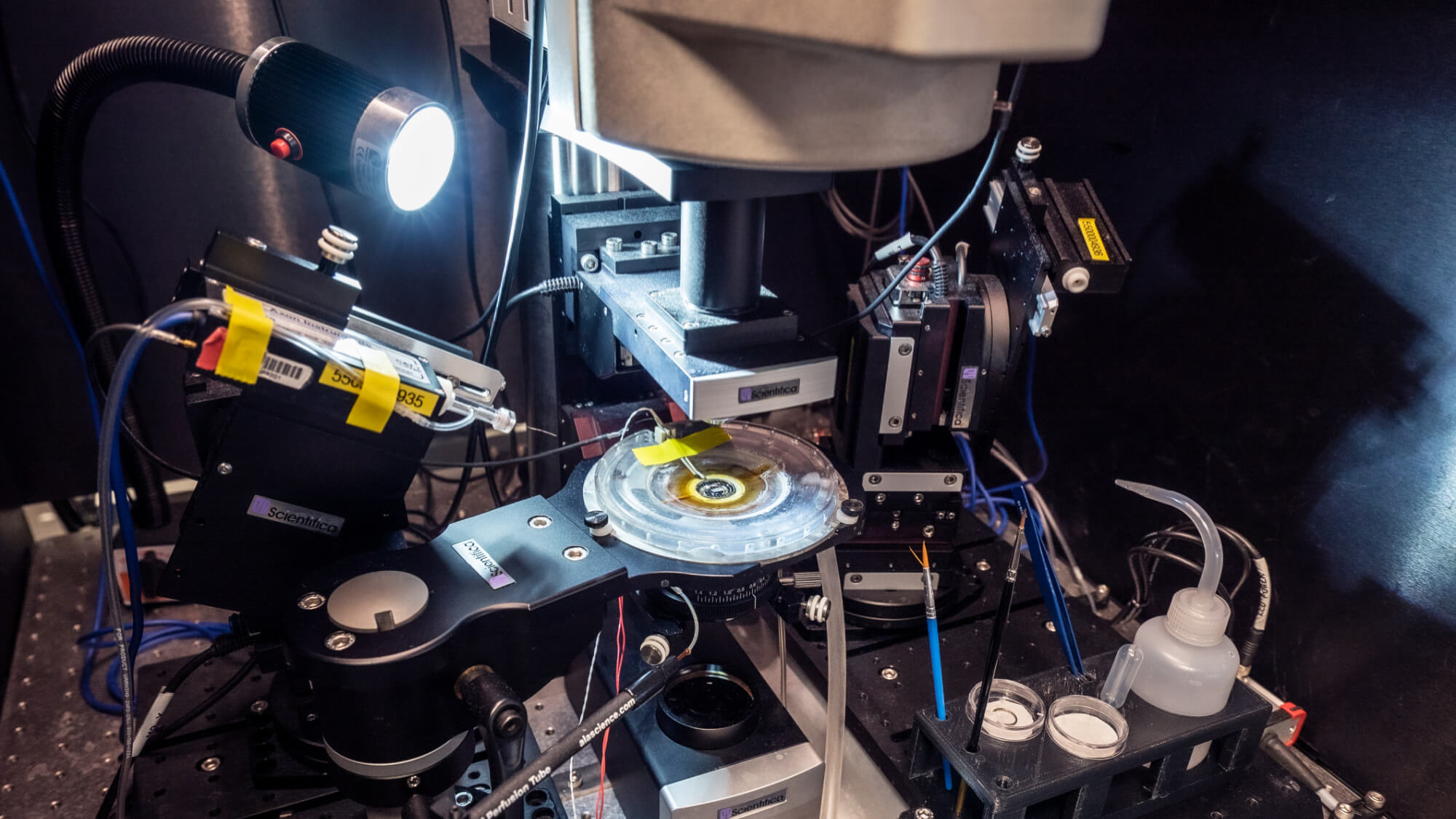
Scientific laboratory equipment with bright lights, mirrors, and electrical components on dark surface.
This lab equipment is used to for patch-clamp electrophysiology.

‍

Patch-seq lab tour  

Curious about how scientists study the cells of the brain? Watch this video for a behind-the-scenes look at the Allen Institute’s patch-seq research pipeline and meet our teams of scientists working together to gather data on morphology, electrophysiology, and gene expression—all from the same neuron. The data collected through this pipeline are freely available for you to explore at brain-map.org. Video length: 9:48

‍

Collecting data with patch-seq

Measuring electrophysiology: Patch-clamping refers to the use of a small glass pipette containing an electrode, lowered under a microscope to touch the surface of a living neuron. By applying a small amount of negative pressure, scientists are able to carefully rupture the membrane of the cell and gain access to record its responses to electrical stimulation.

Measuring morphology: In addition to recording electrical activity, the glass pipette is used to fill the neuron with a dye, called biocytin, which enables later imaging to visualize the detailed morphology (shape) of the cell. After that imaging, the three-dimensional structure of the neuron can be reconstructed using computer software to allow quantification of properties such as axon length, number of dendrites, and more.

Measuring gene expression (transcriptomics): After the cell’s electrical activity has been measured and biocytin dye has been added, scientists then extract the nucleus of the cell using the same glass pipette. This allows the RNA inside to be sequenced, providing insight into which genes were being expressed within the cell at that moment in time. The resulting transcriptomic data, combined with the electrophysiology and morphology data, makes Patch-seq a powerful multimodal technique for describing individual neurons.
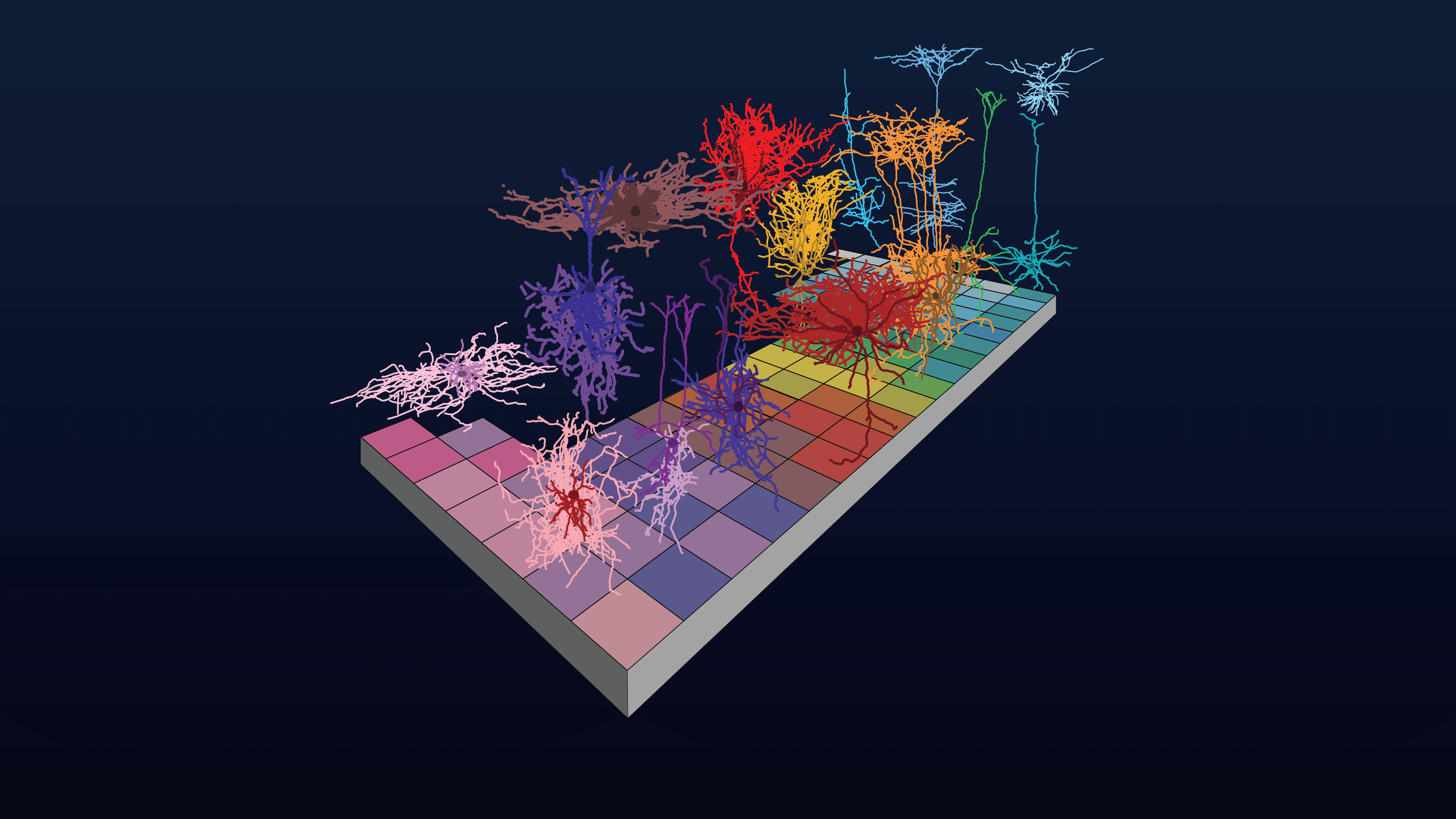
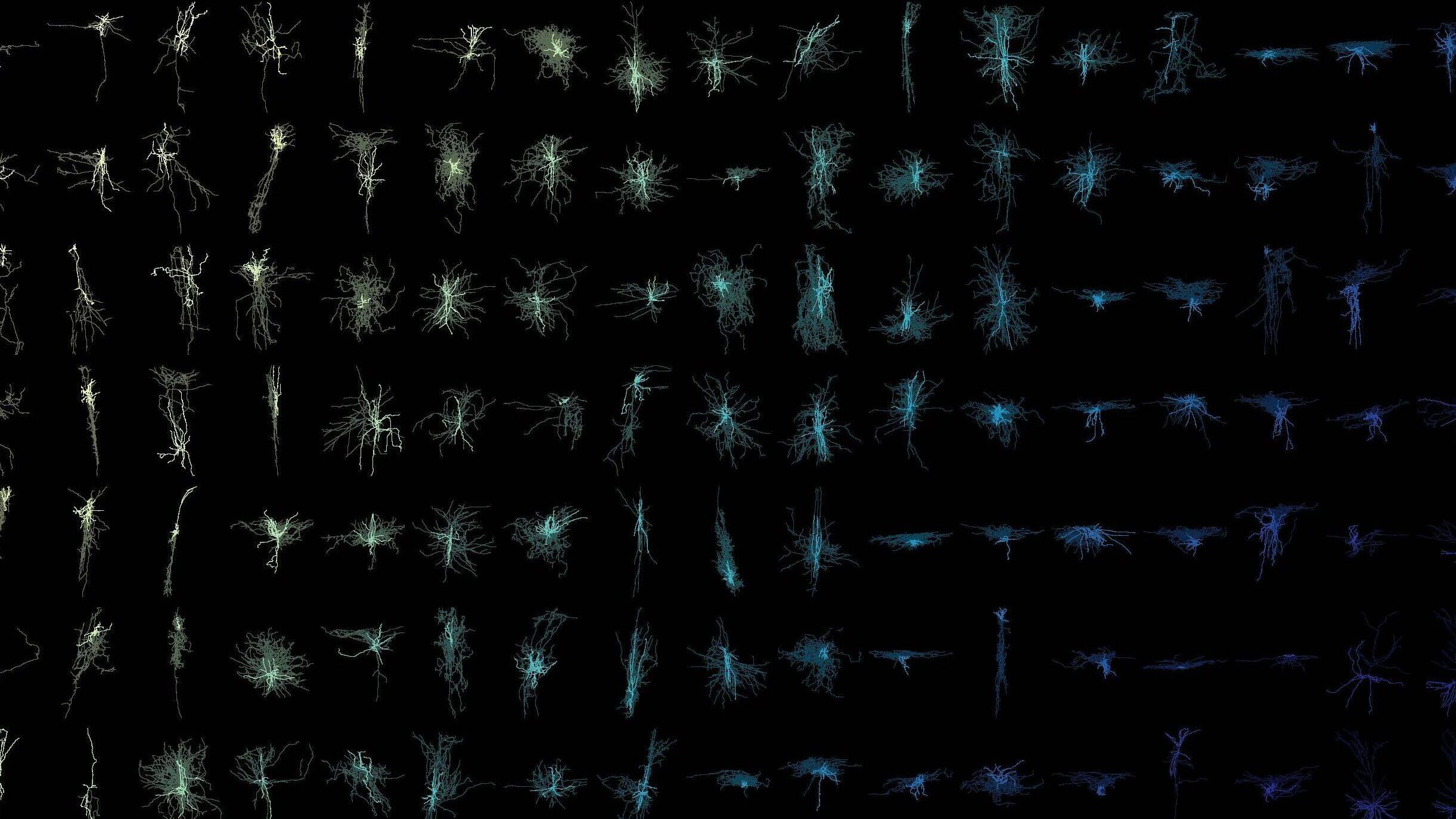
Colorful neural network visualization with branching patterns on gradient grid surface.
Defining cell types using transcriptomics, morphology, and electrophysiology
Overview of how multi-modal data is gathered to define cell types in the brain

featured education resources

explore more resources
Colorful cross-section of a mouse brain showing neural tissue with pink, blue, and orange regions.
Database Guide
Database Guide | Allen Brain Cell (ABC) Atlas
An in-depth guide on how to use the ABC Atlas to ask and evaluate research questions
Grid of digitally generated neurons with branching dendrites in white, green, cyan, and blue colors
Lesson(s)
Building realistic neurons with pipe cleaners
Create authentic models of neurons using low-cost craft materials
Laptop displaying code on desk with blurred people collaborating in background office setting.
Interactive Activity
Teaching and learning with python
Explore resources to introduce undergraduate students in the life sciences to Python programming
Black and white microscopic view of interconnected cells and particles in dark space
Video
How scientists see neurons fire with 2-photon calcium imaging
Join our scientists in the lab to walk through the 2-photon calcium imaging pipeline
Laboratory microscopy and optical equipment setup with bright LED illumination and sample preparation
Video
Explore Patch-seq in the lab
Join our scientists in the lab as they showcase the patch-seq pipeline
Colorful neural network visualization with branching patterns on gradient grid surface.
Lesson(s)
Defining cell types using transcriptomics, morphology, and electrophysiology
Overview of how multi-modal data is gathered to define cell types in the brain
we acceleratedevelopcatalyzeimpact

science done differently. shared openly.

explore our accelerators

brain science

Mapping every cell, connection, and circuit in the brain—openly shared with the world.

cell science

Decoding how cells become tissues, then programming that knowledge into powerful new research tools.

neural dynamics

Revealing the brain's hidden algorithms that transform neural activity into real-world behavior.

immunology

Creating the deepest open reference for the healthy human immune system ever built.

synthetic biology

Engineering cells to record their own histories, transforming how we understand disease over time.

research

Big questions, open answers, and science built to be shared.

education

Inspiring the next generation of scientists through open science resources.

impact

Our science is empowering researchers and advancing health worldwide.
advancing science through open, collaborative research
Get the allen institute newsletter
Stay informed on the latest breakthroughs in neuroscience, bioscience, and AI-driven research.
allen institute
impactpeople & teamscareers & opportunitiesalumnihistory & founder
science resources
allencell.orgallenimmunology.orgallenneuraldynamics.orgbrain-bican.orgbrain-map.orgmicrons-explorer.org
research
brain sciencecell scienceneural dynamicsimmunologysynthetic biologypublications
education
science educationfield tripsprofessional developmenteducation resources
quick links
newseventsopen sciencepodcastscience resourceshuman brain donationvisit uscontact
follow us/

allen institute, 615 Westlake Ave North, Seattle, WA 98109 +12065487055

© 0000 allen institute. all rights reserved.
privacy policyterms of usecitation policyemployee portalpolicy & compliancecookie settings