scientists use Open Ephys GUI to study how psychedelics affect the brain
Software co-created by the Allen Institute is helping scientists better understand psilocybin, which could lead to new treatments for neuropsychiatric disorders like depression
by Peter Kim
Using psilocybin to treat brain disorders
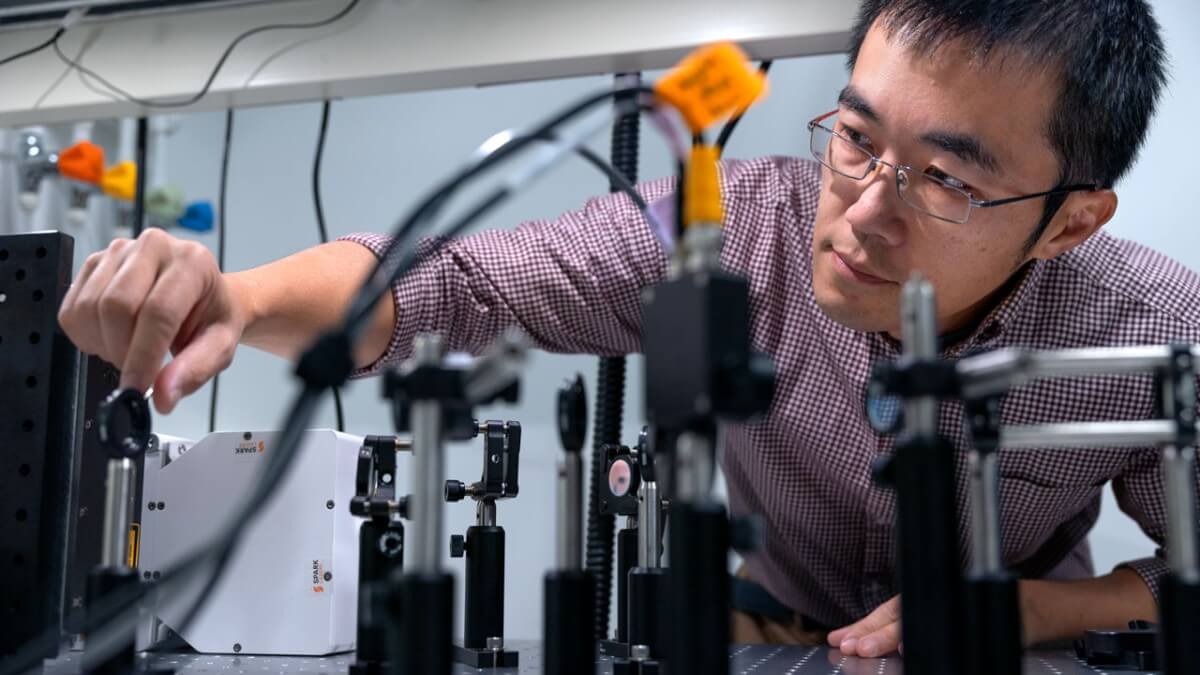
Alex Kwan, Ph.D., is a researcher at Cornell University passionate about finding new therapies for neuropsychiatric disorders like depression. In addition to his role at the school’s biomedical engineering department, he has been a faculty member in the psychiatry departments at both Yale and Cornell, where he learned about the debilitating toll of mental illness and the hopelessness many feel given the limited treatment options available to them.
“For 20 years, people have depended mostly on treatments like selective serotonin reuptake inhibitors (SSRI) or electroconvulsive therapy, things that we have used for so long; but we know that they take a while to begin working, and some people don’t respond to them very well,” said Kwan. “So it’s very exciting to have a new treatment option on the horizon.”
Using psilocybin to treat brain disorders
One promising treatment option could be psilocybin, a naturally occurring psychedelic compound found in certain species of mushrooms. The video shows pyramidal tract neurons in red. These cells rewire after exposure to the drug and gain new neuronal connections. A small group of them also become more active.
Open Ephys GUI
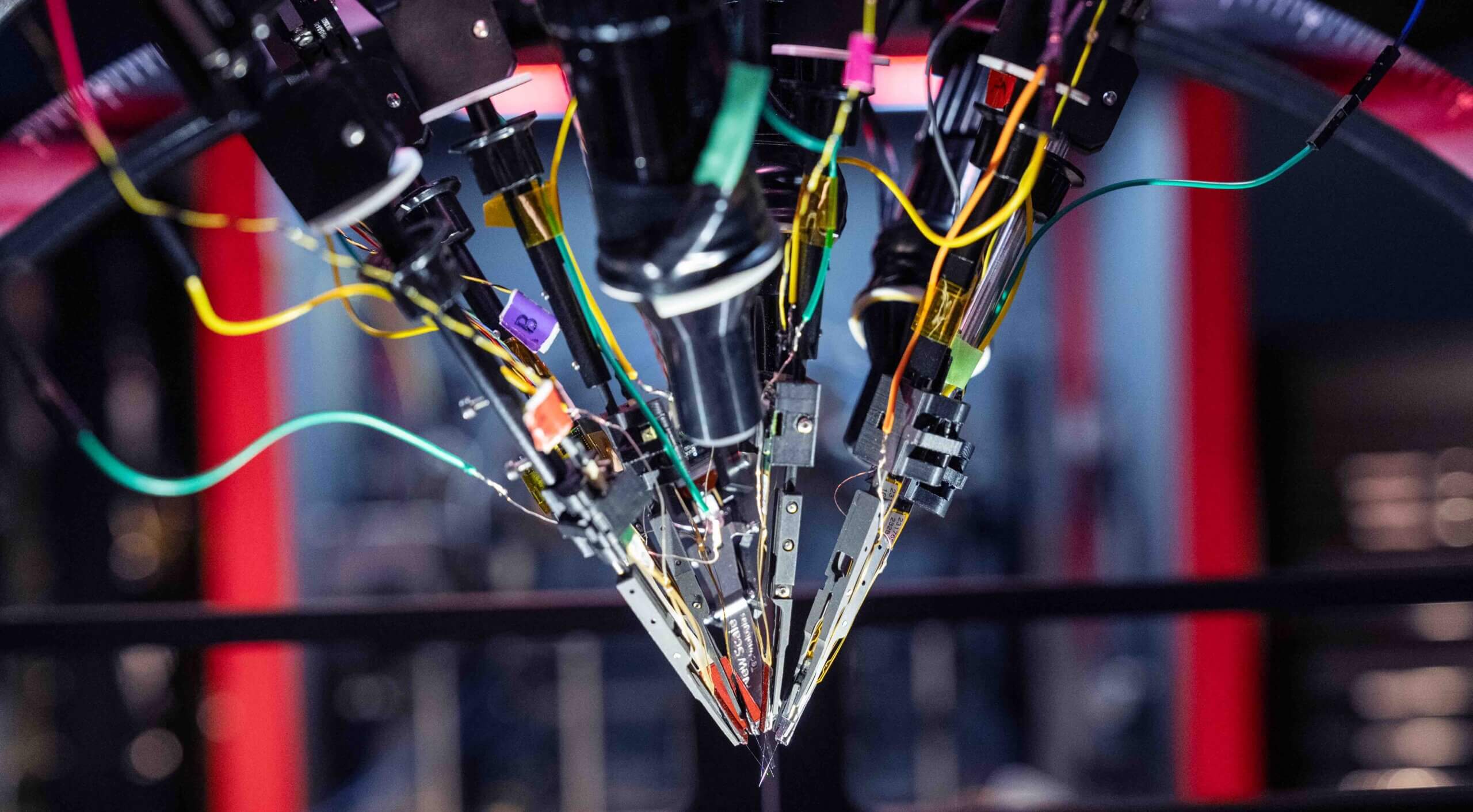
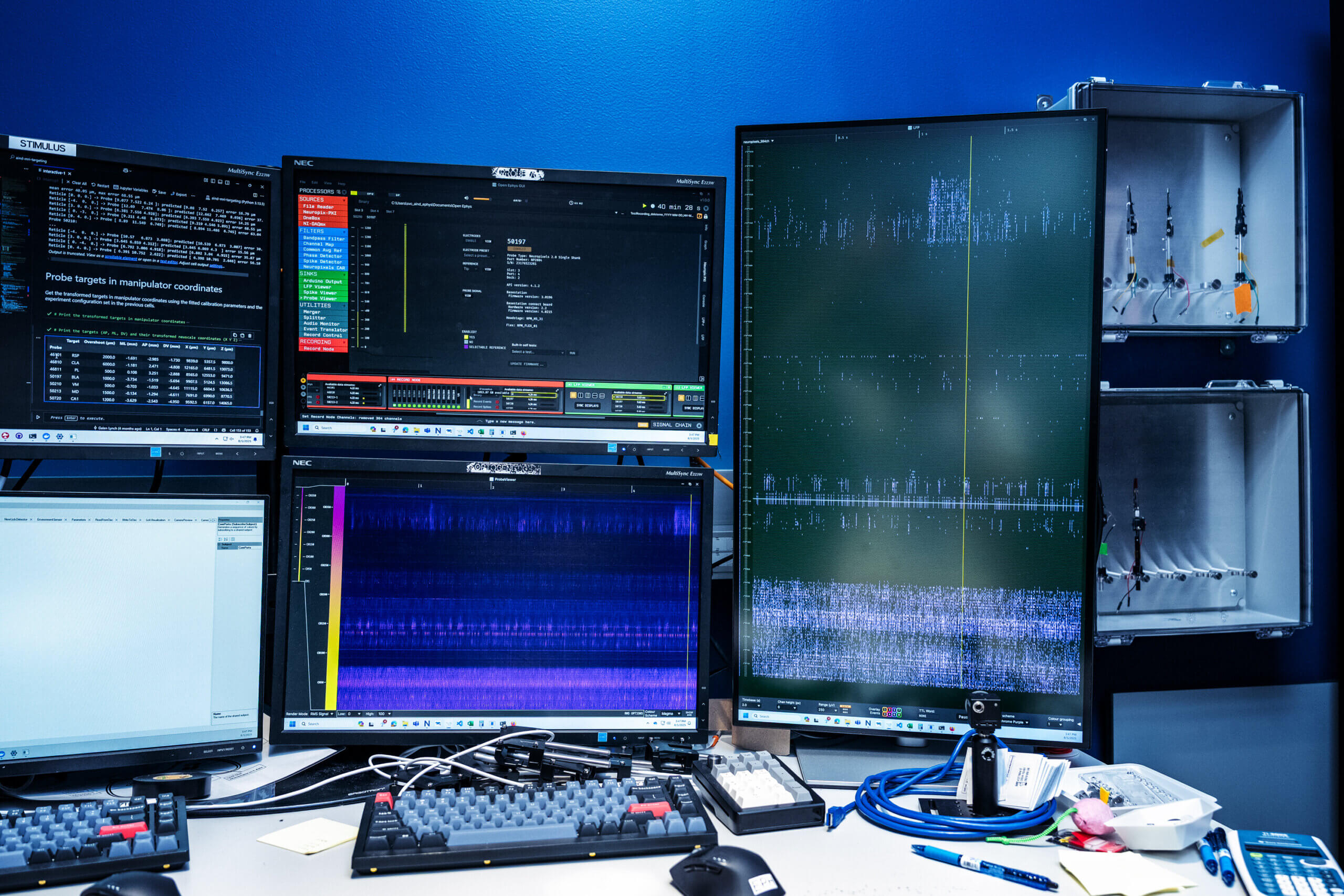
Open Ephys GUI (graphic user interface) was co-created by the Allen Institute and MIT. It processes and visualizes electrophysiology data captured by Neuropixels probes so that scientists can see what their data looks like. This is data related to the communications, or chatter, between thousands of brain cells sending electrical signals to one another. “Raw data is just numbers, which is not very useful to look at on its own. But if you can convert the raw data into rich visualizations with appealing colors, it becomes much more readily understandable (and interpretable),” said Josh Siegle, Ph.D., one of the lead designers and senior scientists at the Allen Institute. “This is especially important when recording from multiple Neuropixels probes in parallel, where you have data from hundreds or thousands of channels that needs to be summarized at a glance.”
Kwan’s research team, which included Cory Knox, Quan Jiang, and Pasha Davoudian, made some of these discoveries using Neuropixels probes to record from hundreds of mouse brain cells in real time, and an advanced open-source software package called Open Ephys GUI.
Benefits of Open Ephys GUI
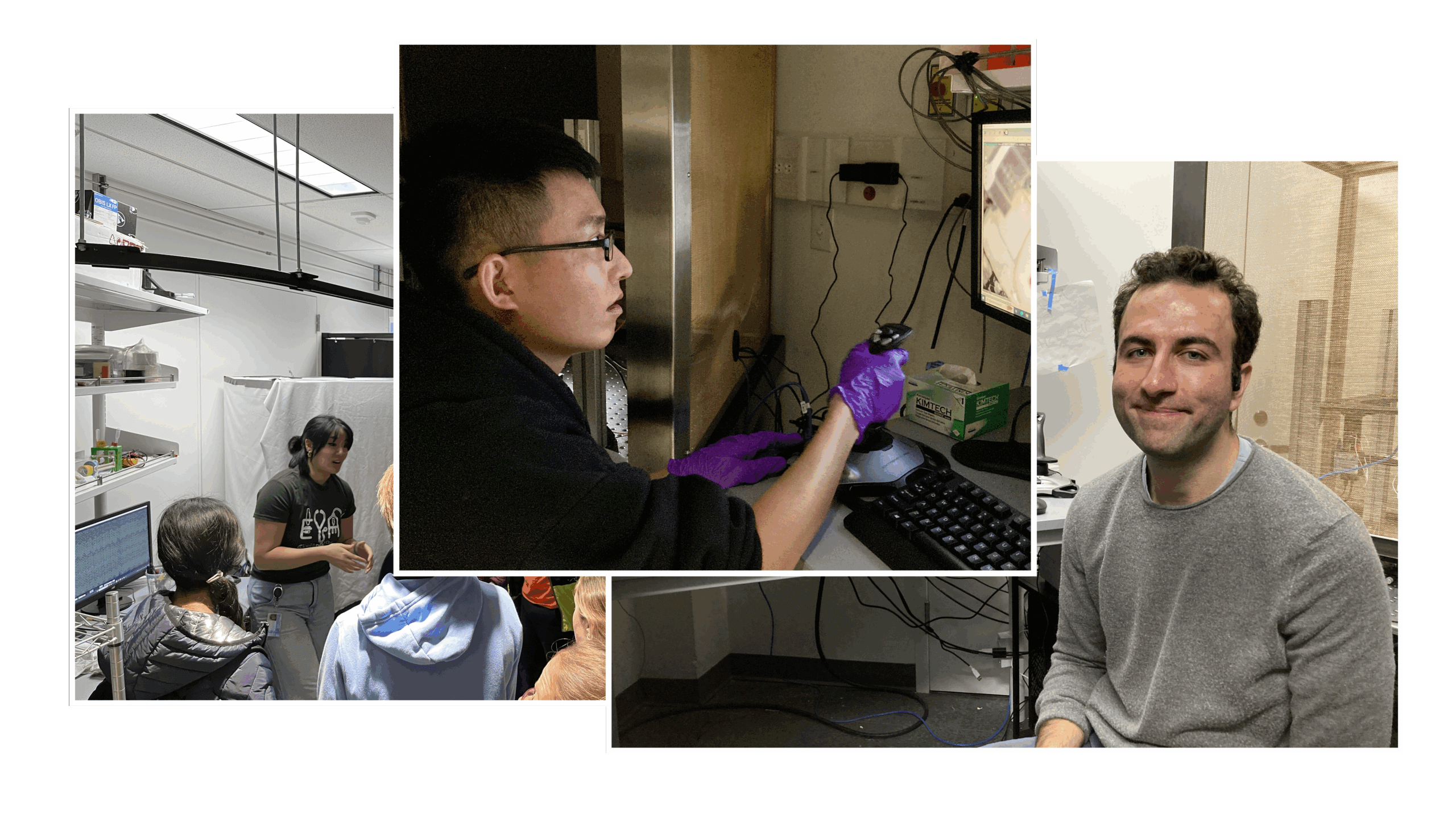
The system is highly adaptable for specific experimental needs because it relies on a diverse range of plugins that the global scientific community designs, much like an online app store where developers design and contribute their own apps that others can use. “Everyone in the lab agrees just how brilliant the plugin system has been—the fact that the software is quite modular and that you can add and subtract functionality, this helps us keep the software to just the right amount of complexity, but no more or less, which I think is quite important,” said Kwan, whose team used Open Ephys GUI almost every day during the course of their study.
“In our case, we needed to tag neurons with optogenetics at the end of the experiment; so we would record them as the mouse was administered the drug, and then at the very end, we would perform opto tagging. Here, the plugins came in very handy. It was very easy to incorporate pulse pal (plugin) for laser stimulation for tagging these cell types. We just dropped it into the pipeline and then it’s right there, and it worked right off the shelf.
Other plugins include CNN Ripple, Falcon Output, LSL Inlet, and Phase Calculator. All of these perform specific functions that expand experimental capabilities.
Another benefit of Open Ephys GUI is that it’s hardware agnostic: it can work with multiple pieces of equipment and hardware, making it much more flexible than other systems. In the past, scientists were locked into one company and had to spend thousands of dollars buying their hardware and software to perform experiments and record and process data because there wasn’t compatibility between companies.
Open Ephys GUI is free for anyone to download and works on any operating system. It has been used to collect data for hundreds of scientific publications and has made extracellular electrophysiology more accessible in countries like Brazil, India, and South Africa.
“One of the very critical criteria for us is stability of the software. Open Ephys has been rock solid. Particularly for us, we had to record for a long time and it’s very important for the recording to be stable before and after the drug is administered. It’s a two-hour continuous recording; the system cannot crash,” said Kwan.

We study how cells self-organize by integrating imaging, computational modeling and synthetic biology, revealing fundamental principles in cell biology and laying the groundwork for breakthroughs in diagnosing and treating disease.

Scientific progress depends on a handful of indispensable open-source software tools. Open Ephys GUI is one of them—an essential driver of the revolution in multichannel neurophysiology. Its features empower a wide range of experiments, but above all, it is exceptionally robust and reliable.
Advancing our understanding of the brain
Kwan and his research team are shedding valuable light onto the potential therapeutic effects of psilocybin, laying the groundwork for new drugs that could help treat depression and other serious brain disorders. Their findings—including how pyramidal tract neurons respond to the psychedelic compound—were published in the journal Nature. His team now hopes to broaden our understanding of the brain by analyzing behavioral data; and with Open Ephys GUI’s versatility, that area of investigation is ripe for discovery.