impact
about
our story
explore our impact
careers and opportunities
join us
open science
sharing science to speed discovery
open science week
celebrating open science
team science
people & teams
discovery is a team effort
allenites
the people who make our work possible
advisors
their input shapes our science
board of directors
they help us fulfill our mission
shanahan foundation fellowship
at the interface of data and neuroscience
next generation leaders
fostering emerging leaders in bioscience
research
overview
our approach
science at the scale of greatest impact
publications
explore our publications
open science
sharing science to speed discovery
science accelerators
brain science
building a blueprint of the brain
cell science
understanding how cells become organs
neural dynamics
revealing the brain’s hidden algorithms
immunology
creating the ultimate immune system reference
synthetic biology
seattle hub for synthetic biology
brain health
accelerating human brain research and disease therapeutics
education
overview
science education
science is for everyone
open science
sharing science speeds discovery
engagement
education resources
real science. real skills.
field trips
experience science where it happens
educator development
empowering educators
news
overview
all news
explore the latest news
podcast
the human stories behind discovery
sign up for our newsletter
stay connected to our science
events
overview
all events
public engagement, workshops, seminars and more
conferences
connect with us
science resources
science resources
allencell.org
allenimmunology.org
allenneuraldynamics.org
brain-bican.org
brain-map.org
microns-explorer.org
impact
back to menu
team science
our story
explore our impact
careers and opportunities
join us
open science
sharing science to speed discovery
open science week
celebrating open science
team science
people & teams
discovery is a team effort
allenites
the people who make our work possible
advisors
their input shapes our science
board of directors
they help us fulfill our mission
shanahan foundation fellowship
at the interface of data and neuroscience
next generation leaders
fostering emerging leaders in bioscience
research
back to menu
overview
our approach
science at the scale of greatest impact
publications
explore our publications
open science
sharing science to speed discovery
science accelerators
brain science
building a blueprint of the brain
cell science
understanding how cells become organs
neural dynamics
revealing the brain’s hidden algorithms
immunology
creating the ultimate immune system reference
synthetic biology
seattle hub for synthetic biology
brain health
accelerating human brain research and disease therapeutics
education
back to menu
overview
science education
science is for everyone
open science
sharing science speeds discovery
engagement
education resources
real science. real skills.
field trips
experience science where it happens
educator development
empowering educators
news
back to menu
overview
all news
explore the latest news
podcast
the human stories behind discovery
newsletter
stay connected to our science
events
back to menu
overview
all events
public engagement, workshops, seminars and more
conferences
connect with us
science resources
back to menu
science resources
allencell.org
allenimmunology.org
allenneuraldynamics.org
brain-bican.org
brain-map.org
microns-explorer.org
Heading
search
impact
people

Ed Lein

Executive Vice President and Director, Brain Health

Leadership
Allenite
/
Brain Health

biography

Ed Lein leads the Brain Health accelerator’s research and global collaboration efforts aimed at advancing foundational insights into the human brain and neurodegenerative disease. Prior to this, Ed led the Human Cell Types Department in the Brain Science accelerator.  His research has aimed to create comprehensive cell atlases of the human and non-human primate brain, understand what is disrupted in Alzheimer’s disease, and create tools for precision genetic targeting of brain cell types as transformative tools for basic neuroscience and gene therapy. This work is now expanding to encompass a much wider range of neurodegenerative diseases including Alzheimer’s, Parkinson’s, Huntington’s, and ALS, combining large-scale discovery science, AI and disease modeling, and development of cell- and circuit-based genetic therapies. Ed’s areas of expertise include developmental neurobiology, structural and cellular neuroanatomy, transcriptomics and epigenomics, comparative neurobiology, and Alzheimer’s disease. He is a member of the BRAIN Initiative Cell Atlas Network (BICAN), a member of the organizing committee of the Human Cell Atlas (HCA), and a Canadian Institute for Advanced Research (CIFAR) fellow. Ed is also an affiliate professor in the Departments of Neurological Surgery and Laboratory Medicine and Pathology (DLMP) at the University of Washington in Seattle. He received a BS in Biochemistry from Purdue University, a PhD in Neurobiology from UC Berkeley, and performed postdoctoral work at the Salk Institute for Biological Studies.

Since joining the Allen Institute in 2004, Ed has provided scientific leadership for the creation of large-scale anatomical, cellular and gene expression atlases of the adult and developing mammalian brain as catalytic community resources, including the inaugural Allen Mouse Brain Atlas and a range of developmental and adult human and non-human primate brain atlases.

‍

back to people and teams
featured contributions
featured media
featured stories
featured events
featured publications

featured events

No articles for the category

featured stories

news
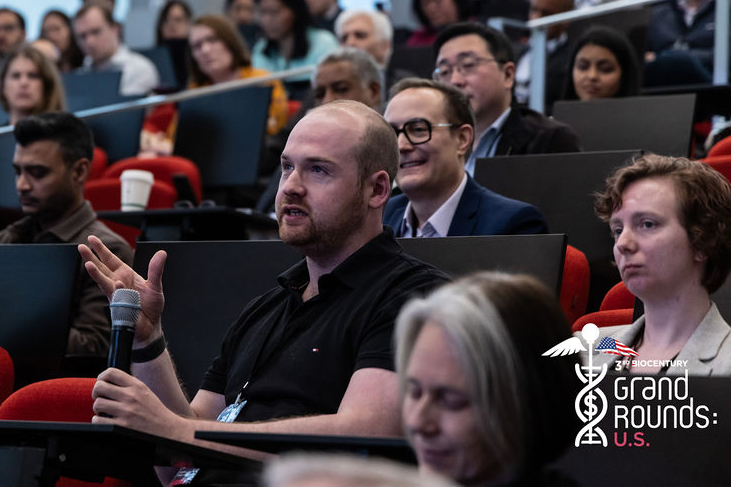
BioCentury Grand Rounds conference highlights importance of big data
The conference hosted Nobel Laureates, researchers, and biotech leaders in Seattle looking to advance better treatments in medicine
news
Brain Health accelerator to transform our understanding of brain disorders and develop new treatments
the global collaborative research initiative will initially target Alzheimer’s, Parkinson’s, Huntington’s disease, ALS, and Lewy body dementia
news
Mapping the brain to improve lives
A collaborative effort between UW and the Allen Institute is creating a first-of-its-kind brain atlas, paving the way for breakthroughs in brain...

featured media

media / Endpoints News
Allen Institute launches $400M effort to turn brain atlas lessons into medicines
A Seattle-based nonprofit is launching an initiative to translate its knowledge into drug development for neurodegenerative diseases, including Alzheimer’s.
media / TheScientist
The Brain Health Accelerator Seeks to Revolutionize Neuroscience Research
The Allen Institute launched a new project to accelerate the mechanistic understanding of neurodegenerative diseases and develop potential therapies.
media / The Transmitter
Allen Institute sets sights on treatments for five brain diseases
The Brain Health Accelerator program aims to harness single-cell transcriptomics and cell-type-specific genetic tools to develop treatments for Alzheimer’s, Huntington’s and Parkinson’s diseases, Lewy body dementia and ALS.

featured publications

publication / 2025
Accelerating biomedical discoveries in brain health through transformative neuropathology of aging and neurodegeneration
Neuron
publication / 2025
Integrating multimodal data to understand cortical circuit architecture and function
Nature Neuroscience
publication / 2024
Mapping human tissues with highly multiplexed RNA in situ hybridization
Nature Communications
publication / 2024
Hierarchical Bayesian inference to model continuous phenotypical progression in Alzheimer's Disease
bioRxiv
publication / 2023
Single-cell genomics reveals region-specific developmental trajectories underlying neuronal diversity in the human hypothalamus
Science Advances
publication / 2023
Single-cell DNA methylation and 3D genome architecture in the human brain
Science (New York, N.Y.)
publication / 2023
A comparative atlas of single-cell chromatin accessibility in the human brain
Science (New York, N.Y.)
publication / 2023
Comparative single-cell transcriptomic analysis of primate brains highlights human-specific regulatory evolution
Nature Ecology & Evolution
publication / 2023
A guide to the BRAIN Initiative Cell Census Network data ecosystem
PLoS biology
publication / 2023
Target cell-specific synaptic dynamics of excitatory to inhibitory neuron connections in supragranular layers of human neocortex
eLife
publication / 2022
Multi-modal characterization and simulation of human epileptic circuitry
Cell Reports
publication / 2022
Single-neuron models linking electrophysiology, morphology, and transcriptomics across cortical cell types
Cell Reports
publication / 2022
A scalable and modular automated pipeline for stitching of large electron microscopy datasets
eLife
publication / 2022
Local connectivity and synaptic dynamics in mouse and human neocortex
Science (New York, N.Y.)
publication / 2022
Single nucleus multi-omics identifies human cortical cell regulatory genome diversity
Cell Genomics
publication / 2021
Cell type ontologies of the Human Cell Atlas
Nature Cell Biology
publication / 2021
A multimodal cell census and atlas of the mammalian primary motor cortex
Nature
publication / 2021
A machine learning method for the discovery of minimum marker gene combinations for cell type identification from single-cell RNA sequencing
Genome Research
publication / 2021
Single-cell and single-nucleus RNA-seq uncovers shared and distinct axes of variation in dorsal LGN neurons in mice, non-human primates, and humans
eLife
publication / 2021
Scaled, high fidelity electrophysiological, morphological, and transcriptomic cell characterization
eLife
publication / 2021
Enhancer viruses for combinatorial cell-subclass-specific labeling
Neuron
publication / 2020
Common cell type nomenclature for the mammalian brain
eLife
publication / 2020
A community-based transcriptomics classification and nomenclature of neocortical cell types
Nature Neuroscience
publication / 2019
Single-cell transcriptomic evidence for dense intracortical neuropeptide networks
eLife
publication / 2019
Classification of electrophysiological and morphological neuron types in the mouse visual cortex
Nature Neuroscience
publication / 2018
Joint registration and synthesis using a probabilistic model for alignment of MRI and histological sections
Medical Image Analysis
publication / 2018
Shared and distinct transcriptomic cell types across neocortical areas
Nature
publication / 2018
Distinctive Structural and Molecular Features of Myelinated Inhibitory Axons in Human Neocortex
eNeuro
publication / 2018
Sparse recurrent excitatory connectivity in the microcircuit of the adult mouse and human cortex
eLife
publication / 2018
A robust ex vivo experimental platform for molecular-genetic dissection of adult human neocortical cell types and circuits
Scientific Reports
publication / 2018
An anatomic transcriptional atlas of human glioblastoma
Science (New York, N.Y.)
publication / 2018
Preparation of Acute Brain Slices Using an Optimized N-Methyl-D-glucamine Protective Recovery Method
Journal of Visualized Experiments: JoVE
publication / 2017
The Human Cell Atlas
eLife
publication / 2017
STRT-seq-2i: dual-index 5' single cell and nucleus RNA-seq on an addressable microwell array
Scientific Reports
publication / 2017
Neuropathological and transcriptomic characteristics of the aged brain
eLife
publication / 2017
The promise of spatial transcriptomics for neuroscience in the era of molecular cell typing
Science (New York, N.Y.)
publication / 2017
SmartScope2: Simultaneous Imaging and Reconstruction of Neuronal Morphology
Scientific Reports
publication / 2017
Single-Cell Profiling of an In Vitro Model of Human Interneuron Development Reveals Temporal Dynamics of Cell Type Production and Maturation
Neuron
publication / 2015
Canonical genetic signatures of the adult human brain
Nature Neuroscience
publication / 2014
Convergent transcriptional specializations in the brains of humans and song-learning birds
Science (New York, N.Y.)
publication / 2014
Disruptive CHD8 mutations define a subtype of autism early in development
Cell
publication / 2014
Evolution and development of the mammalian cerebral cortex
Brain, Behavior and Evolution
publication / 2011
Multi-scale correlation structure of gene expression in the brain
Neural Networks: The Official Journal of the International Neural Network Society
publication / 2011
Differential connectivity and response dynamics of excitatory and inhibitory neurons in visual cortex
Nature Neuroscience
publication / 2008
Quantitative methods for genome-scale analysis of in situ hybridization and correlation with microarray data
Genome Biology
publication / 2007
Neuroinformatics for genome-wide 3D gene expression mapping in the mouse brain
IEEE/ACM transactions on computational biology and bioinformatics
we acceleratedevelopcatalyzeimpact

science done differently. shared openly.

explore our accelerators

brain science

Mapping every cell, connection, and circuit in the brain—openly shared with the world.

cell science

Decoding how cells become tissues, then programming that knowledge into powerful new research tools.

neural dynamics

Revealing the brain's hidden algorithms that transform neural activity into real-world behavior.

immunology

Creating the deepest open reference for the healthy human immune system ever built.

synthetic biology

Engineering cells to record their own histories, transforming how we understand disease over time.

Brain Health

Accelerating human brain research and new therapeutic strategies for neurological conditions

research

Big questions, open answers, and science built to be shared.

education

Inspiring the next generation of scientists through open science resources.

impact

Our science is empowering researchers and advancing health worldwide.
advancing science through open, collaborative research
Get the allen institute newsletter
Stay informed on the latest breakthroughs in neuroscience, bioscience, and AI-driven research.
allen institute
impactpeople & teamscareers & opportunitiesalumnihistory & founder
science resources
allencell.orgallenimmunology.orgallenneuraldynamics.orgbrain-bican.orgbrain-map.orgmicrons-explorer.org
research
brain sciencecell scienceneural dynamicsimmunologysynthetic biologybrain healthpublications
education
science educationfield tripsprofessional developmenteducation resources
quick links
newseventsopen sciencepodcastscience resourceshuman brain donationvisit uscontact
follow us/

allen institute, 615 Westlake Ave North, Seattle, WA 98109 +12065487055

© 0000 allen institute. all rights reserved.
privacy policyterms of usecitation policyemployee portalpolicy & compliancecookie settings