impact
about
our story
explore our impact
careers and opportunities
join us
open science
sharing science to speed discovery
open science week
celebrating open science
team science
people & teams
discovery is a team effort
allenites
the people who make our work possible
advisors
their input shapes our science
board of directors
they help us fulfill our mission
shanahan foundation fellowship
at the interface of data and neuroscience
next generation leaders
fostering emerging leaders in bioscience
research
overview
our approach
science at the scale of greatest impact
publications
explore our publications
open science
sharing science to speed discovery
science accelerators
brain science
building a blueprint of the brain
cell science
understanding how cells become organs
neural dynamics
revealing the brain’s hidden algorithms
immunology
creating the ultimate immune system reference
synthetic biology
seattle hub for synthetic biology
education
overview
science education
science is for everyone
open science
sharing science speeds discovery
engagement
education resources
real science. real skills.
field trips
experience science where it happens
educator development
empowering educators
news
overview
all news
explore the latest news
podcast
the human stories behind discovery
sign up for our newsletter
stay connected to our science
events
overview
all events
public engagement, workshops, seminars and more
conferences
connect with us
science resources
science resources
allencell.org
allenimmunology.org
allenneuraldynamics.org
brain-bican.org
brain-map.org
microns-explorer.org
impact
back to menu
team science
our story
explore our impact
careers and opportunities
join us
open science
sharing science to speed discovery
open science week
celebrating open science
team science
people & teams
discovery is a team effort
allenites
the people who make our work possible
advisors
their input shapes our science
board of directors
they help us fulfill our mission
shanahan foundation fellowship
at the interface of data and neuroscience
next generation leaders
fostering emerging leaders in bioscience
research
back to menu
overview
our approach
science at the scale of greatest impact
publications
explore our publications
open science
sharing science to speed discovery
science accelerators
brain science
building a blueprint of the brain
cell science
understanding how cells become organs
neural dynamics
revealing the brain’s hidden algorithms
immunology
creating the ultimate immune system reference
synthetic biology
seattle hub for synthetic biology
education
back to menu
overview
science education
science is for everyone
open science
sharing science speeds discovery
engagement
education resources
real science. real skills.
field trips
experience science where it happens
educator development
empowering educators
news
back to menu
overview
all news
explore the latest news
podcast
the human stories behind discovery
newsletter
stay connected to our science
events
back to menu
overview
all events
public engagement, workshops, seminars and more
conferences
connect with us
science resources
back to menu
science resources
allencell.org
allenimmunology.org
allenneuraldynamics.org
brain-bican.org
brain-map.org
microns-explorer.org
search
impact
people

Hongkui Zeng

Executive Vice President and Director, Brain Science

teams /
Leadership
Allenite

Hongkui Zeng joined the Allen Institute in 2006 and became Executive Vice President, Director for the Brain Science group in 2020. From 2016 to 2020, she led the Structured Science Division to develop and operate high-throughput pipelines to generate large-scale datasets and tools to accelerate neuroscience discovery. Since joining the Allen Institute, she has led several research programs, including the Transgenic Technology program, the Human Cortex Gene Survey project, the Allen Mouse Brain Connectivity Atlas project, the Cell Types and Connectivity program, the Human and Mammalian Brain Cell Atlas project, and the Developmental Mouse Brain Cell Atlas project.

Zeng studies neuronal diversity and connectivity in the mammalian brain-wide circuits in the context of development, function and disease. Through her leadership of multidisciplinary teams, she has built research programs using transcriptomic, connectomic and multimodal approaches to characterize and classify the wide variety of cell types in the brain, laying the foundation for unraveling the cell type basis of brain function. Her work has led to many large-scale, open-access datasets and tools that have become widely adopted community resources and standards, including transgenic mouse lines, Allen Mouse Brain Connectivity Atlas, the Common Coordinate Framework (CCF), and the brain-wide transcriptomic cell type taxonomy and atlas.

Zeng received her Ph.D. in molecular and cell biology from Brandeis University, where she studied the molecular mechanisms of the circadian clock in fruit flies. As a postdoctoral fellow at Massachusetts Institute of Technology, she studied the molecular and synaptic mechanisms underlying hippocampus-dependent plasticity and learning. She has served on multiple advisory boards and councils, including the advisory board of journals Cell and Neuron and as a member of the National Advisory Mental Health Council. She has received many honors, including the 2016 AWIS Award for Scientific Advancement, the 2018 Gill Transformative Investigator Award, the 2023 Pradel Research Award from the National Academy of Sciences, and the 2024 Asian American Engineer of the Year (AAEOY) Award. She is an elected member of the National Academy of Sciences and the National Academy of Medicine.

research focus

The brain circuit is an intricately interconnected network of a vast number of neurons with diverse molecular, anatomical and physiological properties. To understand the principles of information processing in the brain circuit, it is essential to have comprehensive knowledge about the common and unique properties of its components - the neuronal as well as non-neuronal cell types, to monitor their activities while the brain is processing information, and to have the ability to manipulate these cells to investigate their functions in the brain circuit. Combining genetic tools with large-scale imaging and single-cell analysis technologies presents us with the opportunity to gain systematic understanding of the properties, interconnections and functions of these cell types.

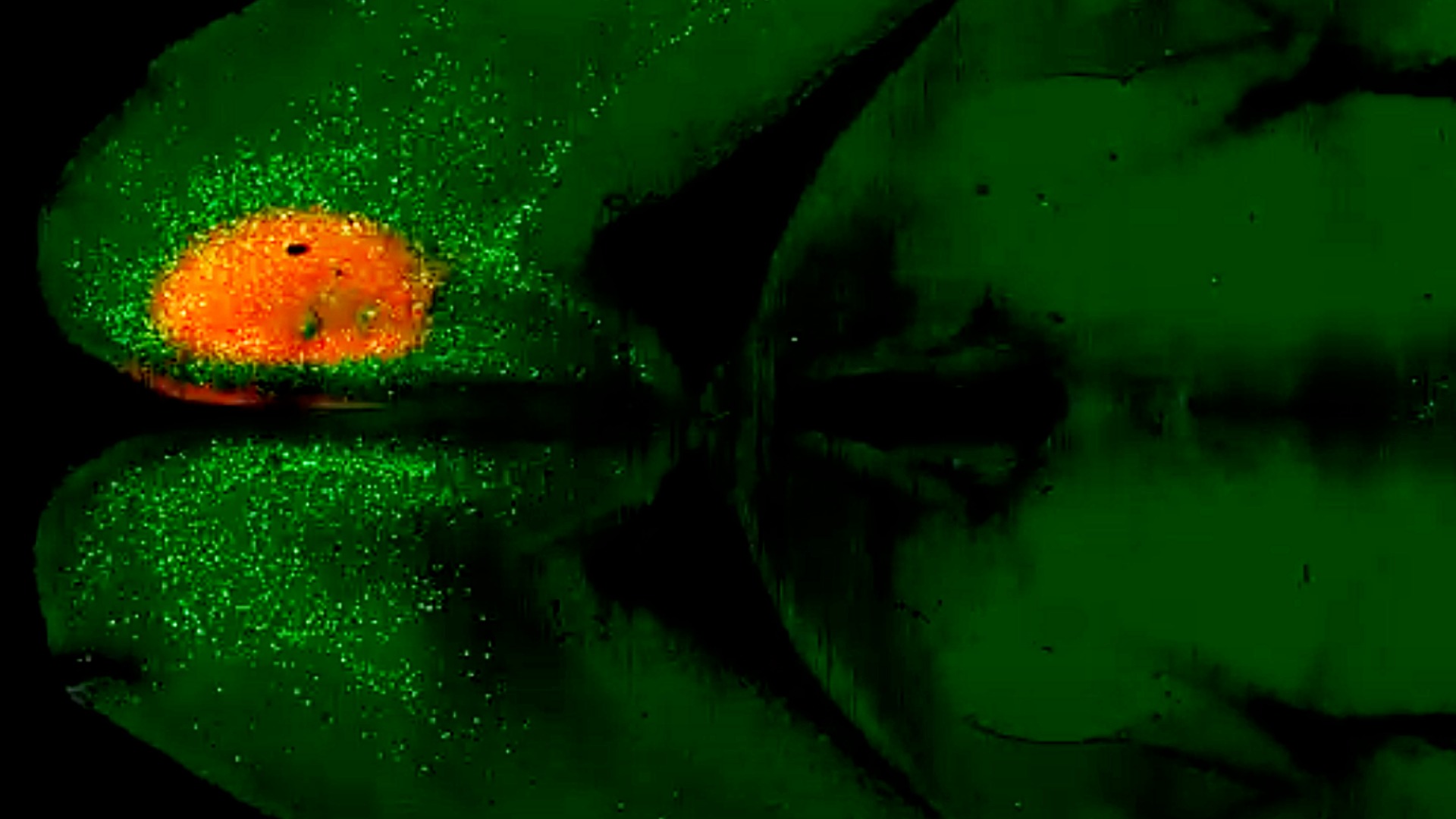
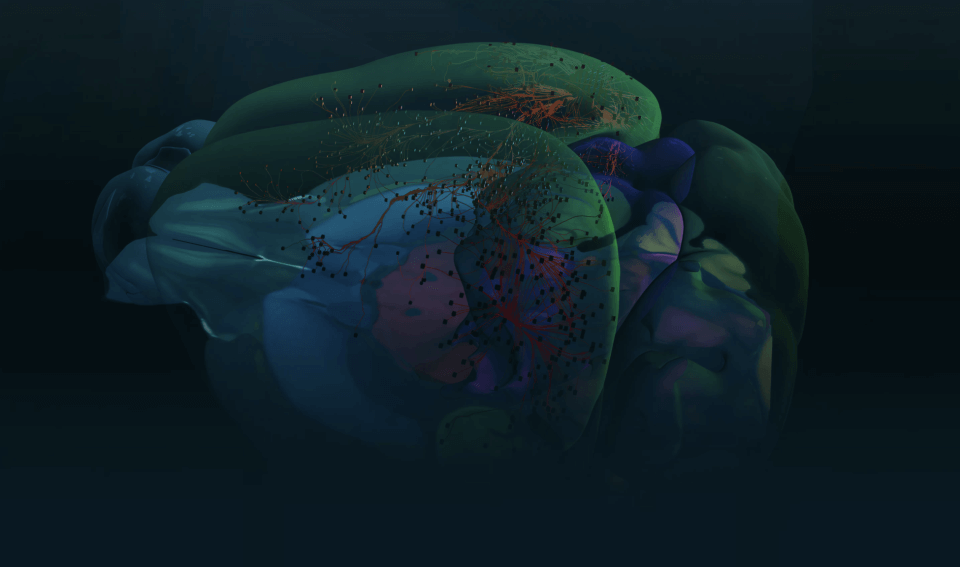

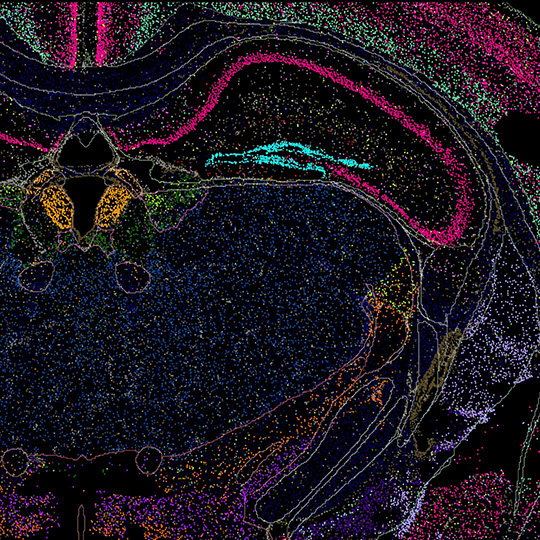
Zeng’s team at the Allen Institute has built multiple platforms, including single-cell transcriptomics, spatial transcriptomics, single and multi-patching electrophysiology, 3D reconstruction of neuronal morphology, high throughput brain-wide connectivity mapping, large-scale electron microscopy connectomics, and cell type-targeting transgenic and viral tools, to characterize the transcriptomic, physiological, morphological, and connectional properties of different types of mammalian brain cells in a standardized way. Zeng has been the principal investigator on several large National Institutes of Health-funded projects, including a BRAIN Initiative Cell Census Network (BICCN) project in which her team created a comprehensive whole-brain atlas of cell types in the mouse, and two BRAIN Initiative Cell Atlas Network (BICAN) projects with the goals of creating similarly comprehensive and high-resolution cell type atlases for human and non-human primate (NHP) brains and for the developmental mouse brain.

The Allen Institute team Zeng leads has utilized these platforms to define and classify the diverse cell types that constitute the mammalian brain and describe their wiring diagrams at different levels, uncovering principles of cell type and circuit organization including the hierarchical organization reflecting the varied similarities and differences among cell types, the coexistence of discrete and continuous transcriptional variations across cell types, the correspondence as well as nuanced heterogeneities at granular levels between transcriptomic profiles and other modalities of cellular properties, and the conservation and divergence of cell types across species. The Allen team has been building the online Brain Knowledge Platform to provide all the data, knowledge and tools as comprehensive foundational resources to the broader neuroscience community. Zeng’s research has also moved beyond cell atlasing, further into studies of cell type and cell state changes during developmental, aging, behavioral, pharmacological, and diseased processes, revealing new relationships between spatiotemporal transcriptomic dynamics and cell type-specific functions. Altogether, building such an integrated and dynamic cell type knowledge base lays the foundation for decoding the computational mechanisms of brain circuit function.

back to people and teams
featured contributions
featured media
featured stories
featured events
featured publications

featured events

event / October 25 - 29, 2026
2026 Lake Conference – Comparative and Evolutionary Neurobiology
Join the Allen Institute and Circuit Neuroscience Basel for the Lake Conference in Seattle, Washington this October.

featured stories

news
Mind trip: How psilocybin changes the brain
New research may help improve psychedelic therapy for neuropsychiatric disorders
news
Scientists unveil the world's most comprehensive AI-powered tool for neuroscience: Brain Knowledge Platform
Massive, first-of-its-kind data resource aims to accelerate medical breakthroughs in brain diseases like Alzheimer’s and Parkinson's
news
Scientists complete first drafts of developing mammalian brain cell atlases
New research reveals how early brains form and the critical periods that could help diagnose and treat brain disease.

featured media

media / Nature
🔒 Nature: The ‘silent’ brain cells that shape our behaviour, memory and health
A rush of studies from labs in many subfields are revealing just how important astrocytes are in shaping our behavior, mood and memory.
media / The Scientist
The Scientist: A New Cell Atlas Helps Researchers Navigate the Developing Brain
Researchers collaborating on a BRAIN Initiative project unveiled the most comprehensive map of developing mammalian brains to date.
media / Yahoo News
Yahoo News: Two-tiered atlas of the developing human brain offers new hope in Parkinson’s treatment
This work sits alongside the U.S. NIH BRAIN Initiative Cell Atlas Network to build a complete atlas of human brain cells.

featured publications

publication / 2025
Data-driven fine-grained region discovery in the mouse brain with transformers
Nature Communications
publication / 2025
The xIV-LDDMM toolkit of image-varifold based technologies for mapping 3D images and spatial-omics across scales
Communications Biology
publication / 2025
Imaging high-frequency voltage dynamics in multiple neuron classes of behaving mammals
Cell
publication / 2025
Cholinergic neuronal activity promotes diffuse midline glioma growth through muscarinic signaling
Cell
publication / 2025
Enhancer AAVs for targeting spinal motor neurons and descending motor pathways in rodents and macaque
Cell Reports
publication / 2025
A suite of enhancer AAVs and transgenic mouse lines for genetic access to cortical cell types
Cell
publication / 2025
Enhancer AAV toolbox for accessing and perturbing striatal cell types and circuits
Neuron
publication / 2025
Connectivity of single neurons classifies cell subtypes in mouse brains
Nature Methods
publication / 2025
Integrating multimodal data to understand cortical circuit architecture and function
Nature Neuroscience
publication / 2025
Transcriptional determinants of goal-directed learning and representational drift in the parahippocampal cortex
Cell Reports
publication / 2025
Brain-wide cell-type-specific transcriptomic signatures of healthy ageing in mice
Nature
publication / 2024
The BRAIN initiative: a pioneering program on the precipice
Nature Neuroscience
publication / 2024
Neuronal diversity and stereotypy at multiple scales through whole brain morphometry
Nature Communications
publication / 2024
Unsupervised pattern identification in spatial gene expression atlas reveals mouse brain regions beyond established ontology
Proceedings of the National Academy of Sciences of the United States of America
publication / 2024
High-throughput analysis of dendrite and axonal arbors reveals transcriptomic correlates of neuroanatomy
Nature Communications
publication / 2024
The single-cell opioid responses in the context of HIV (SCORCH) consortium
Molecular Psychiatry
publication / 2024
Cross-modality mapping using image varifolds to align tissue-scale atlases to molecular-scale measures with application to 2D brain sections
Nature Communications
publication / 2024
Publisher Correction: Long-term labeling and imaging of synaptically connected neuronal networks in vivo using double-deletion-mutant rabies viruses
Nature Neuroscience
publication / 2024
Long-term labeling and imaging of synaptically connected neuronal networks in vivo using double-deletion-mutant rabies viruses
Nature Neuroscience
publication / 2023
Brain-wide correspondence of neuronal epigenomics and distant projections
Nature
publication / 2023
A high-resolution transcriptomic and spatial atlas of cell types in the whole mouse brain
Nature
publication / 2023
Single-cell analysis of chromatin accessibility in the adult mouse brain
Nature
publication / 2023
A transcriptomic taxonomy of mouse brain-wide spinal projecting neurons
Nature
publication / 2023
Single-cell DNA methylome and 3D multi-omic atlas of the adult mouse brain
Nature
publication / 2023
Molecularly defined and spatially resolved cell atlas of the whole mouse brain
Nature
publication / 2023
Signature morphoelectric properties of diverse GABAergic interneurons in the human neocortex
Science (New York, N.Y.)
publication / 2023
Morphoelectric and transcriptomic divergence of the layer 1 interneuron repertoire in human versus mouse neocortex
Science (New York, N.Y.)
publication / 2023
All-optical recreation of naturalistic neural activity with a multifunctional transgenic reporter mouse
Cell Reports
publication / 2023
Neuroscience Needs Network Science
The Journal of Neuroscience: The Official Journal of the Society for Neuroscience
publication / 2023
Robust enhancer-gene regulation identified by single-cell transcriptomes and epigenomes
Cell Genomics
publication / 2023
A guide to the BRAIN Initiative Cell Census Network data ecosystem
PLoS biology
publication / 2023
BigNeuron: a resource to benchmark and predict performance of algorithms for automated tracing of neurons in light microscopy datasets
Nature Methods
publication / 2023
Target cell-specific synaptic dynamics of excitatory to inhibitory neuron connections in supragranular layers of human neocortex
eLife
preprint / 2023
Stimulus novelty uncovers coding diversity in visual cortical circuits
publication / 2023
Regional and cell-type-specific afferent and efferent projections of the mouse claustrum
Cell Reports
publication / 2023
A whole-brain monosynaptic input connectome to neuron classes in mouse visual cortex
Nature Neuroscience
publication / 2023
Modeling the cell-type-specific mesoscale murine connectome with anterograde tracing experiments
Network Neuroscience (Cambridge, Mass.)
publication / 2022
Spatially resolved gene regulatory and disease-related vulnerability map of the adult Macaque cortex
Nature Communications
publication / 2022
Cardiovascular baroreflex circuit moonlights in sleep control
Neuron
publication / 2022
What is a cell type and how to define it?
Cell
publication / 2022
Intersectional mapping of multi-transmitter neurons and other cell types in the brain
Cell Reports
publication / 2022
A gene-expression axis defines neuron behaviour
Nature
publication / 2022
Single-cell transcriptomic classification of rabies-infected cortical neurons
Proceedings of the National Academy of Sciences of the United States of America
publication / 2022
Single cell enhancer activity distinguishes GABAergic and cholinergic lineages in embryonic mouse basal ganglia
Proceedings of the National Academy of Sciences of the United States of America
publication / 2022
Petabyte-Scale Multi-Morphometry of Single Neurons for Whole Brains
Neuroinformatics
publication / 2022
Local connectivity and synaptic dynamics in mouse and human neocortex
Science (New York, N.Y.)
publication / 2022
Make war not love: The neural substrate underlying a state-dependent switch in female social behavior
Neuron
publication / 2022
Voltage imaging in the olfactory bulb using transgenic mouse lines expressing the genetically encoded voltage indicator ArcLight
Scientific Reports
publication / 2022
Synaptic connectivity to L2/3 of primary visual cortex measured by two-photon optogenetic stimulation
eLife
publication / 2022
Dense functional and molecular readout of a circuit hub in sensory cortex
Science (New York, N.Y.)
publication / 2022
Cross-modal coherent registration of whole mouse brains
Nature Methods
publication / 2021
Transcriptional network orchestrating regional patterning of cortical progenitors
Proceedings of the National Academy of Sciences of the United States of America
publication / 2021
Laminar distribution and arbor density of two functional classes of thalamic inputs to primary visual cortex
Cell Reports
publication / 2021
A multimodal cell census and atlas of the mammalian primary motor cortex
Nature
publication / 2021
Human neocortical expansion involves glutamatergic neuron diversification
Nature
publication / 2021
Morphological diversity of single neurons in molecularly defined cell types
Nature
publication / 2021
Cellular anatomy of the mouse primary motor cortex
Nature
publication / 2021
Isoform cell-type specificity in the mouse primary motor cortex
Nature
publication / 2021
Spatially resolved cell atlas of the mouse primary motor cortex by MERFISH
Nature
publication / 2021
Comparative cellular analysis of motor cortex in human, marmoset and mouse
Nature
publication / 2021
A transcriptomic and epigenomic cell atlas of the mouse primary motor cortex
Nature
publication / 2021
Phenotypic variation of transcriptomic cell types in mouse motor cortex
Nature
publication / 2021
Signature morpho-electric, transcriptomic, and dendritic properties of human layer 5 neocortical pyramidal neurons
Neuron
publication / 2021
Single-cell and single-nucleus RNA-seq uncovers shared and distinct axes of variation in dorsal LGN neurons in mice, non-human primates, and humans
eLife
publication / 2021
Scaled, high fidelity electrophysiological, morphological, and transcriptomic cell characterization
eLife
publication / 2021
A taxonomy of transcriptomic cell types across the isocortex and hippocampal formation
Cell
publication / 2021
Control of impulsivity by Gi-protein signalling in layer-5 pyramidal neurons of the anterior cingulate cortex
Communications Biology
publication / 2021
Enhancer viruses for combinatorial cell-subclass-specific labeling
Neuron
publication / 2021
Survey of spiking in the mouse visual system reveals functional hierarchy
Nature
publication / 2021
Functional enhancer elements drive subclass-selective expression from mouse to primate neocortex
Cell Reports
publication / 2021
Alternating sources of perisomatic inhibition during behavior
Neuron
publication / 2021
Relationship between simultaneously recorded spiking activity and fluorescence signal in GCaMP6 transgenic mice
eLife
publication / 2021
Regional, Layer, and Cell-Type-Specific Connectivity of the Mouse Default Mode Network
Neuron
publication / 2021
Consistent cross-modal identification of cortical neurons with coupled autoencoders
Nature Computational Science
publication / 2020
Common cell type nomenclature for the mammalian brain
eLife
publication / 2020
A community-based transcriptomics classification and nomenclature of neocortical cell types
Nature Neuroscience
publication / 2020
Integrated Morphoelectric and Transcriptomic Classification of Cortical GABAergic Cells
Cell
publication / 2020
The Mouse Claustrum Is Required for Optimal Behavioral Performance Under High Cognitive Demand
Biological Psychiatry
publication / 2020
Brainwide Genetic Sparse Cell Labeling to Illuminate the Morphology of Neurons and Glia with Cre-Dependent MORF Mice
Neuron
publication / 2020
A collection of genetic mouse lines and related tools for inducible and reversible intersectional mis-expression
Development (Cambridge, England)
publication / 2020
Distinct Transcriptomic Cell Types and Neural Circuits of the Subiculum and Prosubiculum along the Dorsal-Ventral Axis
Cell Reports
publication / 2020
The Allen Mouse Brain Common Coordinate Framework: A 3D Reference Atlas
Cell
publication / 2020
Fundamental bounds on the fidelity of sensory cortical coding
Nature
publication / 2020
RecV recombinase system for in vivo targeted optogenomic modifications of single cells or cell populations
Nature Methods
publication / 2020
A large-scale standardized physiological survey reveals functional organization of the mouse visual cortex
Nature Neuroscience
publication / 2020
Projection-specific Activity of Layer 2/3 Neurons Imaged in Mouse Primary Somatosensory Barrel Cortex During a Whisker Detection Task
Function (Oxford, England)
publication / 2019
Visual Cortex Gains Independence from Peripheral Drive before Eye Opening
Neuron
publication / 2019
Genetic Identification of Vagal Sensory Neurons That Control Feeding
Cell
publication / 2019
Single-cell transcriptomic evidence for dense intracortical neuropeptide networks
eLife
publication / 2019
Kilohertz two-photon brain imaging in awake mice
Nature Methods
publication / 2019
Hierarchical organization of cortical and thalamic connectivity
Nature
publication / 2019
Multimodal Analysis of Cell Types in a Hypothalamic Node Controlling Social Behavior
Cell
publication / 2019
Conserved cell types with divergent features in human versus mouse cortex
Nature
publication / 2019
TeraVR empowers precise reconstruction of complete 3-D neuronal morphology in the whole brain
Nature Communications
publication / 2019
Classification of electrophysiological and morphological neuron types in the mouse visual cortex
Nature Neuroscience
publication / 2019
Neuronal cell-subtype specificity of neural synchronization in mouse primary visual cortex
Nature Communications
publication / 2019
Autonomous patch-clamp robot for functional characterization of neurons in vivo: development and application to mouse visual cortex
Journal of Neurophysiology
publication / 2019
Volumetric Ca2+ Imaging in the Mouse Brain Using Hybrid Multiplexed Sculpted Light Microscopy
Cell
publication / 2019
Voltage imaging and optogenetics reveal behaviour-dependent changes in hippocampal dynamics
Nature
publication / 2019
In Vivo Submillisecond Two-Photon Optogenetics with Temporally Focused Patterned Light
The Journal of Neuroscience: The Official Journal of the Society for Neuroscience
Next
1 / 2
we acceleratedevelopcatalyzeimpact

science done differently. shared openly.

explore our accelerators

brain science

Mapping every cell, connection, and circuit in the brain—openly shared with the world.

cell science

Decoding how cells become tissues, then programming that knowledge into powerful new research tools.

neural dynamics

Revealing the brain's hidden algorithms that transform neural activity into real-world behavior.

immunology

Creating the deepest open reference for the healthy human immune system ever built.

synthetic biology

Engineering cells to record their own histories, transforming how we understand disease over time.

research

Big questions, open answers, and science built to be shared.

education

Inspiring the next generation of scientists through open science resources.

impact

Our science is empowering researchers and advancing health worldwide.
advancing science through open, collaborative research
Get the allen institute newsletter
Stay informed on the latest breakthroughs in neuroscience, bioscience, and AI-driven research.
allen institute
impactpeople & teamscareers & opportunitiesalumnihistory & founder
science resources
allencell.orgallenimmunology.orgallenneuraldynamics.orgbrain-bican.orgbrain-map.orgmicrons-explorer.org
research
brain sciencecell scienceneural dynamicsimmunologysynthetic biologypublications
education
science educationfield tripsprofessional developmenteducation resources
quick links
newseventsopen sciencepodcastscience resourceshuman brain donationvisit uscontact
follow us/

allen institute, 615 Westlake Ave North, Seattle, WA 98109 +12065487055

© 0000 allen institute. all rights reserved.
privacy policyterms of usecitation policyemployee portalpolicy & compliancecookie settings