impact
about
our story
explore our impact
careers and opportunities
join us
open science
sharing science to speed discovery
open science week
celebrating open science
team science
people & teams
discovery is a team effort
allenites
the people who make our work possible
advisors
their input shapes our science
board of directors
they help us fulfill our mission
shanahan foundation fellowship
at the interface of data and neuroscience
next generation leaders
fostering emerging leaders in bioscience
research
overview
our approach
science at the scale of greatest impact
publications
explore our publications
open science
sharing science to speed discovery
science accelerators
brain science
building a blueprint of the brain
cell science
understanding how cells become organs
neural dynamics
revealing the brain’s hidden algorithms
immunology
creating the ultimate immune system reference
synthetic biology
seattle hub for synthetic biology
education
overview
science education
science is for everyone
open science
sharing science speeds discovery
engagement
education resources
real science. real skills.
field trips
experience science where it happens
educator development
empowering educators
news
overview
all news
explore the latest news
podcast
the human stories behind discovery
sign up for our newsletter
stay connected to our science
events
overview
all events
public engagement, workshops, seminars and more
conferences
connect with us
science resources
science resources
allencell.org
allenimmunology.org
allenneuraldynamics.org
brain-bican.org
brain-map.org
microns-explorer.org
impact
back to menu
team science
our story
explore our impact
careers and opportunities
join us
open science
sharing science to speed discovery
open science week
celebrating open science
team science
people & teams
discovery is a team effort
allenites
the people who make our work possible
advisors
their input shapes our science
board of directors
they help us fulfill our mission
shanahan foundation fellowship
at the interface of data and neuroscience
next generation leaders
fostering emerging leaders in bioscience
research
back to menu
overview
our approach
science at the scale of greatest impact
publications
explore our publications
open science
sharing science to speed discovery
science accelerators
brain science
building a blueprint of the brain
cell science
understanding how cells become organs
neural dynamics
revealing the brain’s hidden algorithms
immunology
creating the ultimate immune system reference
synthetic biology
seattle hub for synthetic biology
education
back to menu
overview
science education
science is for everyone
open science
sharing science speeds discovery
engagement
education resources
real science. real skills.
field trips
experience science where it happens
educator development
empowering educators
news
back to menu
overview
all news
explore the latest news
podcast
the human stories behind discovery
newsletter
stay connected to our science
events
back to menu
overview
all events
public engagement, workshops, seminars and more
conferences
connect with us
science resources
back to menu
science resources
allencell.org
allenimmunology.org
allenneuraldynamics.org
brain-bican.org
brain-map.org
microns-explorer.org
search
impact
people

G.W. Gant Luxton

University of California, Davis

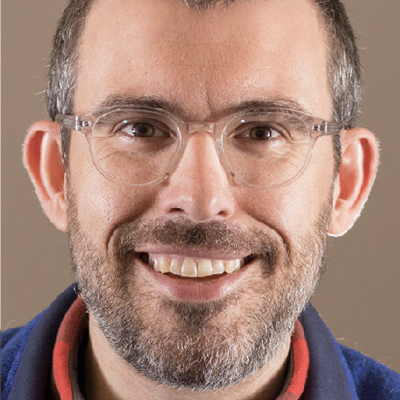
G.W. Gant Luxton is an Associate Professional Researcher/Principal Investigator of Molecular and Cellular Biology at the University of California, Davis. His laboratory investigates the role of the nucleus during mechanotransduction, or the fundamental ability of cells to sense and respond to mechanical forces. Their lens on nuclear mechanotransduction is the conserved nuclear envelope-spanning molecular bridge known as the linker of nucleoskeleton and cytoskeleton (LINC) complex, which mechanically integrates the nucleus with the cytoskeleton and consequently the extracellular environment. They use a suite of cutting-edge biophysical, cell biological, quantitative imaging, and synthetic biological approaches to investigate the assembly of functional LINC complexes as well as how LINC complex dysfunction contributes to human neuromuscular disease pathogenesis.Dr. Luxton was trained as a virologist in the laboratory of Dr. Gregory A. Smith at Northwestern University Feinberg School of Medicine. During his graduate career, Dr. Luxton revealed novel mechanistic insights into alpha-herpesvirus neuroinvasion by identifying the viral tegument protein pUL36 as the key mediator of microtubule-dependent capsid transport in infected neurons and non-neuronal cells. Next, Dr. Luxton joined the laboratory of Dr. Gregg G. Gundersen at Columbia University Irving Medical Center as a postdoctoral fellow. There, Dr. Luxton helped establish rearward nuclear movement during centrosome orientation in wounded fibroblast monolayers as the premiere assay for investigating the mechanisms of nuclear-cytoskeletal coupling by LINC complexes as well as the impact of genetic mutations in nuclear envelope proteins associated with human diseases (i.e. nuclear laminopathies) on LINC complex function. Dr. Luxton’s research lead to the discovery of transmembrane actin-associated nuclear (TAN) lines, which are linear arrays of LINC complexes composed of the KASH protein nesprin-2G and the SUN protein SUN2 that harness the forces generated by the retrograde flow of perinuclear actin cables to move the nucleus rearward during centrosome orientation in fibroblasts polarizing for migration.In 2011, Dr. Luxton established his research group at the University of Minnesota-Twin Cities. In 2016, he was named a HHMI Faculty Fellow for Inclusive Excellence in 2016. In 2018, he was named a Whitman Center Early Career Fellow by the Marine Biological Laboratory as well as a Scialog Fellow by the Research Corporation for Science Advancement and the Gordon and Betty Moore Foundation. In 2020, Dr. Luxton moved his research group to the Department of Molecular and Cellular Biology at the University of California, Davis.
back to people and teams
featured contributions
featured media
featured stories
featured events
featured publications

featured events

No articles for the category

featured stories

No articles for the category

featured media

No articles for the category

featured publications

No articles for the category
we acceleratedevelopcatalyzeimpact

science done differently. shared openly.

explore our accelerators

brain science

Mapping every cell, connection, and circuit in the brain—openly shared with the world.

cell science

Decoding how cells become tissues, then programming that knowledge into powerful new research tools.

neural dynamics

Revealing the brain's hidden algorithms that transform neural activity into real-world behavior.

immunology

Creating the deepest open reference for the healthy human immune system ever built.

synthetic biology

Engineering cells to record their own histories, transforming how we understand disease over time.

research

Big questions, open answers, and science built to be shared.

education

Inspiring the next generation of scientists through open science resources.

impact

Our science is empowering researchers and advancing health worldwide.
advancing science through open, collaborative research
Get the allen institute newsletter
Stay informed on the latest breakthroughs in neuroscience, bioscience, and AI-driven research.
allen institute
impactpeople & teamscareers & opportunitiesalumnihistory & founder
science resources
allencell.orgallenimmunology.orgallenneuraldynamics.orgbrain-bican.orgbrain-map.orgmicrons-explorer.org
research
brain sciencecell scienceneural dynamicsimmunologysynthetic biologypublications
education
science educationfield tripsprofessional developmenteducation resources
quick links
newseventsopen sciencepodcastscience resourceshuman brain donationvisit uscontact
follow us/

allen institute, 615 Westlake Ave North, Seattle, WA 98109 +12065487055

© 0000 allen institute. all rights reserved.
privacy policyterms of usecitation policyemployee portalpolicy & compliancecookie settings