in this article
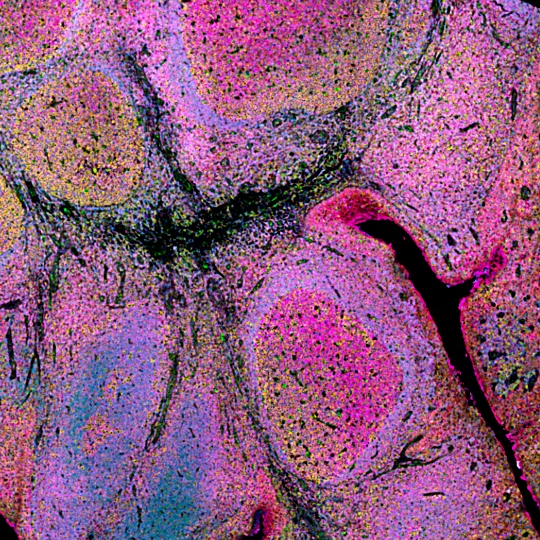
The brain is shrouded in mystery, but some parts are extra mysterious. Take for example the claustrum, a tiny brain region that sits directly underneath the cortex, the outermost shell of the brain.
The cortex is responsible for many of our brains’ higher-order functions like learning and memory, and it sends and receives a huge number of connections to the tiny claustrum. The function of the claustrum itself is much more nebulous, but scientists believe that it plays a role related to the massive thought-processing power of the cortex. Maybe something big like consciousness, or directing us when and where to pay close attention.
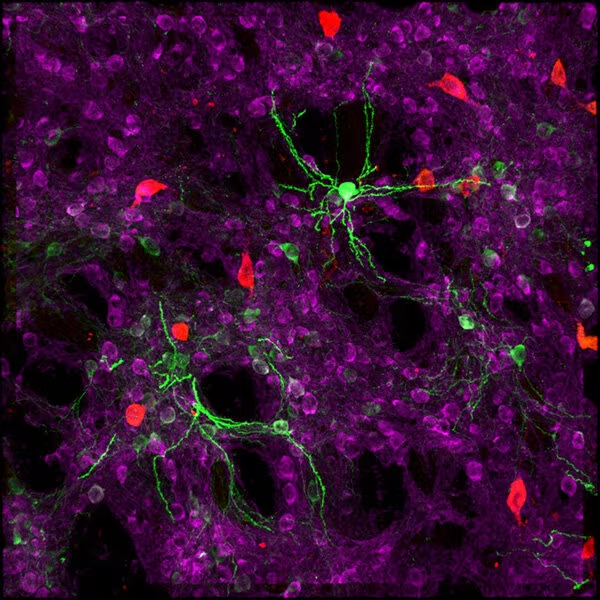
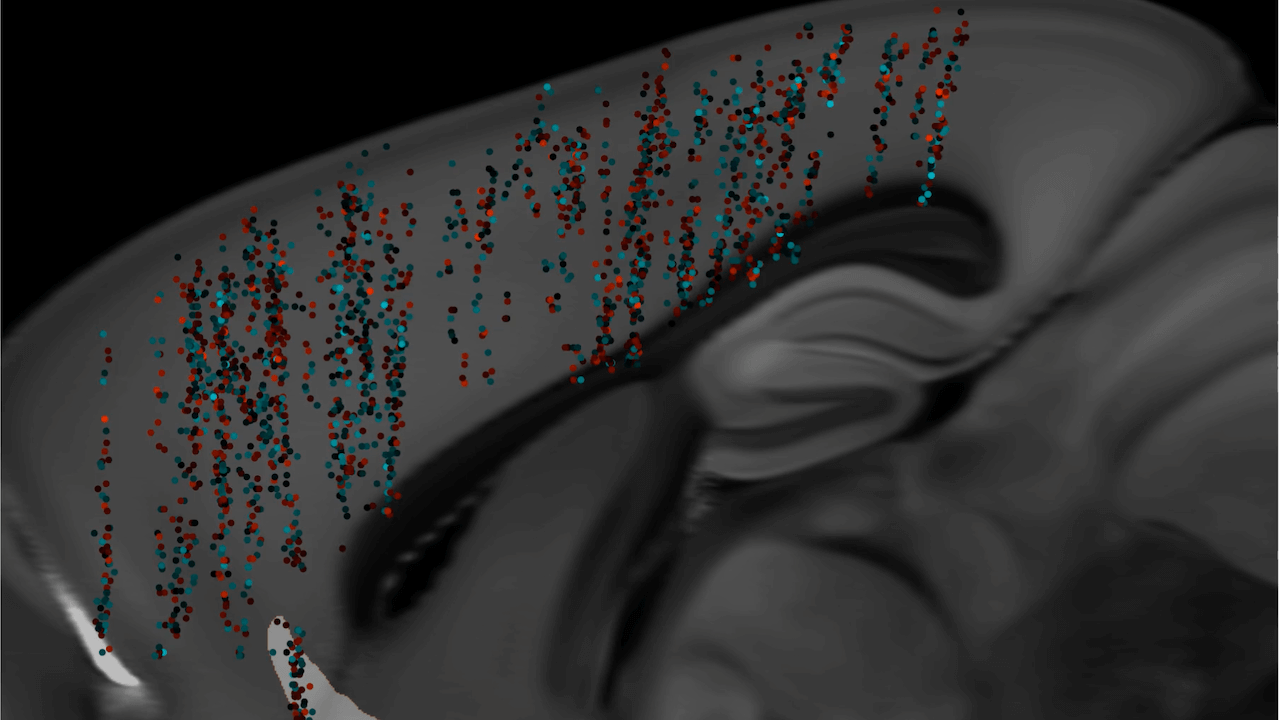
Scientists in the Allen Institute’s MindScope program devised a set of experiments where they activated neurons in the mouse claustrum using a technique called optogenetics that switches on certain genes using beams of light, and then recorded what happens to neurons’ activity in several regions of the cortex. In this video produced by scientist Ethan McBride, Ph.D., neurons with increased activity are represented with red flashes and those with decreased, blue. The scientists used thin silicon probes called Neuropixels to record the activity of more than 15,000 neurons and found that the claustrum exerts a multifaceted influence on the cortex, triggering some neurons to fire and some to stay quiet. The team published their results in the journal Neuron this week.
Citations
about the allen institute
Allen Institute is a 501(c)(3) tax exempt organization dedicated to accelerating science for a healthier world. Through large-scale, multidisciplinary research initiatives, the Institute generates foundational knowledge, data, tools, and models that are shared openly with the world to advance our understanding of life and health. Founded by Jody Allen and the late Paul G. Allen, Allen Institute is supported primarily by Fund for Science and Technology.