impact
about
our story
explore our impact
careers and opportunities
join us
open science
sharing science to speed discovery
open science week
celebrating open science
team science
people & teams
discovery is a team effort
allenites
the people who make our work possible
advisors
their input shapes our science
board of directors
they help us fulfill our mission
shanahan foundation fellowship
at the interface of data and neuroscience
next generation leaders
fostering emerging leaders in bioscience
research
overview
our approach
science at the scale of greatest impact
publications
explore our publications
open science
sharing science to speed discovery
science accelerators
brain science
building a blueprint of the brain
cell science
understanding how cells become organs
neural dynamics
revealing the brain’s hidden algorithms
immunology
creating the ultimate immune system reference
synthetic biology
seattle hub for synthetic biology
education
overview
science education
science is for everyone
open science
sharing science speeds discovery
engagement
education resources
real science. real skills.
field trips
experience science where it happens
educator development
empowering educators
news
overview
all news
explore the latest news
podcast
the human stories behind discovery
sign up for our newsletter
stay connected to our science
events
overview
all events
public engagement, workshops, seminars and more
conferences
connect with us
science resources
science resources
allencell.org
allenimmunology.org
allenneuraldynamics.org
brain-bican.org
brain-map.org
microns-explorer.org
impact
back to menu
team science
our story
explore our impact
careers and opportunities
join us
open science
sharing science to speed discovery
open science week
celebrating open science
team science
people & teams
discovery is a team effort
allenites
the people who make our work possible
advisors
their input shapes our science
board of directors
they help us fulfill our mission
shanahan foundation fellowship
at the interface of data and neuroscience
next generation leaders
fostering emerging leaders in bioscience
research
back to menu
overview
our approach
science at the scale of greatest impact
publications
explore our publications
open science
sharing science to speed discovery
science accelerators
brain science
building a blueprint of the brain
cell science
understanding how cells become organs
neural dynamics
revealing the brain’s hidden algorithms
immunology
creating the ultimate immune system reference
synthetic biology
seattle hub for synthetic biology
education
back to menu
overview
science education
science is for everyone
open science
sharing science speeds discovery
engagement
education resources
real science. real skills.
field trips
experience science where it happens
educator development
empowering educators
news
back to menu
overview
all news
explore the latest news
podcast
the human stories behind discovery
newsletter
stay connected to our science
events
back to menu
overview
all events
public engagement, workshops, seminars and more
conferences
connect with us
science resources
back to menu
science resources
allencell.org
allenimmunology.org
allenneuraldynamics.org
brain-bican.org
brain-map.org
microns-explorer.org
search
news

New image-reading software to level the microscopy image playfield

Open-source AICSImageIO library, developed for cell biologists, faithfully converts proprietary microscope image files into an open format

August 26, 2020
 min read
share/
Open-source AICSImageIO library, developed for cell biologists, faithfully converts proprietary microscope image files into an open format
Thank you! Your submission has been received!
Oops! Something went wrong while submitting the form.

in this article

table of contents will display on published page only
set h2 to populate the table of contents here

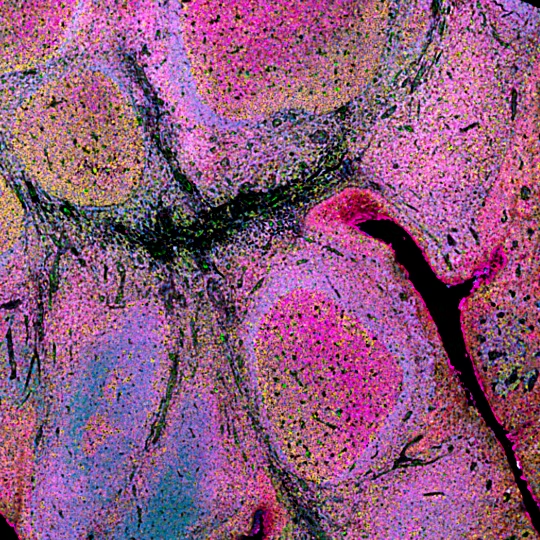
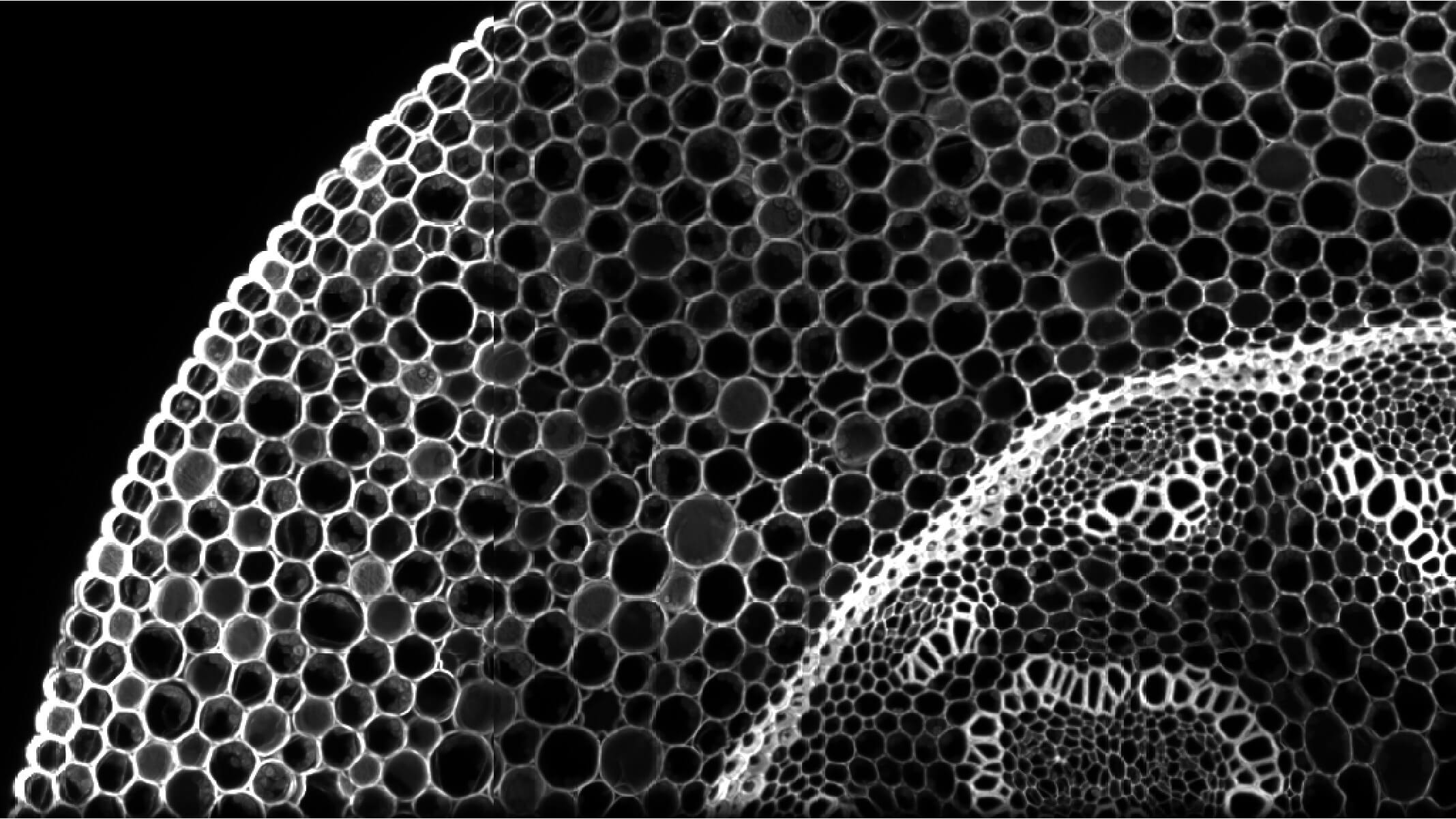
This image of Convallaria, also known as lily of the valley, was converted from a mosaic file to a more standard image format using AICSImageIO, a new open-source software developed by the Allen Institute for Cell Science.

In the cell biology research world, there’s been a recent explosion of newer, faster, better resolution microscopes.

But with these technological advances comes a logistics problem for the microscopes’ users: the image files themselves, or more specifically, the file formats. Nearly every microscope brand generates a different kind of image file format, and that can make it difficult for computational biologists who want to analyze or compare images obtained in different formats.

Image files commonly used outside the cell biology world (jpegs, tiffs, pngs) have such conversion software – known as image libraries – available in spades. “But in the scientific community, you have a specific library for reading one format, and then a totally different library for another format,” said Jackson Brown, an engineer at the Allen Institute for Cell Science, a division of the Allen Institute.

Researchers at the Allen Institute for Cell Science use several different kinds of microscopes in their work. They were looking for a way to easily convert all their image files to the Open Microscopy Environment format, or OME, a format developed by a consortium of researchers and software developers that makes open-access, open-source tools for microscopy image data. Programs that convert image files to OME existed, but the Allen Institute teams wanted a program that was more of a one-stop-shop for easily working with any kind of image file.

The software Brown and his colleagues developed, called AICSImageIO, is an open-source microscopy image reading, writing and file conversion library written in Python. It can convert several types of microscopy image files – at any size – to OME or PNG files, enabling cell biologists to more easily analyze and compare microscopy images taken on different machines.

The software ports the image data and its metadata, the technical information associated with an image that’s not directly contained in its pixels, and converts them both faithfully. That includes very high-resolution images and 3D volumetric images too large to fit into any single computer’s memory, including those from the Institute’s lattice light-sheet microscope which can reach 200 GB in a single 3D image – about the size of 25 HD feature-length movies.

The software itself doesn’t display images, but it can sync up with other image viewing software. Currently, the team is working with the open-source image viewer napari and are planning to make the image-viewing step through that program even more seamless in the next iteration of AICSImageIO.

Aside from Brown, Allen Institute for Cell Science engineers Dan Toloudis and Jamie Sherman, Ph.D., are developers on the software.

Citations
No items found.

about the allen institute

The Allen Institute is an independent, 501(c)(3) nonprofit research organization founded by philanthropist and visionary, the late Paul G. Allen. The Allen Institute is dedicated to answering some of the biggest questions in bioscience and accelerating research worldwide. The Institute is a recognized leader in large-scale research with a commitment to an open science model. For more information, visit alleninstitute.org.

related news

all news
No articles for the category
we acceleratedevelopcatalyzeimpact

science done differently. shared with the world.

explore our accelerators

brain science

Mapping every cell, connection, and circuit in the brain—openly shared with the world.

cell science

Decoding how cells become tissues, then programming that knowledge into powerful new research tools.

neural dynamics

Revealing the brain's hidden algorithms that transform neural activity into real-world behavior.

immunology

Creating the deepest open reference for the healthy human immune system ever built.

synthetic biology

Engineering cells to record their own histories, transforming how we understand disease over time.

research

Big questions, open answers, and science built to be shared.

education

Inspiring the next generation of scientists through open science resources.

impact

Our science is empowering researchers and advancing health worldwide.
advancing science through open, collaborative research
Get the allen institute newsletter
Stay informed on the latest breakthroughs in neuroscience, bioscience, and AI-driven research.
allen institute
impactpeople & teamscareers & opportunitiesalumnihistory & founder
science resources
allencell.orgallenimmunology.orgallenneuraldynamics.orgbrain-bican.orgbrain-map.orgmicrons-explorer.org
research
brain sciencecell scienceneural dynamicsimmunologysynthetic biologypublications
education
science educationfield tripsprofessional developmenteducation resources
quick links
newseventsopen sciencepodcastscience resourceshuman brain donationvisit uscontact
follow us/

allen institute, 615 Westlake Ave North, Seattle, WA 98109 +12065487055

© 0000 allen institute. all rights reserved.
privacy policyterms of usecitation policyemployee portalpolicy & compliancecookie settings